
Leonid Meteor Shower Peaks Tonight: Up to 15 Meteors an Hour in Dark Skies
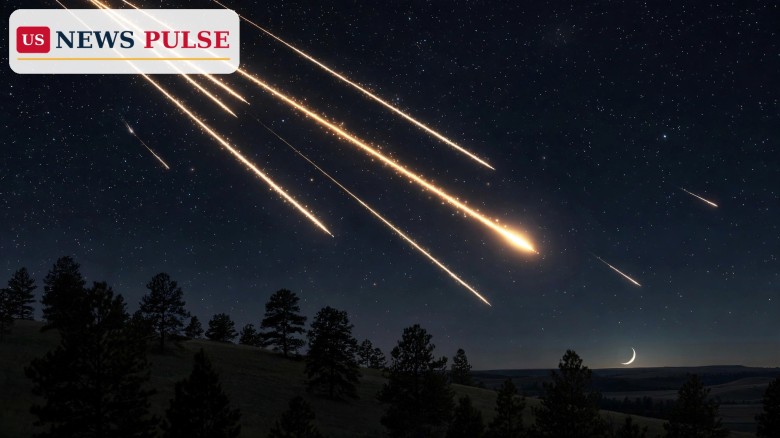
WASHINGTON — The Leonid meteor shower peaks tonight, and skywatchers out in the early hours of Tuesday morning could see up to 15 meteors an hour. The annual shower reaches its best moment overnight Monday into Tuesday, November 17, 2026, as Earth passes through the densest part of comet 55P/Tempel-Tuttle’s debris trail, according to the American Meteor Society.
It will not be a storm: no great Leonid outburst is expected this year, and the meteors are faint. But for anyone willing to find a dark spot and look up, the peak night offers the best Leonid show of 2026, with the moon out of the way before the best hours begin.
Key Points
- The Leonid meteor shower peaks overnight Monday, November 16, into Tuesday, November 17, 2026, when Earth crosses the densest part of comet 55P/Tempel-Tuttle’s debris trail.
- Under clear, dark skies, observers could see up to 15 meteors per hour, said Bill Cooke, lead of NASA’s Meteoroid Environment Office.
- Best viewing comes around 2 or 3 a.m. in any time zone, when the constellation Leo climbs higher.
- The waxing crescent moon, about 39% illuminated, will have set by the peak hours, leaving darker skies.
- No equipment is needed, just a dark sky away from artificial light.
What Happened
The Leonids arrive every November, when Earth’s orbit carries the planet through a stream of dust and small rock grains shed by Tempel-Tuttle over centuries. Each grain burns up high in the atmosphere, looking like a brief streak of light from the ground. On the peak night, that stream is at its thickest.
Bill Cooke, who leads NASA’s Meteoroid Environment Office, put the expected rate at up to 15 meteors per hour under clear, dark skies. That is a modest count, and the Leonids are faint. City lights, a porch lamp, or even a bright neighbour’s window can wash them out. The timing helps, too. The moon is a waxing crescent, about 39% illuminated, and it will have set by the peak hours. Leo, from which the meteors appear to radiate, will be higher by then, which is why the hours around 2 or 3 a.m. are the ones to aim for. “Lie on your back and take in as much sky as you can. No telescopes, no binoculars, just your eyes,” Cooke said.
Background: A Shower With a Famous Past
The Leonids are one of the oldest meteor showers on record, with one of the most dramatic reputations in astronomy. Their parent comet, 55P/Tempel-Tuttle, circles the Sun roughly once every 33 years, laying down a fresh ribbon of debris on each pass. Most years Earth meets only the thin part of that stream, and the show is quiet. But when the planet crosses a dense, recently laid ribbon, the sky can erupt.
The most famous Leonid night came in 1833, when observers across North America reported meteors falling so thickly that people feared the stars were dropping from the sky, a display that helped launch meteor science. The shower returned in force in 1866 and 1966, and its last great storm came in 2001, with bursts of over a thousand meteors an hour. Since then the displays have settled back to their modest pace, and the next storm is not expected until 2033. The meteors are tiny, often no bigger than a grain of sand, and strike the atmosphere at about 44 miles per second, among the fastest of any annual shower, which is why Leonids often leave short, bright trains that linger for a second or two.
Leonid Meteor Shower Peaks Tonight: How to Watch
The advice from astronomers starts with darkness. Find the darkest sky you can reach, away from streetlights and town glow. Give your eyes 20 to 30 minutes to adjust; skip the phone screen. Lie back on a blanket or a reclining chair and take in as much sky as you can.
Do not stare at Leo: the meteors can appear anywhere. Watch a broad patch of sky and be patient: at 15 an hour, quiet minutes can pass between meteors. The hours around 2 or 3 a.m. are the best, when Leo is higher and the moon has set. Clouds are the only real obstacle — check the forecast, and if your spot is overcast, drive toward clearer skies.
Reactions and Quotes
Cooke’s guidance is deliberately low-tech. “Lie on your back and take in as much sky as you can. No telescopes, no binoculars, just your eyes,” he said, a reminder that the best tool for a meteor shower is a dark sky and a patient watcher. The American Meteor Society notes the Leonids are running at their usual quiet pace this November, with no storm expected. A dark, moonless peak night is the best setting for a faint shower.
Why It Matters
A meteor shower is one of the few astronomical events that asks nothing of the watcher but attention. No ticket, no equipment, no expertise: the Leonids are a reminder that the night sky still puts on a show every year, free of charge, for anyone willing to look up. In a year when much space news has been about SpaceX’s Starship test flights and NASA missions, the Leonids are the opposite: a natural event, unchanged for centuries.
The shower also matters to science. Each Leonid is a tiny sample of comet Tempel-Tuttle burning up in the atmosphere, and the rate and brightness of the meteors show researchers how the debris stream is spread through space. NASA’s Meteoroid Environment Office watches showers like this because the same dust can threaten spacecraft.
What Happens Next
The Leonids do not end on the peak night. The shower stays active, at falling rates, until November 30, so a cloudy peak night is not the end of the chance. A clear night later in the week can still produce a few Leonids an hour.
The next shower is the Geminids, peaking in mid-December and usually the year’s strongest, with rates over a hundred meteors an hour under dark skies. For Leonid fans, the long wait is until 2033, when the next storm is expected. Meanwhile, NASA’s Voyager 1 has now flown more than a light-day from Earth. For tonight: check the clouds, dress warmly, find the dark, and look up after 2 a.m.
Frequently Asked Questions
When does the Leonid meteor shower peak? Overnight Monday, November 16, into Tuesday, November 17, 2026. Best viewing is around 2 or 3 a.m. local time.
How many meteors can I expect to see? Up to 15 per hour under clear, dark skies, according to Bill Cooke of NASA’s Meteoroid Environment Office. Light pollution cuts that number sharply.
Do I need a telescope or binoculars? No. The naked eye is best; telescopes and binoculars narrow your view. Lie back and watch as much sky as you can.
Will the moon spoil the view? Not this year. The waxing crescent moon, about 39% illuminated, will have set before the peak hours.
How long does the shower last? Leonids will keep appearing, at lower rates, until November 30. No storm is expected this year; the next is expected in 2033.
© 2026 US News Pulse. All rights reserved.
 Print
 Save