
Bank Outage Locks Out Chase, Bank of America and Wells Fargo Customers
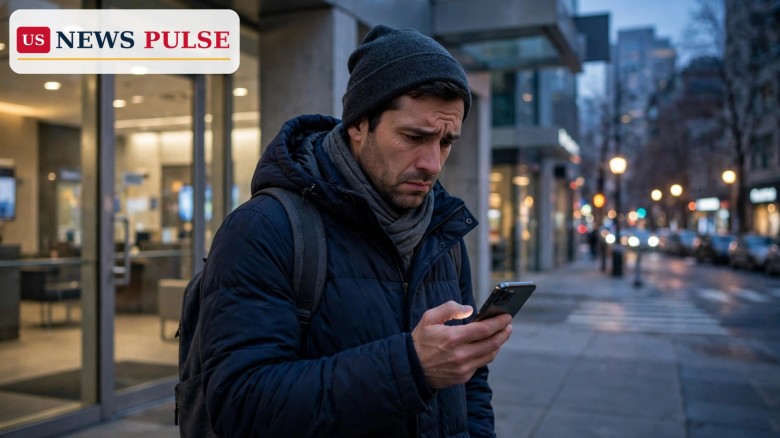
Customers at some of the largest banks in the United States found themselves locked out of their accounts on Monday, November 16, 2026, as online and mobile banking services faltered across the country. JPMorgan Chase, Bank of America, Wells Fargo, U.S. Bank and Truist all drew a surge of problem reports on Downdetector, the outage-tracking service, while payment service Zelle also reported disruption. Chase was hit hardest, with reports passing 4,000 by early afternoon. The banks described the trouble as a technical problem, not a cyberattack, and said customers' money remained safe.
Key Points
- Chase drew more than 4,600 Downdetector reports by 2 p.m. ET on Monday, up from about a dozen at 9 a.m.
- Bank of America, Wells Fargo, U.S. Bank, Truist and Zelle also saw reports climb sharply around midday.
- Chase said the trouble was a technical issue, not a cyberattack, and that customers still had access to their accounts and funds.
- Wells Fargo told customers its online banking was temporarily unavailable and pointed them to ATMs and branches.
- Deposits at FDIC-insured banks remain covered up to $250,000 per depositor, per ownership category.
What Happened
The problems built up through the morning and peaked in the early afternoon. Downdetector showed only about a dozen Chase reports at 9 a.m. ET on Monday, but by 2 p.m. ET Chase reports had passed 4,000, reaching about 4,614, according to the Democrat and Chronicle. Web login was the most common complaint among Chase customers, accounting for 43 percent of reports.
Zelle, the payment service millions of Americans use to send money to friends, family and small businesses, also drew more than 500 reports by early Monday afternoon, about 69 percent of them about funds transfers. The disruption was not limited to one region: reports came from customers across the country, with login pages failing to load, apps timing out and transactions taking far longer than usual.
Background and Context
Online and mobile banking have become the main way most Americans manage their money. Branches still matter, but day-to-day banking now runs through apps and websites, so a login failure can feel like losing access to a wallet.
Downdetector has become the first place many people check when a service stops working. It counts reports from users rather than measuring outages directly, so a spike shows that many people are having trouble at the same time. A jump from about a dozen reports to more than 4,600 in five hours, as Chase saw on Monday, is a clear sign of a widespread problem rather than a handful of isolated glitches.
Bank Outage: What Each Bank Said
Chase moved first to reassure customers, saying the problem was technical and not the work of hackers. "Due to a technical issue, some transactions are taking longer than usual to complete but customers still have access to their accounts and funds," the bank said. The message was aimed at the fear that follows any bank disruption: that money might be missing or accounts might be compromised. Chase gave no time for a full fix.
Wells Fargo was more direct. Its website told customers that "online banking is temporarily unavailable" and directed them to ATMs, branches and customer service instead. Bank of America declined to comment. U.S. Bank and Truist also drew outage reports on Monday, but no public statement from either bank was reported, leaving their customers relying on Downdetector and social media for updates. Zelle runs through the banks themselves, so when a bank's systems struggle, Zelle payments can slow or fail too.
Reactions and Quotes
Chase's statement set the tone for the day: a technical issue, not a cyberattack, with accounts and funds still accessible. The bank's wording mattered because a bank outage raises an immediate question in every customer's mind, and Chase answered it directly, saying customers "still have access to their accounts and funds" even while some transactions ran slowly.
Wells Fargo's message was shorter and more practical. By telling customers that online banking was "temporarily unavailable" and pointing them to ATMs, branches and customer service, the bank acknowledged the failure plainly and gave people somewhere to go. Zelle's response shifted attention back to Chase: the payment service told NBC Chicago that "this is a Chase issue," a short answer that explained why its own users were seeing failed transfers.
Why It Matters
The outage matters because banking is one of the few services almost everyone uses every day, and most of it now happens online. When login fails, people cannot check whether a pay cheque arrived, whether a bill was paid or whether a transfer reached its destination. The uncertainty is often worse than the delay itself, and it spreads quickly when several big banks are affected at once.
It also matters because trust is a bank's core product. Customers hand over their savings on the understanding that the money will be there when they need it, and a day of failed logins tests that trust even when no money is lost. The federal deposit insurance covering up to $250,000 per depositor, per ownership category, at FDIC-insured banks is the backstop behind it. Coming days after a major Microsoft outage and a nationwide flight ground stop, Monday's bank failures are the third high-profile disruption in four days, each with a different cause.
What Happens Next
The banks are expected to restore full service and explain what went wrong, though none had given a firm time for a fix or a detailed cause by Monday afternoon. Customers should watch for updates on each bank's official status page or app, and keep using branches and ATMs while online services recover. Anyone whose payment was delayed should check the transaction history once login works again before sending the money a second time, to avoid a duplicate payment.
People who receive messages claiming to offer help with the outage should be careful: scammers often use bank outages to send fake texts and emails asking for passwords or account numbers. Banks do not ask customers for passwords by text or email.
Frequently Asked Questions
Is my money safe? Yes. Chase said the trouble was a technical issue, not a cyberattack,
Was this a cyberattack? No evidence of one has been reported. Chase described the problem as a technical issue, and no bank said hackers caused the outages.
Why did Zelle go down too? Zelle runs inside the banks' own apps, so trouble in a bank's systems can slow Zelle payments. Zelle told NBC Chicago the problem was a Chase issue.
When will online banking be fixed? No bank had given a firm time by Monday afternoon. Check your bank's official status page and use ATMs and branches in the meantime.
What should I do if a payment did not go through? Wait until you can log in, check your transaction history, and only send the payment again if it is not listed.
For context on recent large service failures, see our report on the Workday outage that locked employees out of payroll and HR systems and the Microsoft 365 outage fixed after 24 hours.
© 2026 US News Pulse. All rights reserved.
 Print
 Save