
Mamdani Disbands NYPD Strategic Response Group in Protest Policing Overhaul - US News Pulse
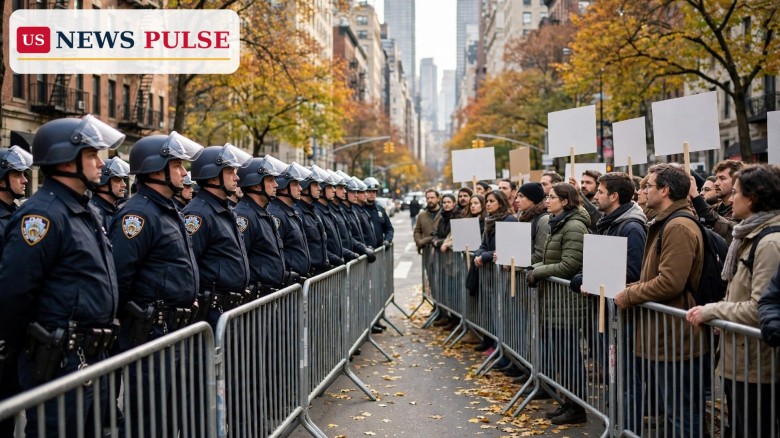
New York City Mayor Zohran Mamdani disbanded the NYPD's Strategic Response Group on Monday, November 16, 2026, carrying out one of the most closely watched promises of his campaign and redrawing how America's largest city polices its protests. Standing alongside Police Commissioner Jessica Tisch, Mamdani said the decade-old anti-terrorism unit will be replaced in part by a new Patrol Support Division, while large demonstrations will be handled by a new civilian-led Community Dialogue and De-escalation Division.
"New Yorkers exercising their constitutional right to protest should not be met with the same police response as a terrorism threat," Mamdani said. The announcement turns a plan first reported last week into a formal decision.
Key Points
- Mamdani disbands NYPD Strategic Response Group: the mayor announced on Monday, November 16, 2026, that the decade-old unit, criticised for excessive force against protesters, will be disbanded.
- The unit's roughly 500 officers will be reassigned within the department before next spring, with some moving to the Counterterrorism Bureau, Commissioner Jessica Tisch said.
- A new civilian-led Community Dialogue and De-escalation Division, unarmed and without arrest powers, will handle large public demonstrations.
- A new Patrol Support Division will replace the disbanded unit in part and, Mamdani said, will police protests differently.
- Civil rights groups cautiously welcomed the move; police unions said it would endanger officers and the public.
What Happened
Mamdani made the announcement on Monday alongside Tisch, the commissioner he retained after taking office. The Strategic Response Group, formed in 2015, has handled riots, large protests, civil disorders, major events and counterterrorism threats.
Under the new arrangement, protest response will be split from counterterrorism. The civilian division will be unarmed and without arrest powers, while the Patrol Support Division takes over part of the disbanded unit's work. A spokesperson for the mayor did not say how the new division would differ from the old unit or whether former members would staff it.
Tisch said about 500 officers would be reassigned before next spring, with some going to the Counterterrorism Bureau. She runs one of the world's largest police forces, with a nearly $7 billion annual budget. "Nothing would change about the way that the NYPD responds to crowd control conditions," she told ABC's Eyewitness News.
Background and Context
The move fulfils a campaign pledge. In December 2024 Mamdani wrote on X that the unit "has cost taxpayers millions in lawsuit settlements + brutalized countless New Yorkers exercising their first amendment rights". He reaffirmed the pledge in September, saying its counterterrorism and protest-response roles should not be dual purposes.
Critics say the unit's officers used pepper spray and mass arrests against demonstrators, including during the 2020 protests against police violence. Attorney General Letitia James, the New York Civil Liberties Union and others sued over excessive force, and a 2023 settlement rebuked the unit and imposed new restrictions on protest policing.
The plan to disband the unit was first reported last week. Politico reported on Thursday, November 12, citing three people with knowledge of the announcement, that Mamdani was preparing to act, and City Hall confirmed it. "As the Mayor has said, our administration will disband the Strategic Response Group and separate protest response from counterterrorism," spokesperson Dora Pekec said. The plan could be formalised by executive order.
Tisch has defended the unit. At a City Council budget hearing in March, she said the NYPD facilitated 4,255 protests in 2025, with the unit available at 245 of them, about 6 percent.
Mamdani Disbands NYPD Strategic Response Group
The announcement is the clearest test yet of how far Mamdani intends to go in reshaping the department he now leads. It is one of the most concrete promises from his campaign, and acting on it in his first weeks in office signals that he intends to keep it.
Separating protest response from counterterrorism changes who shows up at a demonstration and how they are trained. Counterterrorism work stays with the police, while the new civilian division takes the lead at large demonstrations. The open questions are staffing, training and timing.
Reactions and Quotes
The New York Civil Liberties Union cautiously welcomed the announcement, but warned the new Patrol Support Division might end up a rebranding of the Strategic Response Group. It said it will be "monitoring this new unit closely, including for compliance with our 2023 settlement with the City."
The Legal Aid Society commended the disbanding of "one of the NYPD's most notorious units", but said the new unit "will require vigilant oversight to ensure that the SRG's tactics are not repeated."
Police unions criticised the move. "The next time your life is disrupted by demonstrators who are blocking bridges and roadways or causing chaos on our streets, remember: Mayor Mamdani is on their side, not yours," said Patrick Hendry, president of the Police Benevolent Association.
Why It Matters
The decision touches the daily reality of protest in America's largest city, where thousands of demonstrations take place each year. How they are policed shapes whether people feel safe exercising their First Amendment rights.
It is also a test of Mamdani's governing style. He won office promising a different approach to public safety, and other cities are watching. Mamdani-backed candidates won all three New York House seats in the midterms, showing the strength of the coalition behind his agenda.
What Happens Next
The next steps are the details City Hall has not given: the leadership of the civilian division, the staffing of the Patrol Support Division, and the timeline for reassigning about 500 officers before next spring.
Watch for whether the change comes as an executive order, and for the City Council's scrutiny of the new divisions. The first real test will be the next large protest. The NYCLU has said it will be watching closely.
Frequently Asked Questions
What is the NYPD Strategic Response Group?
The Strategic Response Group is a roughly 500-officer NYPD unit formed in 2015 that responds to riots, large protests, civil disorders, major events and counterterrorism threats.
Why is Mamdani disbanding it?
Mamdani pledged in his campaign to disband the unit, arguing its counterterrorism and protest-response roles should not be combined, and pointing to its record of excessive force.
Who will handle protests instead?
Large demonstrations will be handled by a new civilian-led Community Dialogue and De-escalation Division, unarmed and without arrest powers, with a new Patrol Support Division taking over part of the old unit's work.
What happens to the unit's officers?
About 500 officers will be reassigned within the NYPD before next spring, Commissioner Jessica Tisch said, with some moving to the Counterterrorism Bureau.
What do critics and supporters say?
Civil rights groups cautiously welcomed the move but warned the new unit must not be a rebranding, while police unions said it would endanger officers and the public.
© 2026 US News Pulse. All rights reserved.
 Print
 Save