
United Airlines Outage Delays 554 Flights Days After FAA Ground Stop - US News Pulse
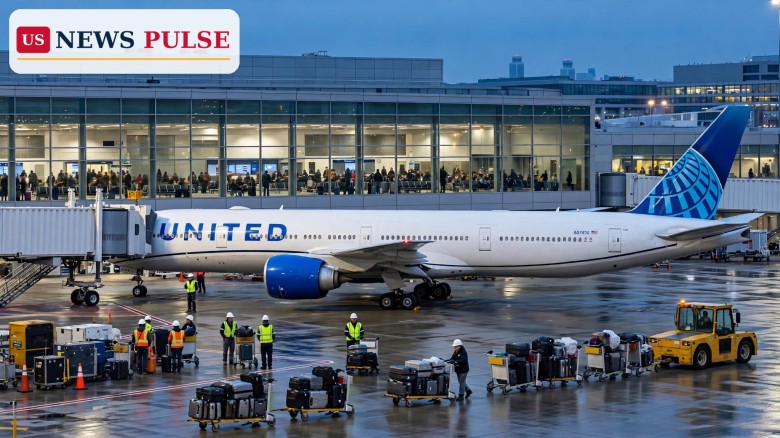
United Airlines suffered a nationwide system outage on Monday, November 16, 2026, grounding departing mainline flights across the United States for about 90 minutes and delaying 554 flights — just three days after a Federal Aviation Administration ground stop brought American air travel to a standstill. The failure began at about 4 p.m. ET, when pilots could not receive the dispatch data they need to take off, and was resolved at about 6 p.m. ET, the airline said. It was the second major disruption to US aviation in four days.
Key Points
- A United system outage from about 4 p.m. ET on Monday, November 16, stopped departing mainline flights nationwide because pilots could not receive dispatch data.
- FlightAware counted 554 delayed United flights — about 17% of the schedule — and 22 cancellations as of 6:10 p.m. ET.
- Chicago O'Hare, United's largest hub, was hit hardest, with 220 delayed departures.
- Flights already in the air and United Express regional flights were unaffected, and United said the outage was not cybersecurity-related.
- The failure came three days after the FAA's nationwide ground stop on Friday, November 13, and on the same day as a major bank outage linked to Chase.
What Happened
The outage struck in the Monday evening travel peak. At about 4 p.m. ET, United's system stopped transmitting the dispatch data pilots need before a flight can legally leave the gate — final weight-and-balance figures and performance calculations. Without them, departing mainline flights could not go. Air-traffic-control audio captured the confusion: one pilot told controllers, "We're having an outage where nothing is transmitting at this moment... It's a systemwide issue."
United said the issue was resolved about an hour later, at about 6 p.m. ET, and apologised, saying: "We have resolved a technology issue that delayed flight departures." The Associated Press put the disruption at roughly 90 minutes. By 6:10 p.m. ET, FlightAware counted 554 delayed United flights and 22 cancellations, with O'Hare seeing 220 delayed departures. Flights already in the air and United Express regional flights were unaffected, and United said the outage was not cybersecurity-related. No root cause has been publicly identified.
Background: A Weekend of Chaos for US Aviation
The outage landed on a system already reeling. On Friday, November 13, the FAA ordered a nationwide ground stop after a router flooded the agency's network, halting nearly all departures for almost five hours — the longest nationwide interruption since the September 11, 2001 attacks. Nearly 10,000 flights were cancelled on Friday alone.
The chaos dragged through the weekend: more than 6,150 flights cancelled and 7,300 delayed by Saturday evening, United and Delta imposing their own ground stops at O'Hare and LaGuardia, and 2,300 more cancellations on Sunday. FAA Administrator Bryan Bedford said schedules were unlikely to return to normal until late Sunday. Transportation Secretary Sean Duffy has called for $50 billion to upgrade air-traffic control, saying: "This is an emergency."
United Airlines Outage: What Went Wrong
United's outage was a different kind of failure from the FAA's, but it exposed the same fragility. The FAA's ground stop was a failure of the air-traffic system itself; United's was a failure inside the airline's own dispatch operation. The result at the gate was the same: aircraft ready to fly, crews ready to work, and nowhere to go.
Dispatch data is not a convenience — it is a legal requirement. Before every departure, pilots must receive final weight-and-balance figures and performance calculations, which set the speeds and runway length needed for a safe takeoff. When that data stops flowing, the aircraft stays put, however mechanically sound it is. United has not said whether the fault was in its hardware, its software or its network. The outage coincided with a major bank outage linked to Chase, but no connection has been suggested.
Reactions and Quotes
United apologised to affected customers and stressed that there was no indication the outage was cybersecurity-related, a point it was keen to make clear after the FAA's weekend failure had already raised questions about the resilience of US aviation systems.
The pilot's radio call became the clearest public account of the failure as it happened. FlightAware's figures told the rest of the story: 554 delays and 22 cancellations by early evening, with O'Hare accounting for 220 delayed departures on its own. The knock-on effects typically take a day or more to clear.
Why It Matters
Two major failures in four days is a pattern, not a coincidence, and it matters because the systems that failed are the ones US air travel cannot function without. The FAA's ageing air-traffic-control network and the airlines' own dispatch systems are both single points of failure: when either one stops, tens of thousands of people stop with it.
It also matters because of where and when it happened. O'Hare is one of the busiest airports in the world and United's largest hub, so a failure there ripples across the country. And it happened with the Thanksgiving travel rush days away, when there is little slack in the system to absorb a second disruption.
What Happens Next
United is investigating what caused the outage, though it has not given a timeline for an explanation. Travellers with United bookings should check their flight status before heading to the airport, as residual delays can linger after the system is restored.
For the full picture of the weekend's disruption, read our report on the flight chaos that dragged into Sunday, and for United's other recent headlines, see United's ban on AI agents booking flights and the bomb threat on United Flight 2174.
Frequently Asked Questions
What caused the United Airlines outage?
No root cause has been publicly identified. United said it resolved a technology issue that delayed departures, and said there was no indication the outage was cybersecurity-related.
How many flights were delayed?
FlightAware counted 554 delayed United flights — about 17% of the schedule — and 22 cancellations as of 6:10 p.m. ET on Monday, November 16. Chicago O'Hare alone saw 220 delayed departures.
Was the outage related to the FAA ground stop?
No. The FAA's nationwide ground stop on Friday, November 13, was caused by a router flooding the agency's network. United's outage on Monday was a separate failure inside the airline's own dispatch system, three days later.
Were flights already in the air affected?
No. Flights already airborne were unaffected, and United Express regional flights continued to operate. Only departing mainline flights were held, because their pilots could not receive dispatch data.
What should affected passengers do?
Check flight status with United before travelling, as delays can linger after the system is restored. Passengers whose flights were cancelled or significantly delayed should contact the airline about rebooking.
© 2026 US News Pulse. All rights reserved.
 Print
 Save