
Babies Born With Measles in US for First Time in Decades - US News Pulse
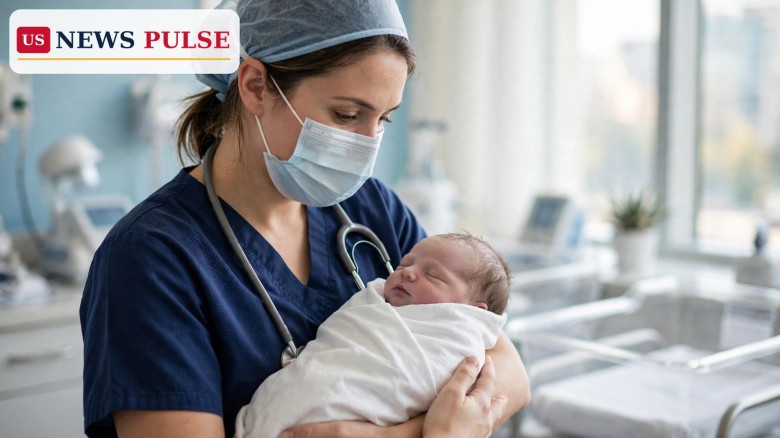
For the first time in decades, babies in the United States are being born with measles. Doctors have reported 13 cases of congenital measles since the start of 2025, a development health experts are calling a brand-new phenomenon in the country's worst measles outbreak in more than 30 years.
The figures were published on Monday, November 16, 2026, in a public health alert by NEJM Evidence with the University of Minnesota's infectious-disease research centre. It counts 13 congenital cases reported to the Centers for Disease Control and Prevention from the start of 2025 through September 2026, alongside 112 confirmed measles cases during pregnancy.
"This is a brand new phenomenon," said Michael Osterholm, the centre's director. Congenital measles happens when a pregnant woman passes the virus to her fetus in the womb, and it can cause serious complications or death for newborns.
Key Points
- Thirteen babies were born with congenital measles in the United States from the start of 2025 through September 2026, per CDC figures published on November 16, 2026.
- The same alert counted 112 confirmed measles cases during pregnancy, almost all among women who were unvaccinated or whose vaccination status was unknown.
- Pennsylvania, the outbreak epicentre, has recorded 1,542 cases and seven deaths, with at least 101 pregnant women diagnosed by November 14.
- An estimated 25 to 30 per cent of babies born to someone who catches measles shortly before delivery may become infected, the American Academy of Pediatrics says.
- More than 7,500 Americans have caught measles in the past two years, with 5,412 confirmed cases in 2026 alone, the most since 1991.
What Happened
The alert lays out a problem that has crept up on doctors as the outbreak has grown. Thirteen babies were born already infected over 21 months, and the true number may be higher, because congenital cases are easily missed when a newborn's rash is mistaken for something else or the mother's infection was never diagnosed.
Pennsylvania sits at the centre of the new pattern. The state has recorded 1,542 measles cases and seven deaths, and at least 101 pregnant women had been diagnosed there by November 14. Its hospital networks have documented nearly two dozen congenital or neonatal cases. Nationally, CDC data updated on November 13 puts confirmed cases in 2026 at 5,412, the highest annual total since 1991.
Congenital Measles: A Brand-New Phenomenon
Congenital measles is rare because measles itself had been eliminated in the United States for a generation. When a pregnant woman catches the virus, it can cross the placenta and infect the fetus. A baby born with measles can arrive prematurely, underweight and already fighting an infection that attacks the lungs and the brain. In the most serious cases the infection is fatal.
Even babies who survive face a lasting risk: subacute sclerosing panencephalitis, or SSPE, a rare, progressive and almost always fatal brain disorder that typically emerges seven to 10 years after infection. Children infected around birth face a higher risk than children infected later. There is no antiviral drug for measles, so care for a newborn is supportive, easing breathing and fever. Prevention is the only real defence, and it has a catch: the MMR vaccine is not given during pregnancy, so protection must be in place before conception.
Background and Context
The outbreak began in Texas in January 2025 and spread from state to state, carried by a single strain that has now circulated without a break for more than a year. That unbroken chain cost the United States its measles elimination status, which the Pan American Health Organization revoked in November after 26 years. The US lost its measles-free status after 26 years.
Falling vaccination rates drive the resurgence. Kindergarten MMR coverage is 92.4 per cent, below the roughly 95 per cent needed for herd immunity, and about 96 per cent of this year's cases have been in people unvaccinated or of unknown status. Two doses of MMR give about 97 per cent protection, but only if enough people have it. The CDC has confirmed six measles deaths in 2026, double the three in all of 2025. Six measles deaths confirmed in 2026; cases passed 5,000 in the latest CDC update.
Reactions and Quotes
Osterholm's warning frames the cases as something new in American medicine. Doctors who trained after elimination in 2000 have treated measles as a disease of childhood, not of birth, and are now learning to recognise it in newborns. The American Academy of Pediatrics puts the danger in numbers: an estimated 25 to 30 per cent of babies born to someone who gets measles shortly before delivery may become infected.
Other doctors have been blunt about the wider outbreak. Dr Thomas Lew of Stanford University, reacting to the CDC's figures this month, called six deaths from "an entirely preventable disease" "a travesty of our public health system".
Why It Matters
Newborns are among the least protected people in an outbreak. The first MMR dose is not given until 12 to 15 months of age, so a baby's only shield in its first year is its mother's immunity, and the protection of the community around it. When vaccination rates fall, that shield thins, and congenital measles is what the gap looks like.
The cases also show the outbreak is no longer only a story of case counts. Losing elimination status was a classification; babies born infected is a clinical reality, with a decade-long SSPE risk attached to every case. If coverage keeps falling, officials warn, congenital measles will stop being rare at all.
What Happens Next
The CDC will keep publishing weekly case updates, which will show whether the outbreak is still growing or beginning to slow. State health departments are expected to step up catch-up vaccination campaigns where coverage has fallen furthest, and doctors urge women of childbearing age to check their immunity before becoming pregnant. Hospitals in outbreak states are watching for more neonatal cases, and the alert's authors expect the count to rise if transmission continues at its current pace.
Frequently Asked Questions
What is congenital measles?
Measles passed from a pregnant woman to her fetus in the womb, so the baby is born already infected. It can cause premature birth, low birth weight, serious complications or death.
How many babies have been born with measles in the US?
Thirteen congenital cases were reported to the CDC from the start of 2025 through September 2026; the true number may be higher, as cases can be missed.
Can measles during pregnancy be prevented?
Yes, by vaccination before pregnancy. Two doses of MMR give about 97 per cent protection, but the vaccine is not given during pregnancy, so immunity must be in place before conception.
What is SSPE and why do doctors mention it?
A rare, progressive and almost always fatal brain disorder that typically emerges seven to 10 years after a measles infection. Children infected around birth face a higher risk.
How bad is the US measles outbreak now?
The CDC has confirmed 5,412 cases in 2026 alone, the most since 1991, with more than 7,500 in the past two years. The US has lost its measles elimination status, held since 2000, and six deaths have been confirmed.
© 2026 US News Pulse. All rights reserved.
 Print
 Save