
Vance Tells Americans 'We Do Not See Some Crisis Coming' After Week of Outages - US News Pulse
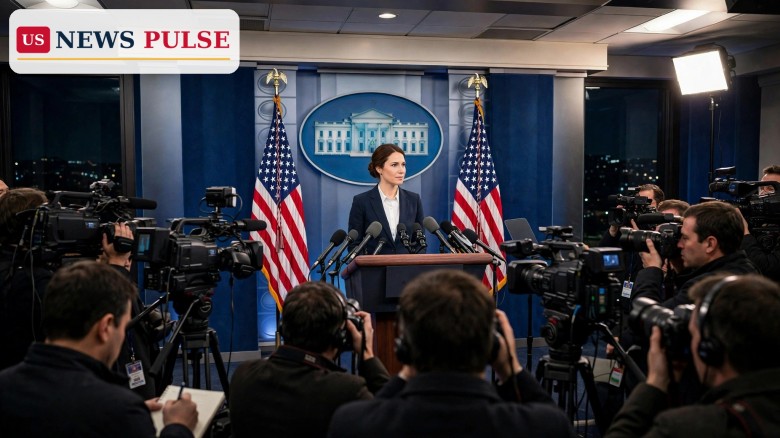
WASHINGTON — After a week in which Microsoft, the Federal Aviation Administration, major banks and United Airlines all suffered outages, Vice President JD Vance and Homeland Security Secretary Markwayne Mullin delivered the same message to Americans on Monday, November 16, 2026: there is no crisis coming, and there is no evidence the failures were connected. The Vance Mullin no crisis message came as online speculation swirled about whether the breakdowns were a coordinated attack.
Vance, in a Fox News interview released Monday, was direct. "We do not see some crisis coming down. But you have to be prepared for everything," he said. Asked whether friends should build bunkers or stockpile food, he answered: "My answer to that is no."
Key Points
- Vice President JD Vance said on Monday, November 16, 2026: "We do not see some crisis coming down," and told Americans not to build bunkers or stockpile food and water.
- Homeland Security Secretary Markwayne Mullin said there was no evidence the outages were connected: "I can tell you with 98% certainty, we're not seeing the cyber attack."
- Mullin added: "Breathe. The homeland is secure," saying the government's cybersecurity agency told him the outages were "all individually unrelated."
- The failures included a Microsoft outage of roughly two days, an FAA failure that caused thousands of flight cancellations, a Chase outage and a short United Airlines outage.
- Transportation Secretary Sean Duffy demanded up to $50 billion in emergency FAA funding, while Senate Majority Leader John Thune asked what happened to the $12.5 billion approved last year.
What Happened
Vance spoke after returning to Washington from campaign stops in New York and Ohio. Friends had asked him whether to prepare for something worse, he said, and his answer was to stay calm. He also called reports of Pentagon bases preparing to operate off the grid for 90 days "basic good government" rather than a sign of trouble.
Hours later, Mullin appeared on Fox News Monday night with the same reassurance. He said the government's cybersecurity agency had told him the outages were "all individually unrelated" and that there was no evidence of a coordinated attack. "Breathe. The homeland is secure," he said.
Background: A Week of Outages
The run of failures began on Thursday, November 13, when a Microsoft outage left people around the world without Outlook, Teams and other tools for roughly two days. Some estimates put the cost in lost productivity at potentially $7 billion.
On Friday, November 14, an FAA systems failure caused thousands of flight cancellations nationwide. The failure was blamed on a single newly installed router at a remote radio outpost in Arkansas, a small piece of equipment with an outsized effect on the airspace system.
On Monday, November 16, thousands of Chase customers had trouble with online accounts and branches because of what the bank called a "software bug." Smaller issues appeared at Bank of America, Wells Fargo and US Bank, linked to Zelle transfers to Chase. The same afternoon, United Airlines suffered a widespread but short-lived outage lasting about 30 minutes, with fewer than 150 flights impacted.
Each failure had its own explanation, and none of the companies or agencies involved has blamed a cyberattack. But coming one after another in four days, the outages fed online theories that something bigger was happening, which is what Vance and Mullin were answering.
The Vance Mullin "No Crisis" Message
The message from both men was the same: the systems failed for ordinary, separate reasons, and the government sees no threat behind them. Vance framed preparation as common sense, not alarm: Americans should be prepared for everything without expecting disaster.
Mullin was more specific. "I can tell you with 98% certainty, we're not seeing the cyber attack," he said. The Cybersecurity and Infrastructure Security Agency had told him the outages were "all individually unrelated."
Reactions and Quotes
Vance's comments drew the most attention. "We do not see some crisis coming down. But you have to be prepared for everything," he said. On bunkers and stockpiling, he was blunt: "My answer to that is no."
Mullin's line was simpler still. "Breathe. The homeland is secure," he said, adding that with "98% certainty, we're not seeing the cyber attack."
Not everyone sounded so calm. Transportation Secretary Sean Duffy demanded up to $50 billion in emergency FAA funding over the weekend. Senate Majority Leader John Thune and other Republicans pushed back, demanding to know what happened to the $12.5 billion Congress approved last year, of which only $474.9 million had been spent as of June.
Why It Matters
The week exposed how fragile the systems Americans depend on can be. A single router in Arkansas grounded thousands of flights. A software bug locked customers out of the country's biggest bank. A Microsoft failure idled workplaces around the world for two days.
The Duffy-Thune funding clash also shows the administration itself is divided over what to do. Duffy wants tens of billions in emergency money now. Thune wants an accounting of the billions already approved first. That argument will shape how quickly the FAA's ageing systems are fixed.
For the public, the question was simpler: attack or accident? Vance and Mullin answered it as clearly as they could — a run of unrelated accidents.
What Happens Next
The FAA funding fight is the next test. Congress must decide whether to approve Duffy's emergency request, and Thune's demand for an accounting of the earlier $12.5 billion is likely to slow any deal.
The companies involved will also face questions. Chase blamed a software bug, and Microsoft and the FAA pointed to technical failures of their own. Regulators will want to know whether the same weaknesses could cause a repeat.
Vance, meanwhile, heads to Asia with President Donald Trump for summits in Manila and Shenzhen, and the planned trilateral meeting with Xi Jinping and Vladimir Putin on Thursday, November 19.
Frequently Asked Questions
What did JD Vance say about a crisis?
"We do not see some crisis coming down. But you have to be prepared for everything," Vance said in a Fox News interview released Monday, November 16, 2026.
Should Americans build bunkers or stockpile food?
"My answer to that is no," Vance said when asked whether friends should build bunkers or stockpile food and water.
What did Markwayne Mullin say about the outages?
Mullin said there was no evidence the outages were connected: "I can tell you with 98% certainty, we're not seeing the cyber attack," and "Breathe. The homeland is secure."
What outages happened last week?
A Microsoft outage of roughly two days, an FAA failure that caused thousands of flight cancellations, a Chase outage blamed on a software bug, and a short United Airlines outage of about 30 minutes.
Why is there a fight over FAA funding?
Duffy wants up to $50 billion in emergency FAA funding, but Thune wants to know what happened to the $12.5 billion Congress approved last year, of which only $474.9 million had been spent as of June.
Read more on US News Pulse: Bank outage locks out Chase, Bank of America and Wells Fargo customers and United Airlines outage delays 554 flights days after FAA ground stop.
© 2026 US News Pulse. All rights reserved.
 Print
 Save