
Judge Blocks DHS Curbs on Foreign Student Internships and Practical Training
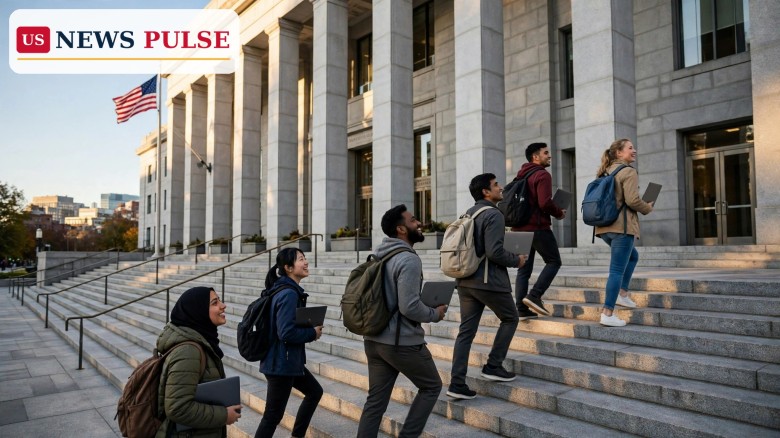
A federal judge in Boston has blocked the Trump administration from enforcing new curbs on foreign student internships, the second courtroom victory in two days for international students and American universities over a student-visa policy. US District Judge Julia Kobick issued a preliminary injunction on Tuesday, November 17, 2026, barring the Department of Homeland Security from enforcing two August directives that sharply narrowed internships and practical training for students on F-1 visas.
The ruling protects a programme that lets more than 140,000 international students a year gain paid work experience with American employers. Judge Kobick found the government had likely acted unlawfully by rewriting a rule that had stood for more than 35 years without admitting it. Her order keeps the longstanding interpretation of curricular practical training, known as CPT, in place while the lawsuit moves forward.
Key Points
- US District Judge Julia Kobick in Boston issued a preliminary injunction on Tuesday, November 17, 2026, blocking two August directives that narrowed foreign students' internships and practical training.
- The directives, issued on August 12 and August 24, 2026, said internships qualified as curricular practical training only if mandatory for every student in a degree programme, excluding elective training for academic credit.
- Judge Kobick found the directives were likely arbitrary and capricious under the Administrative Procedure Act because the department failed to acknowledge a fundamental change to a 35-year interpretation.
- The lawsuit, Association of American Universities v. DHS, was filed on October 5, 2026, by four higher-education groups, including the Association of American Universities and NAFSA.
- About 140,775 student visa holders were authorised for curricular practical training in 2024, according to ICE, with Amazon and Tesla the top two employers that year.
What Happened
The injunction targets two directives issued in August by US Immigration and Customs Enforcement's Student and Exchange Visitor Program, which oversees the student-visa system. They redefined when an internship counts as curricular practical training, the authorisation letting F-1 students take jobs directly related to their field of study. Under the new rules, an internship qualified only if mandatory for every student in a degree programme; elective training for academic credit no longer counted, even when closely tied to the student's field.
That broke with the interpretation applied for more than three decades, under which school-authorised training counted if it was directly related to the student's field and integral to the curriculum. Judge Kobick ruled the department had likely violated the Administrative Procedure Act, because it failed to acknowledge what she called a fundamental change. "Correct or not, this new interpretation is inconsistent with the government's previous position," she wrote: an agency that reverses course must say so and explain why.
Background: How Curricular Practical Training Works
Curricular practical training has been central to the American student-visa system for decades. It allows international students to work off campus in jobs that are an integral part of their academic programme, usually through internships arranged or approved by their university. Unlike optional practical training, used mostly after graduation, CPT is woven into the degree itself, and it is one of the main ways foreign students gain American work experience.
For employers, CPT is a pipeline: in 2024, about 140,775 student visa holders were authorised for it, according to ICE, and the top two employers that year were Amazon and Tesla. The directives landed mid-recruiting season, and some universities, including Stanford, had already paused CPT applications for internships not required for degree completion since September 1. On Monday, another Boston federal judge, F. Dennis Saylor IV, struck down a separate rule that would have ended duration of status for international students and capped their stay at four years.
Judge Kobick Blocks DHS Student Internship Curbs
The lawsuit was filed on October 5, 2026, as Association of American Universities v. DHS, case number 1:26-cv-14520 in the District of Massachusetts. Four groups brought it: the Association of American Universities, the Presidents' Alliance on Higher Education and Immigration, NAFSA, and the Association of Independent Colleges and Universities in Massachusetts. Their argument was straightforward: for more than 35 years, the government had treated curricular practical training as available when a school authorised it and the work was directly related to the student's field and integral to an established curriculum. The August directives quietly replaced that understanding with a far narrower test, through internal guidance rather than a formal rulemaking. Judge Kobick agreed the challengers were likely to prevail, since an agency changing a longstanding position must acknowledge the change and explain it.
Reactions
The higher-education groups that brought the suit welcomed the ruling as a reprieve for students caught mid-year. University leaders argued the directives would have forced them to redesign degree programmes and tell students placements they had arranged no longer counted. Immigration lawyers said the injunction brings immediate relief, but cautioned students to check with their university's international office before starting an internship.
Why It Matters
The ruling matters for three reasons. First, it protects the work opportunities of tens of thousands of international students already in the United States: about 140,775 students were authorised for CPT in 2024 alone. Second, it matters for American universities, which compete globally for talented students, as international enrolment has already fallen sharply, with arrivals down 28 percent in August from 2024 levels. Third, it matters as a precedent: two Boston judges have now, on consecutive days, found that the Department of Homeland Security failed to follow the Administrative Procedure Act when it rewrote student-visa rules.
What Happens Next
The case now moves toward a fuller hearing, unless the government appeals to the First Circuit or withdraws the directives. Either path will take months, and the old CPT rules remain in force meanwhile. Universities are expected to resume processing CPT applications under the longstanding interpretation. The government could also issue a new rule through formal rulemaking. For now, the August directives cannot be enforced, and international students can plan internships under the rules they have known for decades.
Frequently Asked Questions
What did Judge Kobick block?
She blocked two Department of Homeland Security directives from August 2026 that narrowed curricular practical training, saying internships counted only if mandatory for every student in a degree programme.
What is curricular practical training?
Curricular practical training, or CPT, lets F-1 international students take internships directly related to their field of study as part of their degree, with their university's approval. About 140,775 student visa holders were authorised for CPT in 2024.
Why did the judge rule against the government?
Judge Kobick found the directives were likely arbitrary and capricious under the Administrative Procedure Act because the department failed to acknowledge a fundamental change to a 35-year interpretation and did not explain the reversal.
Does this ruling affect the four-year student visa cap?
No, that was a separate case. A different Boston judge, F. Dennis Saylor IV, struck down the four-year cap on Monday, November 16, 2026. Both rulings found the department failed to follow the Administrative Procedure Act.
What should international students do now?
Students should contact their university's international student office before starting an internship, to confirm their CPT authorisation under the restored rules.
Related coverage: Judge Strikes Down DHS Four-Year Cap on International Student Stays.
© 2026 US News Pulse. All rights reserved.
 Print
 Save