
US Strikes Iran's Qeshm Island Again as Strait of Hormuz War Escalates
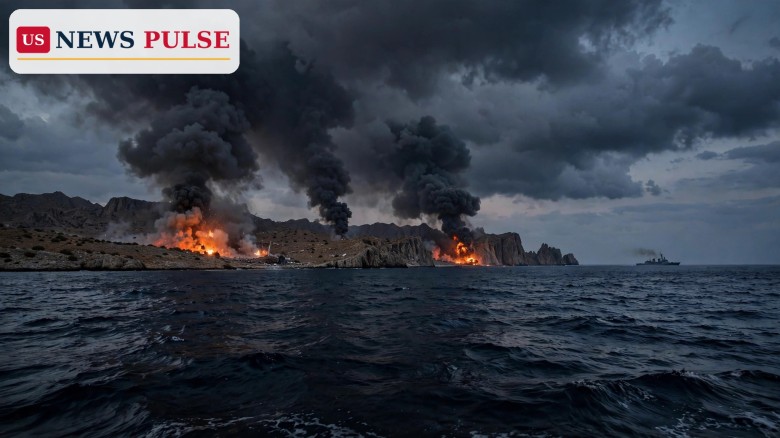
The United States struck Iran's Qeshm Island again on Tuesday evening, November 17, ending a brief lull in the fighting in the Strait of Hormuz. The attacks came hours after Iranian forces targeted an American radar site in Bahrain for the third time in four days, hitting the island at the narrowest chokepoint of the world's most important oil waterway.
Key Points
- The US carried out several attacks on Qeshm Island in the Strait of Hormuz on Tuesday evening, November 17, 2026.
- IRNA said at least five to six explosions were heard across the island, and social media videos showed plumes of smoke over Qeshm.
- A US military official later confirmed to Reuters that the strikes targeted a missile launch site.
- A provincial official said the attack caused no damage to residential, commercial or infrastructure areas.
- The strikes followed the third Iranian drone attack in four days on a US radar facility in Bahrain, which US officials said was intercepted without damage.
What Happened
The attacks came on Tuesday evening, after a short break in the fighting that had raised brief hopes of a step back. Instead, the strikes marked a fresh escalation. IRNA reported at least five to six explosions across the island, and videos on social media showed thick plumes of smoke rising over Qeshm.
Ahmad Nafisi, deputy governor of Hormozgan province, moved quickly to play down the damage. "The American attack on locations on Qeshm island caused no damage to residential, commercial, or infrastructural areas," he said. "The situation on Qeshm island is under control, and all relief, service, and executive agencies are on full alert." At first there was no comment from US authorities, but a US military official later confirmed to Reuters that the strikes had hit a missile launch site on Qeshm.
Background: A Strait Already on Edge
Qeshm sits at the narrowest point of the Strait of Hormuz, the channel through which a large share of the world's seaborne oil passes daily. US forces had already struck Qeshm earlier this month, and the island has been at the centre of the fighting since the US-Iran conflict flared into open hostilities. Our earlier coverage: US fired projectiles at Qeshm Island in Sunday night attack and Iran says it shot down two US drones as three more tankers hit mines.
The wider campaign has spread far beyond the island. Iranian forces and their allies have hit tankers with drones and mines across the Gulf, while the United States has answered with strikes on Iranian positions and a naval build-up that now includes a third aircraft carrier. The latest incidents bring the confirmed tally of attacks on shipping this month to 17, according to Seatrade Maritime.
US Strikes on Qeshm Island: What We Know So Far
What is known so far comes largely from Iranian state media and provincial authorities. The strikes hit several locations on Qeshm on Tuesday evening, with explosions heard across the island and smoke visible in social media footage. The Iranian account stresses that no homes, businesses or infrastructure were damaged, and officials say emergency services are on full alert across Hormozgan province.
The American side has said far less. The confirmation from a US military official that a missile launch site was the target is, for now, the clearest official word on the strikes' aim. The United States has said it is targeting the launch sites, radars and drone facilities Iran uses to threaten American forces and Gulf shipping, rather than civilian areas. No casualty figures have been released, and the full extent of the damage remains unclear.
Reactions and Quotes
The Iranian response was swift and carefully worded. Nafisi's statement that the attack caused no damage to homes, businesses or infrastructure was designed to reassure residents and deny Washington a propaganda win. His second line — that the situation is under control and all relief, service and executive agencies are on full alert — was a signal that the province was braced for more.
Hours before the Qeshm strikes, Iran's Islamic Revolutionary Guard Corps announced that its combat drones had carried out a "precision operation" against a US-operated radar facility at Sheikh Isa Air Base in Bahrain, the third such attack in four days. US officials said the drones were intercepted, with no damage to American equipment. The IRGC also claimed it had downed an American MQ-1 Predator drone south of Qeshm, the 18th such claim since the war began. Washington has not confirmed that claim.
Why It Matters
The return of direct strikes on Iranian soil shows the lull in fighting was just that — a lull, not a ceasefire. Each new round has been more intense than the last. The Strait of Hormuz carries a large share of the world's oil, and every strike near it raises the risk of a shipping disruption that would hit energy prices far beyond the Gulf.
The fighting is also no longer confined to one theatre. In a few days, the conflict has touched Bahrain, the waters off Oman, the approaches to the Strait and now Qeshm itself. The diplomatic track — including a planned meeting between President Donald Trump and Chinese President Xi Jinping in Shenzhen this week — has so far produced no breakthrough.
What Happens Next
The immediate question is whether the Qeshm strikes draw an Iranian answer, and how quickly. Tehran has answered previous American strikes with drone attacks on US bases and with claims of downed aircraft, and the pattern of the last few days suggests another round is likely. Watch, too, for the official American account: the Pentagon has so far said little, and a fuller statement would show how Washington wants this round to be read. Shipping advisories and oil prices will be the earliest signs of whether the escalation is widening or being contained.
Frequently Asked Questions
What happened on Qeshm Island on Tuesday evening?
US forces carried out several attacks on Qeshm Island in the Strait of Hormuz on Tuesday evening, November 17, 2026. IRNA said at least five to six explosions were heard, and a US military official later confirmed to Reuters that a missile launch site was targeted.
Was anyone hurt or was anything damaged?
Iranian official Ahmad Nafisi said there was no damage to residential, commercial or infrastructure areas and the situation was under control. No casualty figures have been released.
Why did the US strike Qeshm now?
They came hours after Iranian forces targeted a US radar facility at Sheikh Isa Air Base in Bahrain for the third time in four days. The US says it is targeting the launch sites Iran uses to threaten American forces and Gulf shipping.
Where is Qeshm Island and why does it matter?
Qeshm is Iran's largest island, at the narrowest chokepoint of the Strait of Hormuz, through which a large share of the world's seaborne oil passes. US forces had already struck it earlier this month.
What happens next in the conflict?
Attention turns to whether Iran answers, what the Pentagon says officially, and whether shipping through the Strait is disrupted. The diplomatic track, including President Trump's meeting with China's Xi Jinping this week, has produced no breakthrough.
© 2026 US News Pulse. All rights reserved.
 Print
 Save