
Hung Cao Navy Secretary Hearing Puts Iran War Costs in Focus - US News Pulse
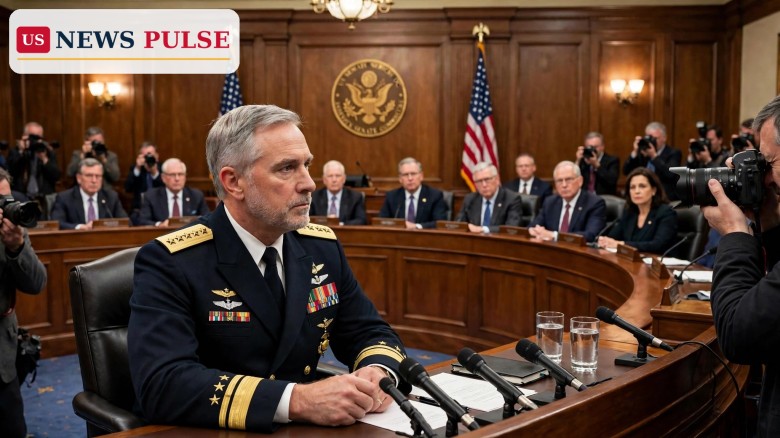
The Hung Cao Navy secretary hearing on Tuesday put a price on the war with Iran: about $32.5 million a day to maintain the naval blockade of Iranian shipping, and at least $400 million in damage from Iranian strikes on the Navy's headquarters in Bahrain. Acting Navy Secretary Hung Cao, testifying at his confirmation hearing before the Senate Armed Services Committee, said plainly: "This war, again, I know it's a strain on our Navy." He also confirmed eight sailors in the USS Abraham Lincoln strike group attempted suicide during a 10-month deployment, and said deployments now average nearly a year at sea, with only 286 ships against a requirement of 355.
Key Points
- Acting Navy Secretary Hung Cao told the Senate Armed Services Committee on Tuesday that the Iran war is straining the Navy, at his confirmation hearing for the permanent post.
- He confirmed the naval blockade of Iranian shipping costs about $32.5 million a day, a figure raised by Senator Elizabeth Warren.
- Iranian strikes on the Navy's 5th Fleet headquarters in Bahrain caused at least $400 million in damage, but Cao could not give a full assessment because the area is "nonpermissive" for US personnel.
- Eight sailors in the USS Abraham Lincoln strike group attempted suicide during an extended 10-month deployment, Cao confirmed in a letter to Senator Kirsten Gillibrand.
- The Navy has 286 ships against a requirement of 355, and deployments now average nearly a year at sea instead of the seven-month goal.
What Happened
Cao appeared on Tuesday, November 17, before the Senate Armed Services Committee, which must approve his nomination to lead the Navy permanently. Senator Elizabeth Warren pressed him on the cost of the war, putting the daily price of the blockade at about $32.5 million and the damage from Iranian strikes on the 5th Fleet headquarters in Bahrain at at least $400 million. Cao confirmed the blockade figure. On Bahrain, he said he could not offer a full damage assessment because "it's a nonpermissive area for us to go", even though he told a reporter months ago that Iran "blew the hell out of Bahrain". Cao also confirmed a letter to Senator Kirsten Gillibrand disclosing that eight sailors in the USS Abraham Lincoln strike group attempted suicide during its extended 10-month deployment in support of the war. He told the committee deployments have averaged closer to a year at sea, rather than the Navy's seven-month goal, "because we only have 286 ships today".
Background and Context
The war with Iran began on February 28, 2026, when Iranian attacks hit Naval Support Activity Bahrain, home of the Navy's 5th Fleet headquarters. In March, the Navy evacuated roughly 1,250 to 1,450 military family members from Bahrain, a chaotic withdrawal that Democrats in Congress are now demanding answers about. The US has enforced a naval blockade of Iranian shipping since the war began. The strain Cao described is already visible across the fleet: the USS George H.W. Bush Carrier Strike Group, which left Norfolk on March 31 for a routine six- to seven-month tour, has been extended twice and may now stay deployed for 12 months. Cao has been acting Navy secretary since April, after John Phelan's departure, and President Donald Trump nominated him for the permanent job in September 2026. He retired from active duty in October 2021, less than the seven years the law requires before a former officer can lead a military department.
Hung Cao Navy Secretary Hearing: What the War Is Costing
The figures Cao confirmed on Tuesday give the clearest picture yet of what the war is costing the Navy. At $32.5 million a day, the blockade costs close to $1 billion a month, and nearly $11.9 billion if sustained for a full year. The $400 million in Bahrain damage is a separate bill for facilities US personnel still cannot fully inspect. The human cost is harder to price: eight suicide attempts in a single strike group during one 10-month deployment, and families of the Bush strike group told to prepare for a year away from home. The fleet numbers explain why: 286 ships against a requirement of 355 leaves the Navy 69 ships short, about 19 percent below what it says it needs. Longer deployments are how the service copes, keeping the same ships at sea for months beyond the seven-month goal.
Reactions and Quotes
Cao did not dispute the picture senators painted of a stretched force. "This war, again, I know it's a strain on our Navy," he said, while insisting the campaign had "set China back on their heels". On Bahrain, his answer cut both ways: he could not give senators a full assessment because the site is a "nonpermissive area", yet his own earlier words to a reporter — that Iran "blew the hell out of Bahrain" — suggested the damage was severe. Warren pressed Cao until he confirmed the $32.5 million daily blockade figure. Gillibrand's letter drew out the suicide-attempt disclosure, a figure not previously public. The committee took no vote on Tuesday.
Why It Matters
The hearing matters because it is the first time the Navy's nominee has confirmed, on the record, what the Iran war is costing in money, ships and sailors. The $32.5 million daily blockade figure and the $400 million Bahrain damage estimate turn an abstract war into a concrete bill, at a moment when Congress is debating defence spending and the future of the fleet. The eight suicide attempts put a human face on the long deployments the ship shortfall forces on sailors. And the hearing is a test: Cao would take charge of a 286-ship Navy mid-war while needing a waiver requiring 60 Senate votes, where Republicans hold 53 seats.
What Happens Next
The Senate Armed Services Committee has not yet scheduled a vote on Cao's nomination. Before it can advance, the waiver question must be resolved: legislation allowing a recently retired officer to lead the Navy needs 60 votes, and Republicans hold 53 seats, so Democratic support would be required. Democrats take control of both chambers in January, which could complicate the timing if the process drags into the new Congress. If confirmed, Cao would take permanent command of the 286-ship fleet while the war continues, with both strike groups still deployed and the blockade still running at $32.5 million a day.
Frequently Asked Questions
What did Hung Cao confirm about the cost of the Iran war?
The blockade costs about $32.5 million a day, and Iranian strikes on the Navy's Bahrain headquarters caused at least $400 million in damage.
How many sailors attempted suicide in the Lincoln strike group?
Eight, during an extended 10-month deployment, Cao confirmed in a letter to Senator Kirsten Gillibrand.
How many ships does the US Navy have?
286 ships, against a requirement of 355, with deployments averaging close to a year at sea.
Why does Hung Cao need a waiver?
He retired in October 2021, short of the seven years the law requires. A waiver needs 60 Senate votes; Republicans hold 53 seats.
When was the hearing, and what happens next?
Tuesday, November 17, 2026. The committee has not yet voted, and the waiver must be resolved first.
© 2026 US News Pulse. All rights reserved.
 Print
 Save