
Trump Pushes White House Renovations After Midterm Loss - US News Pulse
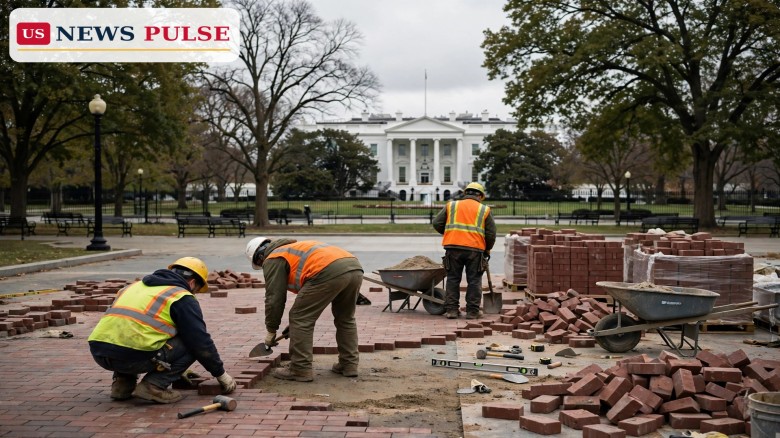
President Donald Trump is pushing ahead with more White House renovations despite the Republican Party's midterm election loss, with workers already resetting the bricks in Lafayette Square at a cost of about $3 million to taxpayers, The Washington Post reported on Tuesday, November 17, 2026.
The project in the public park across Pennsylvania Avenue from the White House is being paid for by the National Park Service, according to two officials and documents reviewed by the Post. Workers were seen on the job on Monday, November 16, even as the president faced questions about why he was focused on building work during a nationwide ground stop and a wave of technology outages.
Key Points
- The administration is spending about $3 million to reset the bricks in Lafayette Square, with the National Park Service footing the bill, The Washington Post reported on Tuesday, November 17, 2026.
- Trump is also expanding a black granite walkway he installed outside the West Wing earlier this year, extending it past the remodelled Rose Garden.
- Work continues on his towering White House ballroom and a new visitors' centre, part of a building programme the Post previously put at at least $900 million.
- Trump said the renovations take him "10 minutes a day" and dismissed critics as "losers", insisting the projects "don't cost money".
- A Reuters/Ipsos poll published on November 11 found 67% of Americans oppose Trump's White House and Washington construction projects, including half of Republicans.
What Happened
The Washington Post reported on Tuesday that Trump is pursuing more White House renovations despite the Republican losses in the November 3 midterm elections, in which Democrats took control of both chambers of Congress. The newest project is the brick work in Lafayette Square, the seven-acre public park directly across from the White House that has long served as a gathering place for protesters, tourists and television cameras.
According to two officials and documents reviewed by the Post, the administration is spending about $3 million to reset the bricks, with the National Park Service covering the cost. Workers were seen on the project on Monday, November 16, the same day Trump was asked about the renovations. The Lafayette Square job is only the latest piece of a much larger programme that also includes the walkway, the ballroom and the visitors' centre.
Background: A $900 Million Building Programme
The Post previously reported that the administration is set to spend at least $900 million on White House construction projects, covering the ballroom, the Rose Garden work, the walkways and other changes to the grounds. The ballroom alone is expected to cost around $600 million, with about half coming from taxpayers and the rest from private donors. The administration has said it has a list of more than $330 million in private donor contributions for the ballroom.
Renovations at the White House are nothing new — every modern president has changed the residence and its grounds — but the scale and speed of this programme are unusual. The row has already produced public clashes: last month, former president Barack Obama mocked the changes at a Cleveland rally, and Trump fired back at Obama over the "Cheesecake Factory" White House renovation jibe. Democrats have also warned that records tied to the projects may be disappearing, after whistleblowers said construction documents are being destroyed.
Trump White House Renovations: The Lafayette Square Brick Job
Lafayette Square is one of the most photographed public spaces in Washington. Its brick walkways frame the view of the White House from the north, and the park has been the site of protests and celebrations for generations. Resetting its bricks is routine maintenance in principle, but the timing and the price tag have turned a $3 million job into a political story.
The work is being carried out by the National Park Service, which maintains the park. The Post reported that the agency is footing the bill, which means the cost falls on taxpayers rather than on the private donors Trump has cited for the ballroom. The project began in the days after the midterm elections, in which voters delivered a clear rebuke to the president's party.
Reactions and Quotes
Trump's defence of the programme has been blunt. "It takes me 10 minutes a day," he said on Monday when asked about the renovations, adding that his critics were "losers" and that the projects "don't cost money". The remarks were the latest in a series of public comments in which the president has presented the building work as a minor part of his schedule and as largely free to the public purse.
The public appears unconvinced. A Reuters/Ipsos poll completed in September and published on November 11 found that 67% of Americans oppose Trump's White House and Washington construction projects. The opposition crossed party lines: half of Republicans surveyed said they opposed the projects too. The president's own closing argument before the midterms was itself dominated by renovation talk — Trump opened his Reflecting Pool closing speech with more than 15 minutes on the pool renovation, calling the site "better and more beautiful than it's ever been before".
Why It Matters
The renovations matter because they show how Trump is governing after the midterm defeat. Rather than changing course, the president is pressing ahead with a personal building programme that most Americans oppose, according to the Reuters/Ipsos poll. The projects test whether he will adjust to the new political reality or continue as before.
The money matters too. At least $900 million in construction spending, with roughly $300 million of the ballroom's cost falling on taxpayers, is a substantial public commitment. The $3 million Lafayette Square job is small by comparison, but it is entirely taxpayer-funded, which undercuts the claim that the projects "don't cost money". It also raises questions about stewardship of a national landmark whose grounds changes are permanent.
What Happens Next
Work on the Lafayette Square bricks will continue in the coming days, and the ballroom and visitors' centre projects are expected to proceed as planned. The administration has given no sign the midterm results will slow the programme. Democrats, who take control of the House and Senate in January, are likely to scrutinise the programme closely.
Frequently Asked Questions
How much is the Lafayette Square brick project costing?
About $3 million, according to The Washington Post. The National Park Service is footing the bill, which means the cost falls on taxpayers.
What other White House renovations is Trump pursuing?
He is expanding a black granite walkway past the remodelled Rose Garden, and continuing work on a towering ballroom and a new visitors' centre.
How much is the whole White House building programme costing?
At least $900 million, the Post previously reported. The ballroom alone is expected to cost around $600 million, with about half taxpayer-funded.
What did Trump say about the renovations?
Asked on Monday, November 16, why he was focused on renovations, Trump said it takes him "10 minutes a day", dismissed critics as "losers" and insisted the projects "don't cost money".
Do Americans support the construction projects?
No. A Reuters/Ipsos poll published on November 11 found 67% of Americans oppose the projects, including half of Republicans.
© 2026 US News Pulse. All rights reserved.
 Print
 Save