
Iran Claims Drones Hit US Patriot Defences at Kuwait Air Base - US News Pulse
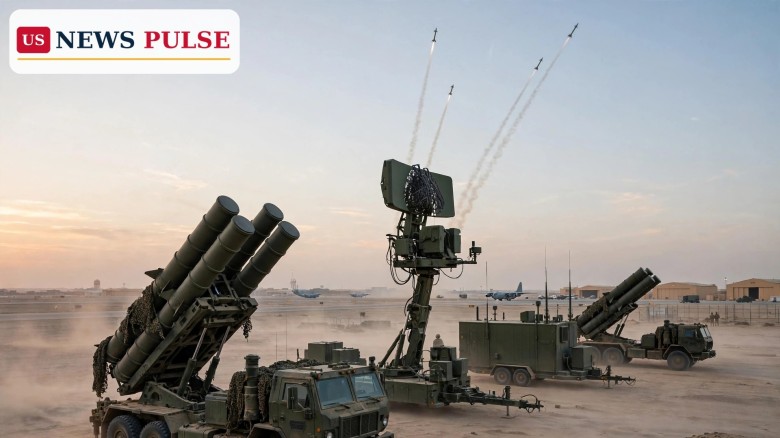
Iran's army said on Wednesday that its drones struck American Patriot air-defence systems at Ali Al Salem Air Base in Kuwait, in the latest escalation of the war. Kuwait's military said its air defences were countering hostile drone attacks before dawn, while Bahrain said it had intercepted Iranian aerial attacks for the third time this week. At the same time, the United States-led coalition said it had struck 60 Houthi military targets across Yemen.
Key Points
- Iran's army said its combat and kamikaze drones targeted US Patriot air-defence systems and launch platforms at Ali Al Salem Air Base in Kuwait early on Wednesday, November 18, 2026.
- Kuwait's military said its air defences were countering hostile drone attacks, the first Iranian attack on Kuwait since September.
- Bahrain said its air defences intercepted Iranian aerial attacks early on Wednesday, the third interception this week.
- The US-led coalition said it struck 60 Houthi military targets across Yemen early on Wednesday.
- The exchange follows a US strike on an Iranian missile launch site on Qeshm Island on Tuesday, after Iran said it had targeted the US radar at Bahrain's Sheikh Isa Air Base.
What Happened
The Iranian army issued its statement on Wednesday morning, carried by state television IRIB. It said combat and kamikaze drones had targeted Patriot air-defence systems and launch platforms belonging to the US military at Ali Al Salem Air Base in Kuwait.
Kuwait's military confirmed that its air defences were countering hostile drone attacks, the first Iranian attack on Kuwait since September. Bahrain said its air defences had intercepted Iranian aerial attacks early in the morning, the third time this week it has reported doing so.
In parallel, the US-led coalition said early on Wednesday that it had struck 60 Houthi military targets across Yemen. Sixty targets in a single round marks a sharp step up in the coalition's campaign against the Iran-aligned Houthis.
Background and Context
The war began on February 28, 2026, when the United States and Israel launched strikes on Iran. Since then, the fighting has spread to the Gulf's shipping lanes, to American bases in Bahrain and Kuwait, and to Yemen.
Ali Al Salem Air Base, in southern Kuwait, is one of the main American military facilities in the Gulf. It hosts US Air Force units and the Patriot batteries that protect them. On Tuesday, Iran's Revolutionary Guard said it had launched a drone attack on a US-operated radar system at Sheikh Isa Air Base, and Bahrain said it intercepted the attack, the third Iranian attack claim on Bahrain in five days.
Iran's Drone Claim Against the Patriot Systems in Kuwait
The heart of Wednesday's news is the Iranian claim itself. Patriot systems are the backbone of American air defence in the Gulf. A successful strike on a Patriot battery would be a significant achievement for Iran's drone forces.
But the claim, as reported, is unverified. Iran's army statement, carried by state television, said the drones targeted the Patriot systems and associated launch platforms. It did not publish images, video or other evidence of a hit, and neither Kuwait nor the United States has confirmed any damage to the base or its defences. Kuwait's military said only that its air defences were countering hostile drone attacks.
The verified facts are these: Iranian drones were in Kuwaiti airspace early on Wednesday; Kuwait's air defences engaged them; Bahrain intercepted another Iranian attack; and the coalition struck 60 Houthi targets in Yemen. Whether a Patriot battery was actually hit is not yet established.
Reactions
Kuwait's military was the first to speak publicly about the attack on its territory. Its statement said the country's air defences were countering hostile drone attacks, and it framed the incident as the first Iranian attack on Kuwait since September. The statement gave no details of damage or casualties. Bahrain's announcement was similarly brief: the kingdom said its air defences had intercepted Iranian aerial attacks early on Wednesday, the third interception this week.
The US-led coalition's statement focused on Yemen. It said the coalition had struck 60 Houthi military targets across the country early on Wednesday. No immediate public response from US Central Command or the Pentagon was reported.
Why It Matters
Wednesday's exchange matters for three reasons. First, it brings Kuwait directly into the fighting for the first time in two months. An Iranian attack on its territory, aimed at American air defences, tests both Kuwait's own defences and the credibility of the American security umbrella over the Gulf.
Second, the claim targets the Patriot system itself, the shield that lets American aircraft operate from Gulf bases. If Iran can credibly threaten it, the risk calculus for every American deployment in the region changes. Third, the fighting is now running on several fronts at once. In a single morning, drones were over Kuwait, interceptors were up over Bahrain, and coalition aircraft were hitting targets in Yemen. That breadth strains air defences and raises the risk that a single miscalculation could push the war into a new phase.
What Happens Next
The immediate question is what Kuwait and the United States say about Ali Al Salem. A damage assessment will determine whether Iran's claim holds up, and it will shape the American response. If a Patriot battery was damaged, the United States is likely to answer with further strikes on Iranian launch sites. If the attack was fully intercepted, the response may be more measured.
Bahrain's defences will remain on high alert, and Kuwait will be watching its skies closely after the first attack in two months. Diplomacy has a date on the calendar: President Donald Trump is due to meet China's President Xi Jinping and Russia's President Vladimir Putin in Shenzhen on Thursday, in the first three-way meeting of its kind. The Iran war is almost certain to feature in those talks.
Frequently Asked Questions
What did Iran claim on Wednesday?
Iran's army said its combat and kamikaze drones targeted US Patriot air-defence systems and launch platforms at Ali Al Salem Air Base in Kuwait early on Wednesday, November 18, 2026.
Has the claim been confirmed?
No. Kuwait's military confirmed only that its air defences were countering hostile drone attacks. Neither Kuwait nor the United States has confirmed damage to a Patriot system.
What is Ali Al Salem Air Base?
A major US military facility in southern Kuwait hosting American Air Force units and Patriot batteries; Wednesday's attack was the first on Kuwait since September.
What happened in Yemen?
The US-led coalition said it struck 60 Houthi military targets across Yemen early on Wednesday, one of the largest single operations against the Houthis in this conflict.
How did this round of fighting start?
The war began on February 28, 2026, with US and Israeli strikes on Iran. The latest round began on Tuesday, when the United States struck an Iranian missile launch site on Qeshm Island after Iran said it had targeted the US radar at Bahrain's Sheikh Isa Air Base.
Read our report on Bahrain's all-clear and Kuwait's drone defences earlier on Wednesday, our coverage of Iran's drone claim against the US radar at Bahrain's Sheikh Isa Air Base, and our report on the US strike on Iran's Qeshm Island.
© 2026 US News Pulse. All rights reserved.
 Print
 Save