
Paris Hilton and AOC Push DEFIANCE Act on Deepfakes at Capitol - US News Pulse
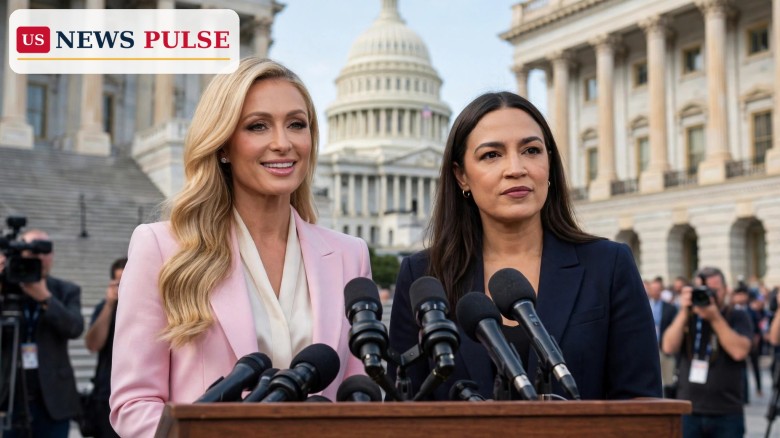
Paris Hilton stood outside the United States Capitol on Tuesday, November 17, 2026, alongside Representative Alexandria Ocasio-Cortez, and asked the House to do something she says the law has failed to do for her: protect victims of sexually explicit deepfakes. Hilton, 45, returned to Capitol Hill with Ocasio-Cortez and Representative Laurel Lee to press for a vote on the stalled DEFIANCE Act, a bipartisan bill that would let victims sue those who create and share fake explicit images of them. The bill passed the Senate in January 2026, but the House has still not passed it.
Key Points
- Paris Hilton, 45, returned to Capitol Hill on Tuesday, November 17, 2026, and spoke outside the United States Capitol alongside Representatives Alexandria Ocasio-Cortez and Laurel Lee, calling on the House to pass the stalled DEFIANCE Act.
- The bipartisan bill would let victims of sexually explicit deepfakes sue those who create or distribute the images without consent, and claim any profits made from them.
- Victims would have 10 years to sue, counted from when they discover the violation or turn 18.
- The Senate passed the bill in January 2026 by unanimous consent, but it has stalled in the House, which has not passed it.
- Hilton said a former boyfriend leaked an explicit video of her when she was a teenager, and that more than 100,000 explicit deepfakes of her still exist online.
What Happened
Hilton spoke at the press conference at the Capitol on Tuesday, Ocasio-Cortez and Lee beside her. She reminded the crowd she had stood in the same place ten months earlier, told lawmakers what it feels like to have her body exposed without consent, and asked Congress to act. "Ten months ago, I stood here at the Capitol and told the world what it feels like to have your body exposed without your consent, and I asked Congress to do something about it," she said.
Her message was that nothing has changed since. "The laws aren't protecting us. And if this can happen to someone with my resources and my platform, imagine how powerless a young girl might be feeling facing this completely alone," Hilton said. She spoke from experience: a former boyfriend leaked an explicit video of her when she was a teenager, and she says more than 100,000 explicit deepfakes of her still circulate online.
Ocasio-Cortez and Lee stood with her. Both co-sponsored the bill, putting a prominent progressive Democrat and a Florida Republican behind the same legislation.
Background: A Problem That Has Outrun the Law
A deepfake is an AI-generated image or video placing a real person's face into explicit material they never agreed to. The tools are now cheap and widely available, and victims often learn of the images only after they have spread. Read our report on hidden deepfake apps inside ordinary AI apps here. AI misuse is spreading beyond images: Amazon and the FBI have warned that AI agents are stealing API keys at industrial scale. Read our report on AI agents stealing API keys here.
Hilton's case shows how long the problem has run: a former boyfriend leaked an explicit video of her when she was a teenager, years before AI tools existed. Today the same violation can be manufactured at scale: she says more than 100,000 explicit deepfakes of her exist online.
The Senate passed the DEFIANCE Act in January 2026 by unanimous consent, but the bill has waited in the House ever since, and the lower chamber has not passed it or held a vote on it.
The DEFIANCE Act: What the Bill Would Do
The bill would give victims a civil remedy: the right to sue anyone who creates or distributes sexually explicit deepfakes of them without consent, and claim the profits made from the images, so nobody can earn money from fakes of someone else's body.
The 10-year limit would run from when a victim discovers the violation, or turns 18, which matters because many victims are children when the images are made, or learn about them only years later.
The bill is bipartisan, co-sponsored in the House by Ocasio-Cortez and Lee, and it cleared the Senate without a single objection in January. Supporters argue a federal civil claim would give victims a direct route to court, rather than leaving them to plead with platforms one image at a time.
Reactions: Hilton's Plea and a Bipartisan Pair
Hilton's message was aimed at the House and the public: the Senate has acted, and the House should too. She came to the Capitol in January to tell lawmakers what it feels like to have her body exposed without consent, and returned to say the laws still are not protecting victims.
The bipartisan pairing was the point: Ocasio-Cortez, one of the House's best-known progressives, and Lee, a Florida Republican, co-sponsored the bill and stood with Hilton. No vote has taken place in the House, and the bill remains stalled.
Why It Matters
If more than 100,000 fake explicit images of one of the world's most famous women can circulate, ordinary victims face the same harm with far fewer resources. Teenage girls, with no platform and no legal team, are the ones Hilton said she was speaking for. Read our report on AI child abuse reports up 8,400 percent here.
The law has lagged behind the technology: AI tools can now produce convincing fakes in minutes, while victims chase images across platforms. A federal right to sue would shift some of that burden onto the people who make and spread the images, and anyone profiting from them.
The Senate's unanimous vote shows the politics are not the obstacle. The question is whether the House will act before the new Congress takes office in January, or the bill must start over in the next session.
What Happens Next
Supporters will keep pressing House leaders to bring the DEFIANCE Act to a vote. If the House passes it, the bill goes to the president to be signed into law. If it does not pass before the new Congress takes office in January, sponsors must start again, and victims wait longer for a federal remedy.
Hilton has now made the trip twice this year, in January and again in November. Her return signalled she does not intend to let the bill fade quietly, and that the pressure on the House will continue.
Frequently Asked Questions
What is the DEFIANCE Act?
A bipartisan bill letting victims of sexually explicit deepfakes sue those who create or distribute the images without consent.
What could victims claim?
Damages, and any profits made from the images. They would have 10 years to sue, counted from when they discover the violation or turn 18.
Who is supporting the bill?
Paris Hilton is campaigning for it, Alexandria Ocasio-Cortez and Laurel Lee co-sponsored it, and the Senate passed it unanimously in January 2026.
Why has it stalled?
After passing the Senate, the bill has waited in the House, which has neither passed it nor held a vote on it.
What is a deepfake?
An AI-generated image or video that makes a real person appear to do or say something they never did, here sexually explicit material made without their consent.
© 2026 US News Pulse. All rights reserved.
 Print
 Save