
Senate Republicans Unveil $1.1 Trillion Defence Bill, Short of Trump's $1.5 Trillion Ask
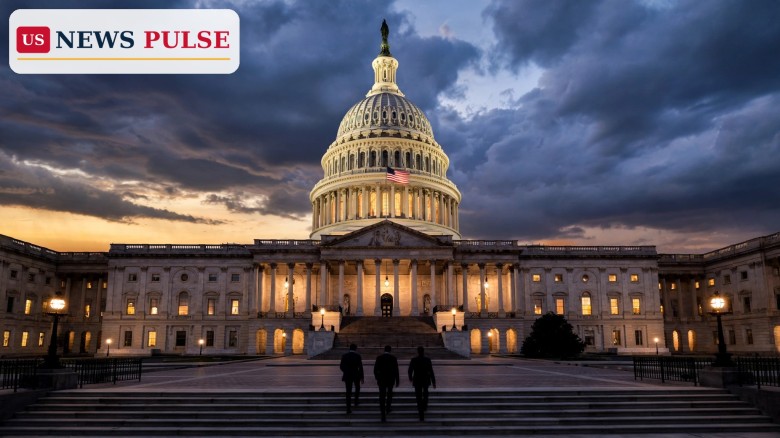
Senate Republicans have unveiled a nearly $1.1 trillion Senate defence bill for fiscal year 2027, setting up a high-stakes fight with President Donald Trump over the size of the Pentagon budget. The bill, released by the Senate Appropriations Committee on Monday, falls about $400 billion short of the $1.5 trillion the president and Defence Secretary Pete Hegseth sought, and it rejects the White House plan to fund a large share of the military through a one-time budget manoeuvre. It now heads for a Senate floor vote and House negotiations, with stopgap funding due to expire on December 11.
Key Points
- Senate Republicans unveiled a nearly $1.1 trillion defence appropriations bill for fiscal year 2027 on Monday, November 16, the last defence committee to publish a budget plan.
- The bill is about $400 billion below the $1.5 trillion sought by President Donald Trump and Defence Secretary Pete Hegseth, and moves nearly $69 billion of one-time reconciliation money into the regular budget.
- It funds a 3.6% military pay rise, $47.2 billion for munitions, $42 billion for shipbuilding and $35.6 billion for air and missile defence, including $9.4 billion for Golden Dome.
- On foreign aid it provides $3.3 billion for Israel, $300 million for Taiwan, $100 million for the Philippines and $750 million for Ukraine, and bans funds for UNRWA, the International Court of Justice and the International Criminal Court.
- The bill still needs a Senate floor vote and agreement with the slightly lower House version before the December 11 funding deadline.
What Happened
The Senate Appropriations Committee published its defence spending bill on Monday, November 16, making it the last of the four congressional defence committees to put forward a budget plan for the coming fiscal year. It was released alongside five other fiscal year 2027 spending bills, as Congress races to fund the government before the current stopgap measure runs out on December 11.
The headline number is the gap. The White House had asked for $1.5 trillion: a $1.15 trillion base budget plus $350 billion through budget reconciliation, a one-time manoeuvre that avoids the Senate filibuster. The Senate bill instead puts nearly $69 billion of that money into the regular discretionary budget, where it must be renewed each year.
Senator Mitch McConnell, the Kentucky Republican who chairs the Appropriations defence subcommittee, framed the choice as one between lasting strength and a short-term surge. Deterring America's adversaries, he said, "will take year-on-year commitments, not just one-time surges of cash".
Inside the Senate Defence Bill: Pay, Missiles, Ships and Golden Dome
The bill's largest commitment is to the people in uniform: $202.9 billion for military pay and benefits, enough for a 3.6% pay rise, as the armed forces struggle with recruitment and the eight-month war in Iran strains personnel and equipment.
Weapons stockpiles get the next biggest share: $47.2 billion for munitions, including $40.6 billion in multi-year contracts for the AMRAAM missile, the Patriot PAC-3 MSE interceptor and the Precision Strike Missile. Shipbuilding receives $42 billion, including nearly $2 billion for an extra Arleigh Burke-class destroyer. Air and missile defence gets $35.6 billion, of which $9.4 billion is for Golden Dome, while drones and counter-drone systems receive $6.2 billion. In total, the bill provides more than $285 billion for weapons systems and $203 billion for research and development.
Background: A $1.5 Trillion Ask Meets a $1.1 Trillion Bill
The gap did not appear overnight. When the administration unveiled its record $1.5 trillion defence request, it argued that the threat from China, Russia and Iran demanded a step change in spending, and that reconciliation was the only way to deliver it quickly. Senate appropriators disagree: money delivered once, outside the normal budget, does not build the industrial base or the force structure deterrence requires.
The Pentagon is funding an eight-month war in Iran, and Democrats have threatened to withhold defence votes while it continues, raising the prospect of a pre-Christmas funding fight. The funding showdown has been building since October, when the scale of the $1.5 trillion request first became clear. The House has already passed its own defence policy bill, and House Republicans have used Ukraine aid as leverage in the parallel National Defense Authorization Act fight.
Reactions: A Rebuke Wrapped in a Budget
McConnell's comment about "year-on-year commitments, not just one-time surges of cash" is the bill's sharpest message to the White House. Moving the reconciliation money into the regular budget makes future defence budgets a matter for annual negotiation rather than a single sweeping vote.
The foreign aid provisions are likely to draw the most debate. Alongside $3.3 billion for Israel, $300 million for Taiwan and $100 million for the Philippines, it provides $750 million for the Ukraine Security Assistance Initiative and $30 million to help return abducted Ukrainian children, while banning funding for UNRWA, the International Court of Justice and the International Criminal Court. The White House has not yet said whether the president would accept a bill $400 billion below his request.
Why It Matters
The defence budget decides how many ships the Navy can build, how many missiles the Pentagon can buy, how quickly Golden Dome can be fielded and whether troops get a meaningful pay rise. A $400 billion gap between the White House and the Senate is the difference between a one-year surge and a sustained build-up, and the choice will shape American military power for years. It also matters for allies watching from Kyiv, Taipei and Jerusalem: the bill keeps Ukraine aid flowing at $750 million, maintains Israel's $3.3 billion in military financing and adds new support for Taiwan and the Philippines.
What Happens Next
The bill now goes to the Senate floor, where amendments could restore some of the White House's priorities or cut others. After the Senate votes, negotiators from both chambers must reconcile it with the slightly lower House version. The calendar is unforgiving: the stopgap funding the government runs out on December 11, and Congress has only a handful of session days left in the lame-duck period. If the two chambers cannot agree, defence funding could be folded into a wider year-end package or left to another short-term extension.
Frequently Asked Questions
How much is the Senate defence bill worth?
Nearly $1.1 trillion for fiscal year 2027, covering pay, weapons, ships, missile defence, research and foreign military aid.
How does it compare with what Trump asked for?
Trump and Defence Secretary Pete Hegseth sought $1.5 trillion: a $1.15 trillion base budget plus $350 billion through reconciliation. The Senate bill is about $400 billion lower.
What does the bill fund?
It includes $202.9 billion for military pay and benefits with a 3.6% rise, $47.2 billion for munitions, $42 billion for shipbuilding, $35.6 billion for air and missile defence including $9.4 billion for Golden Dome, and $203 billion for research.
What foreign aid is in the bill?
$3.3 billion for Israel, $300 million for Taiwan, $100 million for the Philippines and $750 million for Ukraine, plus $30 million to help return abducted Ukrainian children. It bans funding for UNRWA and the two international courts.
What happens next?
It needs a Senate floor vote and agreement with the House version before the December 11 funding deadline.
© 2026 US News Pulse. All rights reserved.
 Print
 Save