
Huawei Trial Ends in Brooklyn as Jury Prepares to Rule on 12 Criminal Counts
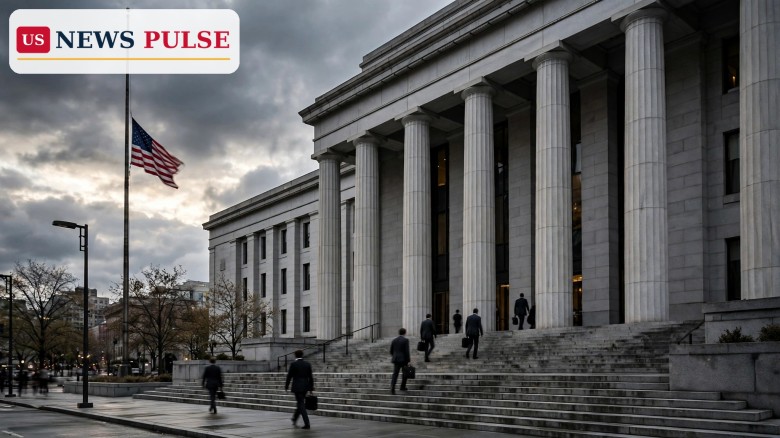
Closing arguments ended on Tuesday in the long-running United States criminal trial of Huawei Technologies, and a federal jury in Brooklyn is now preparing to decide whether one of the world's biggest technology companies operated as a criminal enterprise. After more than two months of testimony, the case now rests with the jurors.
Judge Ann M. Donnelly is expected to instruct the jury on Wednesday before deliberations begin on 12 remaining criminal counts, including racketeering conspiracy, bank fraud and conspiracy to steal trade secrets. It is the most significant American criminal case ever brought against a major Chinese technology company.
Key Points
- Closing arguments concluded on Tuesday, November 17, 2026, in Brooklyn federal court. Judge Ann M. Donnelly will instruct the jury on Wednesday before deliberations begin.
- Huawei faces 12 remaining counts: racketeering conspiracy, conspiracy to steal trade secrets, bank fraud and obstruction of justice. Two sanctions-related counts were dropped in September.
- Prosecutors say Huawei spent 20 years growing through theft, lies and cover-ups, urging a workforce of over 200,000 people in 170 countries to “lie, cheat and steal.”
- The defence says the government “began with guilt and worked backwards” and put a “sinister spin” on ordinary business, failing to prove the charges.
- Prosecutors accuse Huawei of defrauding HSBC and other banks over its Iran business, stealing trade secrets from five US technology companies, and helping Iran spy on its citizens.
What Happened
Assistant US Attorney Meredith Arfa spent about six hours on Monday making the government's final case, telling jurors Huawei built its global rise on theft and deception. Defence lawyer Brian Heberlig answered on Tuesday, arguing that prosecutors had dressed up aggressive business competition as a crime and failed to prove the charges after two months of testimony.
Jury selection began on September 8. The prosecution called more than 60 witnesses and the defence about 15. Judge Donnelly's instructions on Wednesday will set out the law the jurors must apply before they retire to deliberate, a process that could take days.
Background
The case burst into the headlines in December 2018, when Canadian authorities detained Meng Wanzhou, Huawei's chief financial officer and the founder's daughter, at Vancouver airport on a United States warrant. Her arrest turned a corporate dispute into a diplomatic crisis, with China detaining two Canadians in what was widely seen as retaliation.
Huawei, founded in Shenzhen in 1987, grew into one of the world's largest technology companies, selling equipment in more than 170 countries. American officials have long argued that its ties to Beijing make it a security risk; Huawei denies spying for China and denies all charges. Washington has barred its equipment from US networks and cut off its access to advanced American chips. The chip dispute remains live: a US commission warned this week that China's military seeks advanced Nvidia chips for AI weapons, and Nvidia has stopped shipping its licensed Hopper chips to China.
The Huawei Trial: What the Jury Must Decide
The 12 counts fall into four groups. The racketeering charge asks whether Huawei operated as a criminal enterprise — a pattern of related crimes, not isolated mistakes. The trade-secret charges concern an alleged conspiracy to steal technology from five American companies. The bank-fraud charges centre on claims Huawei misled HSBC and other banks about its Iran business, and the obstruction charge concerns alleged interference with the investigation.
For each count, the government must prove its case beyond a reasonable doubt, and the verdict must be unanimous. The jury could convict on some counts and acquit on others, acquit entirely, or deadlock and force a mistrial, leaving prosecutors to decide whether to retry the case. An appeal is likely whatever the outcome.
Reactions
Arfa framed the case as a story about a system. “Huawei spent 20 years growing through theft, lies and cover-ups,” she told the jury, urging them to see two months of episodes as parts of a single enterprise. It was the sharpest line of the government's case, and the one the jury will carry into deliberations.
Heberlig framed it as a prosecution that decided the answer before it had the evidence. Huawei denies all charges, a position it has held since the indictment was unsealed, and denies the broader American claim that it poses a security threat.
Why It Matters
First, the verdict will set a precedent. No American jury has ever decided whether a Chinese technology giant of Huawei's scale is a criminal enterprise. A conviction would give the Justice Department a template for future cases against foreign companies accused of stealing American technology; an acquittal would raise questions about whether racketeering laws fit this kind of case.
Second, the case sits at the centre of the US-China technology rivalry. The jury begins deliberating the same week President Donald Trump is in China for the APEC summit, with a bilateral meeting with President Xi Jinping and a first-ever three-way meeting with Xi and Russian President Vladimir Putin scheduled for Thursday. American technology firms and banks have also watched closely: the trade-secret charges concern their intellectual property, and the fraud charges turn on what Huawei told lenders about Iran.
What Happens Next
Judge Donnelly will instruct the jury on Wednesday, explaining the law behind each count and the standard of proof. Deliberations commonly take several days in a case of this size, and the jury may send the judge questions. If it reaches a verdict, it will be announced in court, with sentencing to follow later if there is a conviction. If it cannot agree, the judge may declare a mistrial, and prosecutors must decide whether to retry the case after a two-month trial.
Frequently Asked Questions
What is Huawei accused of?
Huawei and affiliated companies face 12 criminal counts, including racketeering conspiracy, conspiracy to steal trade secrets, bank fraud and obstruction of justice. Prosecutors say the company defrauded banks over its Iran business, stole trade secrets from five American firms and helped Iran spy on its citizens. Huawei denies all the charges.
How many counts does Huawei face?
Twelve counts remain. Prosecutors dropped two sanctions-related counts in September, before closing arguments.
When will the jury reach a verdict?
There is no fixed timetable. Judge Donnelly is expected to instruct the jury on Wednesday, November 18, before deliberations begin. In a case of this size, deliberations commonly take several days.
Was Huawei charged with espionage?
No. No standalone espionage charge was brought. The charges are racketeering conspiracy, conspiracy to steal trade secrets, bank fraud and obstruction of justice.
What happened to Meng Wanzhou?
Meng Wanzhou, Huawei's chief financial officer, was detained in Canada in December 2018 on a United States warrant, an event that turned the case into a diplomatic crisis. She is not a defendant in the Brooklyn trial.
For more on the technology contest behind this case, read our report on China seeking Nvidia chips for AI weapons and our coverage of Nvidia halting Hopper chip shipments to China.
© 2026 US News Pulse. All rights reserved.
 Print
 Save