
US Test-Fires Unarmed Minuteman III ICBM in Glory Trip 257 as Trump Heads to China
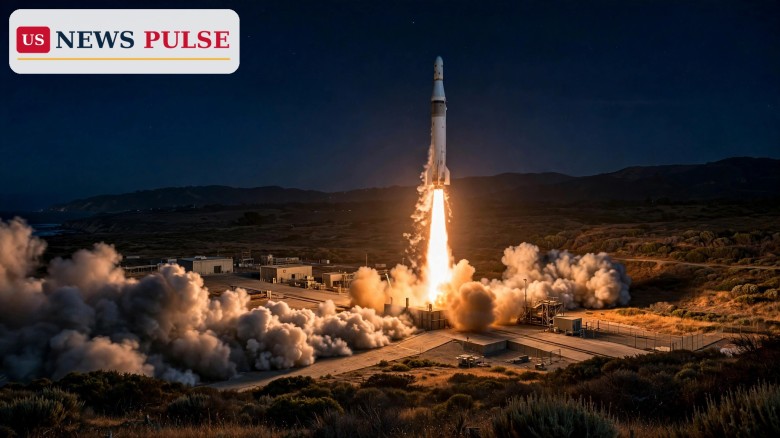
The United States test-fired an unarmed Minuteman III intercontinental ballistic missile late on Tuesday from Vandenberg Space Force Base in California, sending an unarmed re-entry vehicle about 4,200 miles across the Pacific to a target area near Kwajalein Atoll in the Marshall Islands. President Donald Trump was in the air aboard Air Force One on his way to China for the APEC summit. Air Force Global Strike Command said the launch, designated Glory Trip 257, was routine and had been scheduled years in advance.
Key Points
- An unarmed Minuteman III missile was launched from Vandenberg Space Force Base in California late on Tuesday, November 17, 2026, in a window from 11:01 p.m. Pacific Time Tuesday to 5:01 a.m. Wednesday.
- The unarmed re-entry vehicle travelled about 4,200 miles to a target area near Kwajalein Atoll in the Marshall Islands.
- The test, designated Glory Trip 257, was planned about five years in advance; more than 300 Minuteman III test launches have now been completed.
- The LGM-30G Minuteman III is the land-based leg of the US nuclear triad, with about 400 missiles on alert in Montana, North Dakota and Wyoming.
- The missile is due to be replaced by the LGM-35A Sentinel; the previous test, Glory Trip 256, took place on May 20, 2026.
What Happened
The missile lifted off from Vandenberg, on the California coast north-west of Los Angeles, during a window that opened at 11:01 p.m. Pacific Time on Tuesday and closed at 5:01 a.m. on Wednesday — 3:01 p.m. to 9:01 p.m. on Wednesday in Dhaka. The re-entry vehicle then flew roughly 4,200 miles to Kwajalein Atoll, which hosts the Ronald Reagan Ballistic Missile Defense Test Site, where American missile tests have been tracked for decades.
The timing placed the launch in a major diplomatic week. President Donald Trump was travelling to China for the APEC leaders' meeting in Shenzhen on November 18 and 19, where he will hold bilateral talks with Chinese President Xi Jinping and join the first-ever three-way meeting with Xi and Russian President Vladimir Putin on Thursday, November 19.
Air Force officials stressed the test was not timed to send a message. Glory Trip launches are planned about five years in advance, and the programme exists, in the words of Air Force Global Strike Command, to "validate and verify the effectiveness, readiness and accuracy of the weapon system". The test, the command said, "was scheduled years ago and is not in response to world events".
Background and Context
The Minuteman III, formally the LGM-30G, has been the backbone of America's land-based nuclear deterrent since it entered service in 1970. About 400 of the missiles stand on alert around the clock in hardened underground silos across Montana, North Dakota and Wyoming, ready to launch within minutes if the president orders it. Together with the Navy's submarine-launched missiles and the Air Force's nuclear-capable bombers, they make up the nuclear triad.
Each Minuteman III was originally designed to carry three warheads, although the missiles now carry a single warhead under treaty limits. The system has been upgraded repeatedly — new guidance systems, new propulsion components and refurbished warheads — to keep the 1960s design credible today. Its replacement, the LGM-35A Sentinel, is under development and has become one of the most expensive weapons programmes in the country.
The Glory Trip series is the operational test programme for the Minuteman III. More than 300 test launches have been completed, typically a few times a year from Vandenberg, with the unarmed re-entry vehicle splashing down near Kwajalein. Each flight collects data on guidance, propulsion and re-entry performance, feeding decisions about maintenance, upgrades and the handover to Sentinel.
Minuteman III ICBM Test: How the Launch Works
A Minuteman III test begins in a silo at Vandenberg, where a missile pulled from the operational fleet is loaded into a launch facility. At the appointed moment, its solid-fuel motors ignite, lifting the three-stage rocket out of the silo and into a steep climb over the Pacific. The stages burn out and fall away in turn, pushing the re-entry vehicle higher and faster, to many times the speed of sound. Sensors across the Pacific, including the range at Kwajalein Atoll, track every second of the flight. Because the test missile carries no warhead, the re-entry vehicle simply plunges into the ocean near the target area, and its data is recovered from the telemetry it transmitted.
Reactions and Quotes
Air Force Global Strike Command framed the launch as business as usual, saying the test "was scheduled years ago and is not in response to world events". The test drew attention in Washington and abroad largely because of its timing, coming in the same week as the Navy's disclosure that it fired expired Tomahawk missiles at Iran and on the eve of the first trilateral meeting between the American, Chinese and Russian presidents. But there is no indication the launch was moved to coincide with the APEC summit; Glory Trips are planned five years ahead.
Why It Matters
The test matters because the Minuteman III, for all its age, remains a central pillar of American security. The roughly 400 missiles on alert are the most visible and most rapidly responsive part of the nuclear triad: unlike submarines at sea or bombers that must be fuelled and flown, a silo-based missile can be launched within minutes of an order. Proving, several times a year, that the system still works is how the United States assures its allies — and reminds its rivals — that the deterrent is real. Every successful Glory Trip also buys confidence that the old missile can hold the line until Sentinel is ready.
What Happens Next
Air Force engineers will now spend weeks poring over the telemetry from Glory Trip 257, comparing the flight against the more than 300 Minuteman III tests that came before it. Meanwhile, attention in Shenzhen turns to Thursday's trilateral meeting, where the three presidents are expected to discuss Ukraine, the war with Iran, nuclear arms reduction and artificial intelligence.
Frequently Asked Questions
What is the Minuteman III?
An American intercontinental ballistic missile and the land-based leg of the US nuclear triad. About 400 are on alert in Montana, North Dakota and Wyoming, in service since 1970.
Was the missile in the test armed?
No. The test missile carried an unarmed re-entry vehicle with no warhead. It flew about 4,200 miles from Vandenberg to a target area near Kwajalein Atoll.
What is Glory Trip 257?
The designation for this operational test launch. Glory Trips are planned about five years in advance; more than 300 Minuteman III tests have been completed.
Was the test a response to world events?
No, according to Air Force Global Strike Command, which said the test "was scheduled years ago and is not in response to world events".
What will replace the Minuteman III?
The LGM-35A Sentinel, a new intercontinental ballistic missile under development. It will replace the Minuteman III once ready, while the older missile stays on alert.
Related coverage: the US Navy fired expired Tomahawk missiles at Iran, its acting secretary admitted; and a report warns that China is seeking Nvidia chips for AI weapons despite US curbs.
© 2026 US News Pulse. All rights reserved.
 Print
 Save