
Trump Asks Supreme Court to Block Venezuelan TPS Restoration for 600,000 Migrants
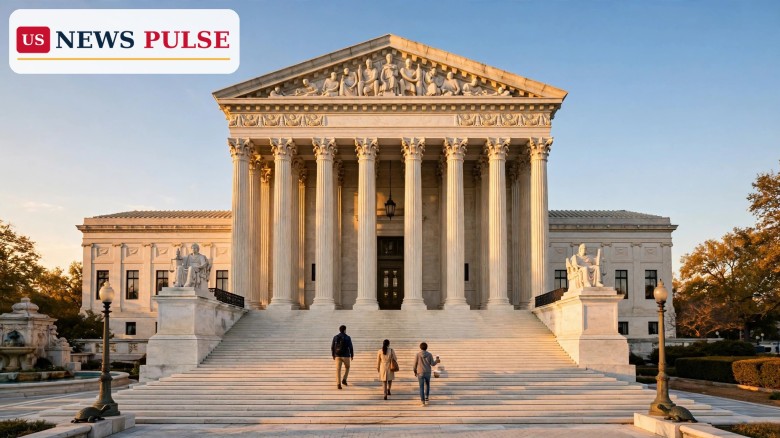
The Trump administration asked the Supreme Court on Wednesday to block the restoration of deportation protections for about 600,000 Venezuelan migrants, warning that federal officials could be forced to release roughly 1,800 people from immigration detention by Friday if the justices do not intervene.
Solicitor General John Sauer filed the emergency appeal in the long-running legal fight over Temporary Protected Status, the programme Congress created in 1990 to shield people from deportation to countries suffering natural disaster or civil strife. It asks the justices to keep the administration's termination of Venezuelan TPS in place while the case continues.
Key Points
- The Trump administration asked the Supreme Court on Wednesday, November 18, 2026, to halt an order that would restore Temporary Protected Status for about 600,000 Venezuelan migrants.
- The emergency appeal, filed by Solicitor General John Sauer, follows a California judge's ruling that ending TPS for Venezuelans was unlawful.
- A Ninth Circuit pause on that ruling expires on Friday, and the administration says it could then be required to release about 1,800 Venezuelans from immigration detention.
- The Supreme Court has set November 30 as the deadline for a response to the administration's request.
- The court twice temporarily allowed the administration to end Venezuelan TPS last year, and in June allowed it to end TPS for people from Haiti and Syria.
What Happened
The appeal landed at the Supreme Court on Wednesday, November 18, 2026, just before the case reached a critical deadline. A federal judge in California had ruled that the administration's decision to end TPS for Venezuelans was unlawful. The Ninth Circuit Court of Appeals then declined to keep the protections on hold, leaving the administration with a narrow window before the judge's ruling takes full effect.
That window closes on Friday, when the appeals court's pause on the judge's decision expires. Unless the justices intervene first, the order restoring the protections would take effect, and the administration says it could be required to free about 1,800 Venezuelans held in immigration detention. Federal attorneys put that warning in the emergency filing itself.
The justices have set November 30 as the deadline for a response. The appeal does not ask the court to settle the underlying dispute now. It asks only for a freeze on the lower court's ruling while the case moves through the courts, a familiar use of the court's emergency docket.
Background and Context
Temporary Protected Status was created by Congress in 1990 to prevent deportations to countries hit by natural disaster, armed conflict or other extraordinary conditions. It is granted in increments of up to 18 months, and it lets people already in the United States live and work here lawfully.
The administration has moved aggressively to wind the programme down, terminating TPS for more than one million people from 13 countries, including Venezuela, Haiti, Honduras, Nicaragua, Afghanistan and Syria.
The Venezuelan case, National TPS Alliance v. Mullin, has already travelled to the Supreme Court twice. Last year the justices twice allowed the administration to end Venezuelan TPS temporarily while the litigation continued. In June the court allowed the administration to end TPS for people from Haiti and Syria. Those interim orders did not decide whether the terminations were lawful.
Venezuelan TPS at the Supreme Court: What the Justices Must Decide
The question before the court is a narrow one, but its consequences are immediate. The justices must decide whether to freeze the California judge's ruling while the case continues, or to let the restoration of TPS take effect on Friday. A freeze would keep the termination in place for now. A refusal would mean the protections return, and the administration would have to release detained Venezuelans whose status had been restored.
The court's handling of the case so far points to a quick decision. Emergency applications of this kind are often resolved in days, and the Friday deadline gives the justices little room to wait.
Reactions and Quotes
The administration's filing frames the case as a matter of urgency, warning in its own words that if the justices do not intervene before Friday, the administration "could be required to release about 1,800 Venezuelans from immigration detention".
The lower courts have taken the opposite view of the underlying question. The California judge ruled that ending TPS for Venezuelans was unlawful, and the Ninth Circuit declined to keep the protections on hold. The Supreme Court's own earlier orders in the case cut the other way, twice allowing the administration to enforce the termination while the litigation continued.
Why It Matters
The case matters first for the roughly 600,000 Venezuelans who hold TPS, and for the 1,800 people in detention whose release the administration says could follow a refusal to intervene. For them, the difference between a freeze and a restoration is the difference between lawful status and the risk of deportation.
It matters more broadly because it tests how far the administration can go in unwinding a programme that Congress designed as a temporary shield. The Venezuelan case is the largest single piece of that effort, and the court's answer will shape how the remaining cases are handled.
What Happens Next
All eyes are now on the Supreme Court before Friday, when the Ninth Circuit's pause expires. The justices may issue a short order freezing the lower court's ruling, refuse the request and let the protections return, or ask for more briefing before deciding. Whatever the court does will be interim, not final: the question of whether the termination was lawful continues through the courts, with a response due by November 30.
If the court declines to intervene, the administration will have to restore TPS for the Venezuelan population and release the detained migrants covered by the order. If it freezes the ruling, the termination stays in force while the litigation continues.
Frequently Asked Questions
What is Temporary Protected Status?
TPS is a programme created by Congress in 1990 that shields people from deportation to countries suffering natural disaster or civil strife. It is granted in periods of up to 18 months and allows recipients to live and work lawfully in the United States.
Why is the Supreme Court involved?
A California judge ruled that ending TPS for Venezuelans was unlawful, and the Ninth Circuit declined to keep the protections on hold. The administration has asked the Supreme Court to freeze that ruling before Friday, when the appeals court's pause expires.
What happens if the justices do not intervene by Friday?
The administration says it could be required to release about 1,800 Venezuelans from immigration detention, and the order restoring TPS would take effect.
Has the Supreme Court ruled on this before?
Yes, in interim orders. The court twice temporarily allowed the administration to end Venezuelan TPS last year while the case was pending, and in June allowed it to end TPS for people from Haiti and Syria. Those orders did not decide whether the terminations were lawful.
Read more on US News Pulse: Venezuelan TPS Returns November 6 as Ninth Circuit Rejects Trump Stay Bid, Haitian Boy, 8, Freed From ICE Custody and Reunited With Family in San Diego, and Supreme Court Backs Trump in Deportation Case as Immigration Judges Lose Pause Power.
© 2026 US News Pulse. All rights reserved.
 Print
 Save