
Elon Musk Says He Is 'Not MAGA' and Regrets $500M on Losing GOP Races - US News Pulse
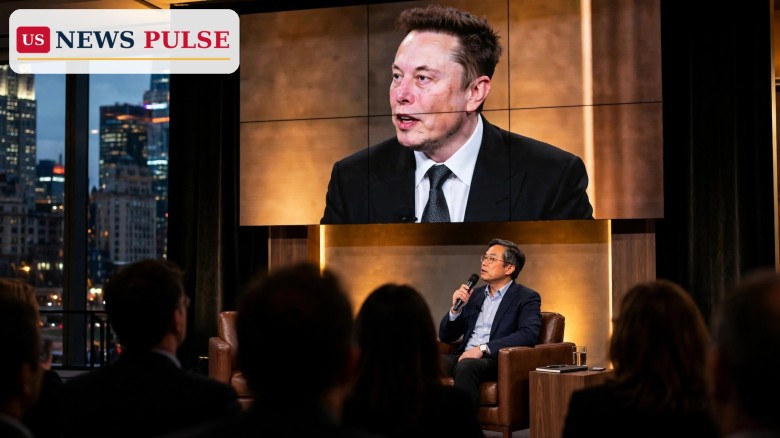
Elon Musk told the New York Times DealBook Summit on Wednesday, November 18, 2026, that he feels "pretty foolish" about spending nearly $500 million backing Republican candidates in the 2026 midterm elections, and declared "I'm not MAGA" — a public break with the movement he helped bankroll.
Key Points
- Musk said at DealBook on November 18 that he feels "pretty foolish" about spending nearly $500 million on Republican candidates in the 2026 midterms.
- He declared "I'm not MAGA", rejecting "blind adherence to a set of policies by the Republican Party", and said he opposes a Republican supermajority.
- OpenSecrets puts his spending at at least $445 million for Republicans; a Times tally puts it near $474 million, the largest individual total in a single US election.
- The total included $200 million aimed at defeating Senator-elect James Talarico in Texas, yet Democrats won both the House and Senate on November 3.
- The reversal is stark: Musk spent $277 million to re-elect Trump in 2024, called himself "dark MAGA", wore a MAGA hat in the Oval Office and led DOGE in 2025.
What Happened
Musk joined the DealBook conversation by video from China, where he is part of President Donald Trump's delegation to the APEC summit in Shenzhen, speaking to columnist Andrew Ross Sorkin before a live New York audience. Asked about the midterm money, he did not defend it. "If I could rewind the clock, I would have spent less money," he said. "American elections are not just about money."
Pressed on MAGA, he was blunt. "I'm not MAGA," he said. "I'm not sure what MAGA means, but if that means sort of blind adherence to a set of policies by the Republican Party, then I certainly don't have that." He acknowledged the rout plainly: "The Republicans were routed in this election." Democrats took both chambers on November 3, reshaping power in Washington ahead of the new Congress in January.
Read our report on Trump growing frustrated with Vance over Iran war blame after the midterms.
Background and Context
OpenSecrets puts his federal-race spending for Republicans at at least $445 million; the Times tally is closer to $474 million. Either figure makes him the largest individual donor in a specific election in US history.
Much of it went to one race: $200 million to defeat James Talarico in Texas. It failed, and Talarico won the Senate seat. That failure is the backdrop to Musk calling himself "pretty foolish" about the outlay.
The 2026 spending followed his 2024 turn, when he spent $277 million to help re-elect Donald Trump, declared himself "dark MAGA", wore a large MAGA hat on stage and in the Oval Office, then led the Department of Government Efficiency, known as DOGE, in 2025 before leaving as a special government employee. His DealBook remarks are the clearest public distance he has put between himself and that identity.
Read our report on the Fed minutes keeping a December rate hike on the table.
Elon Musk 'Not MAGA': What His Break With the Movement Means
Musk's words matter because of who says them and what he spent. The world's richest man did not just criticise a policy; he rejected the label that defined his politics for two years, framing the break as independence rather than a party switch.
"American elections are not just about money" is also a verdict on his own strategy. The cycle tested whether the biggest cheque in US political history could buy a result; in the races Musk cared about most, it could not. The $200 million against Talarico did not stop the Democrat winning, and Republicans lost both chambers despite the record spending.
It is also a warning to the party. Saying he does not favour a Republican supermajority puts him at odds with a party that spent the cycle trying to build one.
Reactions and Quotes
Musk's own words were the story. "If I could rewind the clock, I would have spent less money," he told Sorkin, a rare public admission of regret. "American elections are not just about money," he added, a line that summed up the lesson he said he had taken from the midterm results.
On the label he was equally direct. "I'm not MAGA," he said, before adding: "I'm not sure what MAGA means, but if that means sort of blind adherence to a set of policies by the Republican Party, then I certainly don't have that."
The figures stand behind him: at least $445 million per OpenSecrets, about $474 million per the Times, and $200 million against Talarico.
Why It Matters
The episode tests the limits of money in US politics. Musk's 2026 spending was without precedent for an individual donor, and it did not deliver what he wanted. His own conclusion will be quoted by critics of big spending for years, and it comes from the person who spent the most.
It also matters for the Republican Party. Musk was not only its largest donor but its most visible celebrity backer, whose support signalled to other wealthy donors and voters that the party had the tech world's backing.
For Democrats, the remarks validate their midterm win. They took both chambers despite facing the largest individual donor in US history, and Musk himself has now conceded the spending failed.
Read our report on Anthropic pricing its IPO at $83 a share in a record debut.
What Happens Next
Musk spoke while travelling with Trump's delegation to APEC in Shenzhen, where Trump meets Xi Jinping bilaterally and then holds a first three-way meeting with Xi and Vladimir Putin on Thursday, November 19. His presence shows the MAGA break has not ended his working relationship with the president, for now.
The open question is his money. He gave no commitment about future political spending, and his remark about rewinding the clock suggests a more cautious approach. Republican fundraisers will watch whether he donates at the same scale in 2028; Democrats will watch whether his criticism deepens.
Frequently Asked Questions
What did Musk say at the DealBook Summit? He said he feels "pretty foolish" about spending nearly $500 million on Republican candidates in the 2026 midterms, declared "I'm not MAGA", and said: "If I could rewind the clock, I would have spent less money."
How much did Musk spend on the 2026 midterms? At least $445 million per OpenSecrets, near $474 million per the New York Times, making him the largest individual donor in a single US election.
How much did Musk spend against James Talarico? He spent $200 million trying to defeat Senator-elect James Talarico in Texas, but Talarico won the Senate seat, making it one of the largest single-race efforts by any individual donor.
Why is Musk's "not MAGA" remark significant? He spent $277 million re-electing Trump in 2024, called himself "dark MAGA", wore a MAGA hat in the Oval Office and led DOGE in 2025, so rejecting the label is a sharp public break with the movement he helped fund.
Where was Musk when he made the remarks? He joined DealBook by video from China, where he is part of President Trump's delegation to the APEC summit in Shenzhen.
© 2026 US News Pulse. All rights reserved.
 Print
 Save