
CNN: FAA Had 'No Monitoring' of L3Harris Router Work That Caused Ground Stop
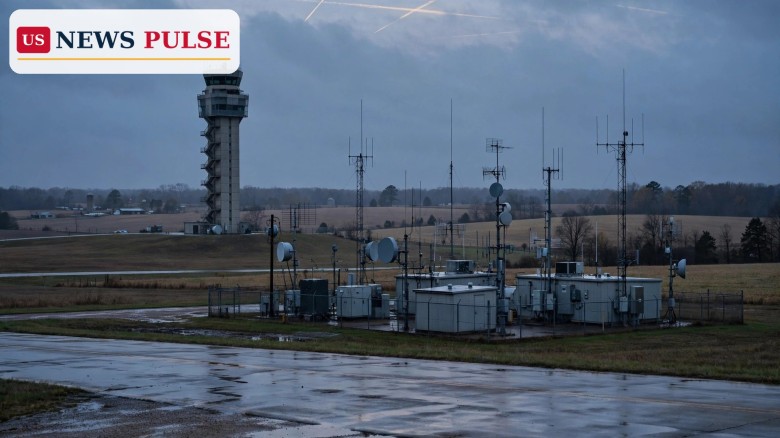
The Federal Aviation Administration had "no monitoring" of the L3Harris contractor work that triggered the nationwide ground stop on Friday, November 13, CNN reported on Tuesday, November 18, contradicting the agency's account of events in El Dorado, Arkansas.
According to CNN, an FAA technician escorted an L3Harris contractor into the site that morning to replace a decades-old router, believing his job ended there. The new router then flooded the FAA's ageing network with data, knocking out communications and radar and halting departures nationwide with about 3,500 planes already in the air.
Key Points
- CNN reported on November 18 that the FAA had "no monitoring" of the L3Harris router replacement at a radio site in El Dorado, Arkansas, on Friday morning.
- Sources said the technician "was only there to unlock the door", disputing Administrator Bryan Bedford's claim the engineer "was monitored by an FAA technician".
- A March 2025 FAA memo shifted contractor maintenance from approvals to mere "notifications", so work proceeds "without FAA approval", handled by a handful of liaisons.
- The new router flooded the network, triggering a ground stop with about 3,500 planes in the air and departures halted over four hours.
- L3Harris gave notice on November 9, work began at 9 a.m. on November 13, and the contractor left unaware, called back hours later.
What Happened
On the morning of Friday, November 13, an FAA technician escorted an L3Harris contractor into the remote radio site in El Dorado, Arkansas, to replace a decades-old router. The technician believed his role ended once the contractor was inside: "There was no monitoring," sources told CNN.
The new router then flooded the FAA's ageing network with data. Communications and radar went down at 17 of its 22 en route centres, and the FAA ordered a nationwide ground stop at about 3:30 p.m. ET. Departures stayed halted for over four hours, until about 8:15 p.m., with about 3,500 planes already in the air. More than 15,000 flights were cancelled from Friday to Sunday, costing airlines over $300 million.
The contractor had no idea what his work had set off. He left the El Dorado site unaware of the chaos spreading across the country's airspace, called back only hours later.
Background: The November 13 Ground Stop
It was the longest nationwide halt to departures since the September 11, 2001 attacks, and the first since January 2023. Investigators traced it to the new router, which sent about 1,000 connection attempts every few seconds, overwhelming the system.
On November 14, Transportation Secretary Sean Duffy blamed L3Harris contractor work and a faulty router. A day later, Trump declared a national emergency and pressed Congress for air traffic control funding. On November 17, the FAA paused new Juniper installations linked to the failure and formally asked Congress for $50.1 billion to rebuild the system.
The same contractor's predecessor, Harris Corporation, caused a similar failure in November 2009, when maintenance errors blocked flight-plan data and delayed more than 800 flights.
FAA "No Monitoring": What the CNN Investigation Found
The most damaging finding is not the faulty router but the system that let it be installed without supervision. A March 2025 FAA memo, aimed at speeding modernisation funded by $12.5 billion from Trump's "big beautiful bill", changed contractor maintenance: contractors once filed "requests" needing FAA approval; now they file "notifications", and work proceeds "without FAA approval".
Only a handful of FAA liaisons process thousands of those notifications. L3Harris gave notice of the El Dorado job on November 9. Work began at 9 a.m. on Friday, November 13, unwatched.
That clashes directly with what the agency said in public. Administrator Bryan Bedford said the engineer "was monitored by an FAA technician" and that a risk assessment had been done. But spokeswoman Hannah Walden later contradicted him, saying the escort "is not there while the technician is doing work". The two statements cannot both be true, and the gap is now the central question.
Reactions and Quotes
The FAA has not disputed the core of the CNN report. Its spokeswoman's account — that the escort was not present — confirms the sources' version: the technician unlocked the door and left. L3Harris declined details, saying only that it is "supporting the FAA in its investigation".
Hewlett Packard Enterprise, which owns Juniper, has said the routers "worked as configured", leaving open whether the problem lay in the configuration, the installation, or how the new equipment interacted with older FAA systems. Duffy has kept the focus on money and accountability, asking Congress for another $50 billion for air traffic control upgrades. After the ground stop he said: "We are going to hold people accountable." Trump urged Congress to approve "the desperately needed money for Air Traffic Control".
Why It Matters
The "no monitoring" finding turns a hardware failure into an oversight failure. A single router should not bring down communications and radar across most of the country, but with nobody watching the installation, that outcome is far more likely. The Cisco routers now carrying the load have been in place for about 25 years.
Thanksgiving, on November 26, is one of the busiest travel periods of the year, and a repeat failure would strand far more passengers than the November 13 stoppage did. Congress must also decide the $50.1 billion request before January, when Democrats take both chambers.
What Happens Next
First, the FAA investigation must settle the contradiction: whether the El Dorado work was monitored, as Bedford said, or unwatched, as the sources and Walden describe. Second, Congress must decide on the $50.1 billion overhaul and whether to restore approval requirements. Third, the FAA must get through Thanksgiving week on 25-year-old Cisco equipment, with Juniper installations paused and L3Harris tests in Florida still under way.
Frequently Asked Questions
Why was nobody monitoring the L3Harris contractor?
Sources told CNN the technician believed his role ended once the contractor entered the site, and that "there was no monitoring". A March 2025 memo had shifted contractor work from approvals to notifications.
What did FAA Administrator Bryan Bedford say?
Bedford said the engineer "was monitored by an FAA technician" and a risk assessment was done. Spokeswoman Hannah Walden later contradicted him: the escort "is not there while the technician is doing work".
What changed in the March 2025 FAA memo?
The memo changed contractor maintenance from "requests" needing FAA approval to "notifications". Work now proceeds "without FAA approval", handled by only a handful of liaisons.
Was the ground stop caused by a cyberattack?
No. The FAA has said there is no indication of a cyberattack. The inquiry is focused on the router, its configuration, how it was installed — and whether anyone was watching.
What happens to L3Harris work now?
The FAA has paused new Juniper installations and disabled the relevant function on more than 60 already in service, while they are tested at an L3Harris laboratory in Florida.
Read our earlier reports on Duffy blaming L3Harris and a faulty router for the ground stop, the FAA pausing Juniper installations and seeking a $50.1 billion overhaul, and Trump pressing Congress to fund air traffic control.
© 2026 US News Pulse. All rights reserved.
 Print
 Save