
Teen Accused in Foiled Aurora Hindu Temple Shooting Indicted on Terrorism Charges
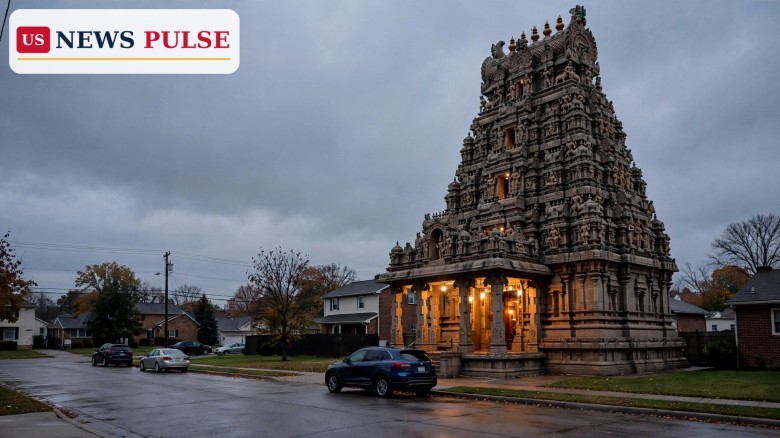
A Cook County grand jury has indicted Alexandros Paporakis, 19, on terrorism charges over the foiled mass shooting plot at the Sri Venkateswara Temple in Aurora, Illinois, escalating a case that shocked the Hindu community in October. The Aurora Hindu temple plot, exposed when police stopped the attack on the first day of Navaratri, now carries some of the most serious charges under Illinois law.
Police announced the expanded indictment on Wednesday, November 18, 2026, nearly two weeks after the grand jury returned it on November 5. Paporakis, of Palatine, Illinois, is due to be arraigned on Thursday morning, November 19, where his lawyer says he plans to plead not guilty.
Key Points
- A Cook County grand jury indicted Alexandros Paporakis, 19, on November 5, 2026, on six counts of terrorism, two of armed violence and two of attempted terrorism, all felonies.
- The indictment adds nine or ten counts of making a terrorist threat, plus weapons charges over an unserialized firearm and no Firearm Owner's Identification card.
- Authorities allege Paporakis drove to the temple in Aurora on October 11, 2026, the first day of Navaratri, with a loaded firearm and tried to fire before the gun jammed.
- Paporakis was first indicted earlier in November on one count each of making a terrorist threat and unlawful use of a weapon. A judge has ordered him detained as a threat to the community.
- His lawyer, Fedor Kozlov, told the Associated Press his client still plans to plead not guilty. The FBI's Chicago office said there was no word on possible federal charges.
What Happened
The new indictment was announced by police on Wednesday, November 18, thirteen days after the grand jury acted. It replaces the original charges filed earlier in November, when Paporakis faced one count of making a terrorist threat and one of unlawful use of a weapon.
The expanded case runs to more than twenty counts. Prosecutors added nine or ten counts of making a terrorist threat, with reports differing on the exact number, plus weapons charges over an unserialized firearm and no police-issued Firearm Owner's Identification, or FOID, card.
It is not clear why police waited nearly two weeks to disclose the November 5 indictment. The FBI's Chicago office said there was no word on possible federal charges, leaving open whether federal prosecutors will bring their own case.
Background: The Foiled Attack on October 11
Authorities say Paporakis drove to the Sri Venkateswara Temple, also known as the Balaji Temple, in Aurora on Sunday, October 11, 2026, the first day of Navaratri, intending a mass shooting. He pointed a loaded firearm at an individual and tried to fire, but the gun jammed. Police foiled the attack before anyone was hurt.
Investigators say the plot had been planned for two years, with the temple targeted for two months. Paporakis was arrested the same day after a co-worker tipped off police, and was ordered detained on October 14. Police recovered a rifle, magazines, hundreds of rounds, body armour and an eight-page manifesto. Prosecutors say he described himself as a white supremacist and a neo-Nazi.
US News Pulse reported on the plot on November 16, when India's Ministry of External Affairs said it was "deeply concerned" and called the attack's reported anti-Hindu and racist nature "particularly disturbing".
Aurora Hindu Temple Plot: The New Terrorism Charges
The new indictment changes the legal shape of the case. Terrorism charges under Illinois law carry far heavier penalties than the threat and weapons counts Paporakis originally faced, and the armed-violence and attempted-terrorism counts signal prosecutors believe he took concrete steps toward the attack, not merely that he threatened one.
The weapons counts add a second front. Possession of a firearm without a serial number, often called a ghost gun, and possession without a FOID card are separate Illinois offences, and prosecutors will argue they show a deliberate effort to obtain and carry a weapon outside the law.
Reactions
Paporakis's lawyer, Fedor Kozlov, told the Associated Press his client still plans to plead not guilty, the same position he has held since the first charges were filed. The defence has not commented publicly on the expanded indictment beyond the plea plan. The FBI's Chicago office said there was no additional information about possible federal charges.
India's Ministry of External Affairs said on November 16 it was "deeply concerned" and urged US authorities to investigate thoroughly. Representative Raja Krishnamoorthi, a Democrat from Illinois, was inside the temple with his family when Paporakis drove by on October 11, and he later joined 104 other lawmakers in writing to FBI Director Kash Patel on October 20 urging a federal hate-crime investigation. The Justice Department's Civil Rights Division has said it will review the incident.
US News Pulse also reported on a far-right disruption at a Diwali festival in Seattle earlier this month.
Why It Matters
The indictment matters first because of the charges. Six terrorism counts against a 19-year-old accused of plotting a mass shooting at a house of worship is an unusually severe state prosecution, signalling Illinois prosecutors intend to treat it as terrorism, not a simple weapons offence.
It matters second for the Hindu community in the Chicago area and across the United States. The Sri Venkateswara Temple is one of the largest Hindu temples in the Midwest, and the attack was planned for Navaratri, one of the most important festivals in the Hindu calendar. The case will also be watched by agencies tracking domestic extremism.
What Happens Next
The immediate next step is Thursday morning's arraignment, where Paporakis is expected to plead not guilty. The judge will then set pretrial hearings and eventually a trial date.
Watch for whether federal prosecutors bring charges of their own. The FBI has said there is no word on possible federal charges, but the Justice Department's Civil Rights Division is reviewing the incident and 105 members of Congress have urged a federal hate-crime investigation. Also watch for an explanation of the thirteen-day gap between the indictment and its announcement on November 18.
Frequently Asked Questions
Who is Alexandros Paporakis?
Alexandros Paporakis is a 19-year-old from Palatine, Illinois, accused of plotting a mass shooting at the Sri Venkateswara Temple in Aurora on October 11, 2026. Prosecutors say he called himself a white supremacist and a neo-Nazi.
What charges does Paporakis face?
A Cook County grand jury indicted him on November 5, 2026, on six counts of terrorism, two of armed violence and two of attempted terrorism, plus threat and weapons charges.
What happened at the Aurora Hindu temple on October 11?
Authorities say he drove to the temple on the first day of Navaratri with a loaded firearm, pointed it at a person and tried to fire, but the gun jammed. No one was hurt.
When is Paporakis due in court?
He is due to be arraigned on Thursday morning, November 19, 2026, and his lawyer says he plans to plead not guilty. A judge has already ordered him detained.
Are there federal charges against Paporakis?
Not so far. The FBI's Chicago office said on November 18 there was no additional information about possible federal charges, although the Justice Department is reviewing the incident.
© 2026 US News Pulse. All rights reserved.
 Print
 Save