
EU Proposes 45 Billion Euro Loan to Ukraine to Plug 2027 Budget Hole as War Enters Sixth Year
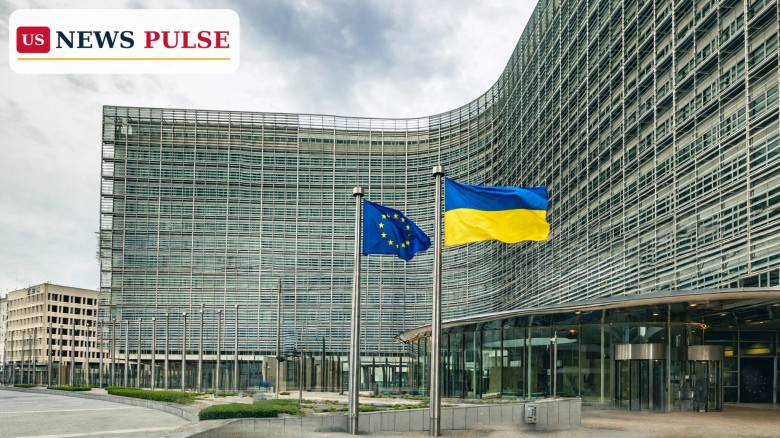
The European Commission proposed on Wednesday a new 45 billion euro loan to Ukraine, a financial lifeline to keep Kyiv's government running and its military supplied through 2027 as Russia's war grinds toward a fifth year. Unveiled in Brussels by Commission President Ursula von der Leyen, the plan would cover about two-thirds of the 70 billion euro budget shortfall Ukraine expects next year, and Kyiv would only repay the money once Russia agrees to pay war reparations for the damage its invasion caused.
The proposal now goes to the leaders of the European Union's 27 member states, who are expected to take it up at a summit later in November. If they approve it, the Commission would raise the money by borrowing on international markets. But four member states have already signalled they will opt out, and Germany wants all 27 to take part.
Key Points
- The European Commission proposed a 45 billion euro loan to Ukraine on Wednesday, November 18, covering about two-thirds of Kyiv's projected 70 billion euro budget gap in 2027.
- Up to 25 billion euros would go to military assistance and up to 20 billion euros to general budget support, funding salaries, pensions and public services.
- Ukraine would repay the loan only after Russia agrees to pay war reparations; if that never happens, the loans would be rolled over indefinitely.
- The money would be raised through joint EU borrowing and still needs EU leaders' approval at a summit later in November.
- Slovakia, Hungary, the Czech Republic and Bulgaria have signalled they will opt out, while Germany demands all 27 take part.
What Happened
Von der Leyen announced the proposal in Brussels on Wednesday, as the next step in Europe's effort to keep Ukraine solvent while the fighting continues. The 45 billion euro loan, worth about 49.5 billion dollars, would sit on top of a 90 billion euro loan that EU leaders agreed at the end of last year to fund Ukraine through 2026 and 2027. That earlier package assumed the war would end in 2026, which the fighting has overtaken.
Under the new plan, up to 25 billion euros could be spent on military aid, including weapons and ammunition, while up to 20 billion euros would go to general budget support, the money that pays soldiers, teachers, doctors and pensioners. Kyiv's other partners would be expected to provide the rest of the money needed to fill next year's funding gap, von der Leyen said.
Background: Why Kyiv Faces a 70 Billion Euro Gap
Ukraine has relied on Western financial support since Russia launched its full-scale invasion in February 2022. The war has devastated the economy, destroyed infrastructure and forced the government to spend far more on defence than its own revenues can cover. Every year since 2022, Kyiv has needed tens of billions of euros from its allies to keep the state functioning.
That need has grown. Intensified Russian attacks on Ukrainian cities and energy infrastructure mean Kyiv needs more support, European economy commissioner Valdis Dombrovskis said. The funding question reaches beyond Brussels: the International Monetary Fund has begun a loan review that could unlock 16.7 billion dollars for Kyiv, while in Washington lawmakers have been weighing a 15 billion dollar Ukraine aid package for energy help.
The 45 Billion Euro Loan: How It Would Work
The most striking feature is its repayment term. Ukraine would only have to repay the loan once Russia agrees to pay war reparations, von der Leyen said. If Moscow never agrees, the loans would be rolled over indefinitely, meaning Kyiv would face no repayment deadline while the war's damage remains uncompensated.
The structure solves two problems at once. It gives Ukraine the money it needs now without adding a debt burden it cannot carry, and it ties repayment to a principle the EU has pushed since the invasion began: that Russia, as aggressor, should ultimately pay for the destruction it caused. Whether that can ever be enforced remains open. The borrowing would be done jointly, with the Commission issuing bonds on international markets and spreading the cost and risk across the bloc.
Reactions
Von der Leyen struck a defiant note as she presented the plan. "Five years since the start of this war of aggression, Europe stands united," she told reporters in Brussels. "We are as committed as ever to support Ukraine in war and in peace." She added that Ukraine would only repay the loan after Russia had paid reparations for the damage caused by the war.
The first political fault line appeared at once. Slovakia, Hungary, the Czech Republic and Bulgaria have signalled they will opt out of the joint borrowing, leaving the rest to carry the loan. Germany, the bloc's largest economy, demands that all 27 states take part, setting up a negotiation that will test the EU's unity at the summit.
Why It Matters
It matters first because of its scale. A 45 billion euro loan would be one of the largest single financial commitments the EU has ever made to a non-member state, and it would lock in European support for Ukraine well beyond the current fighting. For Kyiv, it answers the most urgent question facing its government: how to pay for a war expected to run through 2027.
It also matters as a signal to Moscow. By tying repayment to Russian reparations and raising the money jointly, the EU tells the Kremlin that Europe's support is not running out. Inside the EU, the opt-outs and Germany's insistence on full participation reopen the old argument about sharing debt.
What Happens Next
EU leaders are expected to discuss the proposal at a summit later in November, where the opt-outs and full participation will be the central fight. If leaders approve it, the Commission can begin raising money on international markets, with the first funds expected in Kyiv in 2027, and Ukraine's other partners would then confirm their contributions. If the summit stalls, Kyiv's funding for next year stays uncertain, and the Commission would have to return with a revised plan. For now, it is a proposal, not a promise, and its fate will be decided by the 27 leaders in the room.
Frequently Asked Questions
How big is the EU's proposed loan to Ukraine?
A 45 billion euro loan, worth about 49.5 billion dollars, covering about two-thirds of Ukraine's projected 70 billion euro shortfall in 2027.
What would the money be spent on?
Up to 25 billion euros on military assistance and up to 20 billion euros on budget support, paying for soldiers, public services and the running of the state.
When would Ukraine have to repay the loan?
Only after Russia agrees to pay war reparations. If that never happens, the loans would be rolled over indefinitely.
Who is paying for the loan?
The Commission would borrow jointly on international markets. Four member states have signalled they will opt out, while Germany wants all 27 to take part.
What happens next?
EU leaders are expected to vote on it at a summit later in November. If approved, funds would begin flowing to Kyiv in 2027.
Read how Europe won a seat at the Ukraine peace talks after the EU agreed its negotiating team.
© 2026 US News Pulse. All rights reserved.
 Print
 Save