
Kirkland & Ellis Did $11.8 Million of Free Work for Trump Administration
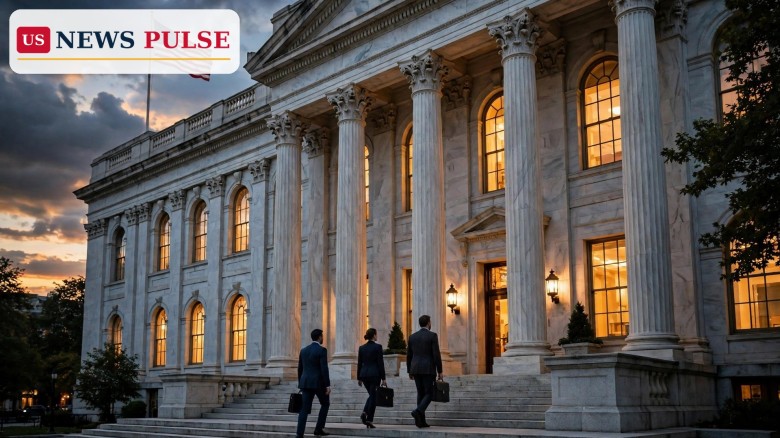
Kirkland & Ellis, the world’s largest law firm by revenue, has done about $11.8 million worth of free legal work for the Trump administration, the firm has quietly disclosed, in the first public accounting of the $125 million pro bono deal it struck with President Donald Trump in April 2025 to avoid a punitive executive order.
Key Points
- Kirkland & Ellis disclosed about 6,491 hours of free legal work for the Trump administration, worth about $11.8 million, the New York Times reported on Thursday, November 19, 2026.
- The work counts toward the $125 million in pro bono services the firm agreed in April 2025 to provide for causes endorsed by President Trump.
- Kirkland was one of nine major law firms that struck such deals with the administration, together pledging about $1 billion in free work.
- The disclosure came amid a congressional investigation led by Senators Adam Schiff and Richard Blumenthal and Representative Jamie Raskin.
- Lawmakers say the firm has produced no written agreement beyond President Trump’s Truth Social posts, and the Justice Department subpoenaed Kirkland in July 2026.
What Happened
The New York Times reported on Thursday that Kirkland & Ellis has told Congress it performed roughly 6,491 hours of free legal work for the Trump administration, valued at about $11.8 million. It is the first detailed accounting of what the firm has delivered under the arrangement reached with the White House last year.
The work counts toward the $125 million in pro bono services Kirkland agreed in April 2025 to provide for causes endorsed by the president, after the administration threatened a punitive executive order. On October 16, 2026, Senators Adam Schiff and Richard Blumenthal and Representative Jamie Raskin wrote to Kirkland chairman Jon Ballis for a sixth time, demanding details of the deal.
In that letter, the lawmakers said the firm had failed to produce any written agreement memorialising the $125 million commitment beyond President Trump’s own Truth Social posts. That, they argued, leaves the president himself as the sole arbiter of what the firm owes, with no document setting out the scope, the causes, or the end date of the obligation.
Background and Context
The deal dates to spring 2025, when the Trump administration issued a series of executive orders targeting law firms it said had acted against the president or his supporters. The orders threatened firms with the loss of security clearances, federal contracts and access to government buildings. Several firms sued and won court rulings blocking the orders. Others chose to negotiate.
Kirkland & Ellis was among the firms that chose to negotiate. In April 2025 it agreed to provide $125 million in free legal work for causes endorsed by the president. It was one of nine major firms that struck such agreements, together pledging about $1 billion in pro bono services to the administration.
The arrangements drew criticism from legal scholars and former judges, who warned that a president extracting free legal services from the country’s largest firms in exchange for not punishing them set a dangerous precedent for the independence of the bar.
Kirkland & Ellis Free Work: What the $11.8 Million Disclosure Reveals
The 6,491 hours disclosed by the firm represent roughly nine percent of the $125 million commitment, measured in value, more than a year and a half after the deal was struck. At that pace, the bulk of the promised work still lies ahead, with more than $113 million remaining.
The lawmakers’ letter flagged two strands of the firm’s work that have drawn their attention. One is free legal work done for the US Department of Commerce, a federal agency whose interests would ordinarily be represented by government lawyers. The other is the firm’s contacts with Boris Epshteyn, President Trump’s personal lawyer, raising questions about who has been directing the work and for whose benefit.
Reactions
The congressional investigators have been the loudest voices in the affair. Schiff, Blumenthal and Raskin have now written to Kirkland six times, each letter pressing for the written agreement and a full accounting of the work done. Their October letter made the central charge plain: a $125 million commitment with no written terms is a commitment whose terms are set by one side alone.
The pressure has not been confined to Congress. In July 2026, the Justice Department subpoenaed Kirkland as part of an investigation of the deal itself, seeking records about how the arrangement was reached and how it has been carried out. The subpoena put the firm in the unusual position of being investigated by the same administration it is doing free work for.
The Kirkland agreement was also cited in a Justice Department letter to Senator Schiff dated November 18, in which US Attorney Aaron Reitz accused Schiff of weaponising congressional investigations and ordered him to preserve documents about his demands, including those concerning the law firm’s pro bono agreement.
Why It Matters
The disclosure is the first real measure of a deal at the centre of a debate about the independence of America’s legal profession. A $125 million promise made to avoid punishment is, on its face, an extraordinary arrangement between a president and the country’s largest law firm.
It also leaves the central question unanswered. Without a written agreement, there is no way for the public, Congress or the courts to know whether the work serves causes the president endorses, causes the firm chose, or causes directed by people close to the president. Nine firms made deals worth about $1 billion, so the Kirkland outcome will shape how other firms treat such arrangements.
What Happens Next
The congressional investigation is unlikely to end with this disclosure. The Justice Department’s July subpoena remains active, and Democrats take control of both chambers of Congress in January 2027, after their November 3 midterm wins. That change is likely to give the investigation new tools, including subpoena power, to demand the documents the lawmakers say have been withheld.
Frequently Asked Questions
How much free work has Kirkland & Ellis done for the Trump administration?
About 6,491 hours, worth about $11.8 million, according to the firm’s disclosure reported by the New York Times on November 19, 2026.
What is the $125 million deal?
In April 2025, Kirkland agreed to provide $125 million in pro bono legal services for causes endorsed by President Trump, a deal struck to avoid a punitive executive order targeting the firm.
Why are lawmakers investigating the deal?
Senators Adam Schiff and Richard Blumenthal and Representative Jamie Raskin say the firm has produced no written agreement beyond the president’s Truth Social posts, leaving Trump as the sole arbiter of what the firm owes.
What work has drawn the most attention?
Free legal work for the US Department of Commerce and the firm’s contacts with the president’s personal lawyer, Boris Epshteyn, both flagged in the lawmakers’ October 16 letter.
Is the Justice Department involved?
Yes. The department subpoenaed Kirkland in July 2026 as part of an investigation of the deal, seeking records about how it was reached and carried out.
© 2026 US News Pulse. All rights reserved.
 Print
 Save