
US and Iran Trade Near-Daily Strikes Pentagon Won't Acknowledge, NBC Reports
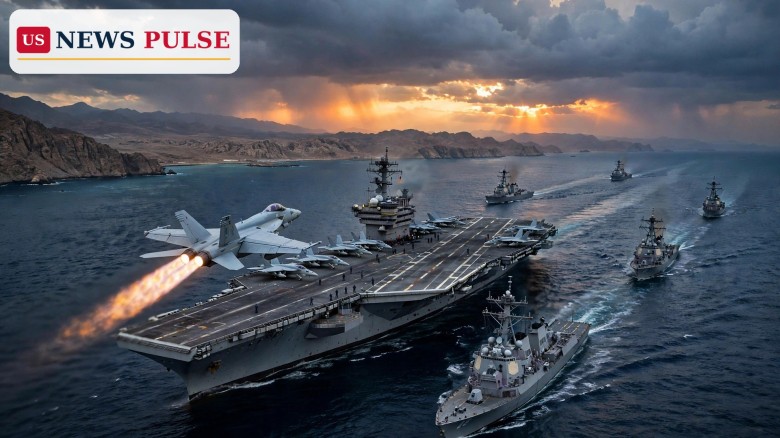
The United States and Iran have been trading military strikes almost every day for months, yet the Pentagon has publicly acknowledged only a fraction of them, according to a new NBC News investigation. The report, published on Tuesday, November 17, 2026, cites two United States officials and a person familiar with the operations. It describes a conflict that never stopped — it simply moved out of public view, while US forces in the Middle East stayed in near-constant action.
Key Points
- NBC News reported on November 17, 2026 that the US and Iran have exchanged strikes almost daily, with the Pentagon not publicly acknowledging most American strikes.
- Iran has targeted US Navy vessels, military facilities and commercial tankers in the Strait of Hormuz, while US forces have intercepted Iranian drones and missiles and hit targets inside Iran.
- The latest operation came on November 17, when US fighter jets struck an IRGC missile launch site on Qeshm Island after an Iranian drone attack on a US radar system at Bahrain's Sheikh Isa Air Base.
- More than 50,000 US troops and two aircraft carrier strike groups are deployed in the Middle East, and the operations cost Washington millions of dollars a day, NBC reported.
- The pattern contradicts President Donald Trump's recent assessment that the war, is effectively over militarily.
What Happened
NBC News reported on Tuesday, November 17, 2026 that the United States and Iran have been exchanging military strikes almost daily. The report rests on interviews with two US officials and a person familiar with the operations, who described a tempo of fighting far heavier than anything the public has been told about. "They are carrying out these strikes and not acknowledging them," the person familiar with the operations told NBC.
Iran has targeted US Navy vessels, military facilities and commercial tankers moving through the Strait of Hormuz. American forces have intercepted Iranian drones and missiles in the air and carried out retaliatory strikes on missile launchers and other targets inside Iran. The most recent operation came on November 17, when US fighter jets struck an Islamic Revolutionary Guard Corps missile launch site on Qeshm Island after an Iranian drone attack targeted an American radar system at Bahrain's Sheikh Isa Air Base. Central Command said the drones were intercepted, with no damage and no injuries. Tehran claimed its attack had scored a hit.
Background: A War That Never Really Ended
The conflict began on February 28, 2026, when the United States and Israel launched coordinated strikes on Iran. In the months since, the public record of the war has thinned to a trickle of announcements, while the fighting continued out of sight. The Wall Street Journal reported that US forces quietly struck Qeshm Island in the weeks before November 11, and the Associated Press reported limited American strikes on Iranian targets, including air defences, at least twice in the week before November 9.
US Iran Near-Daily Strikes: What NBC's Reporting Reveals
The core revelation in the NBC report is not that fighting continues — that much has been visible in fragments for months — but that the Pentagon has chosen not to tell the public about most of it. The person familiar with the operations was explicit: American strikes are being carried out and not acknowledged.
That silence matters. It leaves the American public, and Congress, without a clear picture of a war the United States is still fighting. Lawmakers who vote on military funding are being asked to do so with only a partial account of what the money is paying for. It also leaves the families of the more than 50,000 troops in the region to learn about the dangers their loved ones face from news reports rather than from their own government.
Reactions and Quotes
The Pentagon declined to comment on the NBC report, and the White House did not respond when asked about it. Secretary of State Marco Rubio defended the operations on November 8, saying, "The US acts defensively."
President Donald Trump has recently assessed that the war is effectively over militarily, a view the new reporting directly contradicts. In an interview with Fox News on Thursday, November 19, Trump said the United States would "see what happens" with Iran after January 1, 2027, without explaining the significance of the date.
Why It Matters
A war fought in secret is still a war. The near-daily exchange of strikes carries the risk that a single miscalculation — a drone that gets through, a missile that hits a crowded base, a tanker that sinks with its crew aboard — could turn a shadow conflict into an open one. The fact that the public does not hear about most of these incidents does not make them less dangerous; it makes the escalation harder to see coming.
What Happens Next
The immediate question is whether the Pentagon will change its approach and begin acknowledging the strikes, or whether the silence will continue. The fighting itself shows no sign of stopping: Iran continues to target American vessels, bases and commercial shipping, the two carrier strike groups remain on station, and the naval blockade of Iranian ports has just been tightened. Unless diplomacy intervenes, the near-daily pattern is likely to continue into the new year.
Frequently Asked Questions
Are the US and Iran still at war? Yes. NBC reported on November 17, 2026 that the two sides have been exchanging strikes almost daily ever since, even though President Donald Trump has described the war as effectively over militarily.
Why hasn't the Pentagon acknowledged most of the strikes? The Pentagon declined to comment on the NBC report and has not explained its policy. A person familiar with the operations told NBC that the United States is "carrying out these strikes and not acknowledging them."
How many US troops are in the Middle East? More than 50,000 US troops are deployed in the region, supported by two aircraft carrier strike groups. NBC reported that the continuing operations cost Washington millions of dollars a day.
What happened at Sheikh Isa Air Base and Qeshm Island? On November 17, 2026, an Iranian drone attack targeted a US radar system at Bahrain's Sheikh Isa Air Base, and US fighter jets then struck an IRGC missile launch site on Qeshm Island. Central Command said the drones were intercepted with no damage or injuries; Tehran claimed a hit.
Is the Strait of Hormuz safe for shipping? The strait remains open, but it is dangerous. Iran has targeted commercial tankers there, the United States has tightened its naval blockade of Iranian ports, and maritime authorities continue to assess the regional threat level as severe.
Read more on the Iran conflict: US Strikes Iran's Qeshm Island Again as Strait of Hormuz War Escalates, Trump Tells Fox US Will 'See What Happens' on Iran After January 1, 2027.
© 2026 US News Pulse. All rights reserved.
 Print
 Save