
Trump Official Floated Ceding Guyana's Essequibo to Venezuela, Reuters Reports
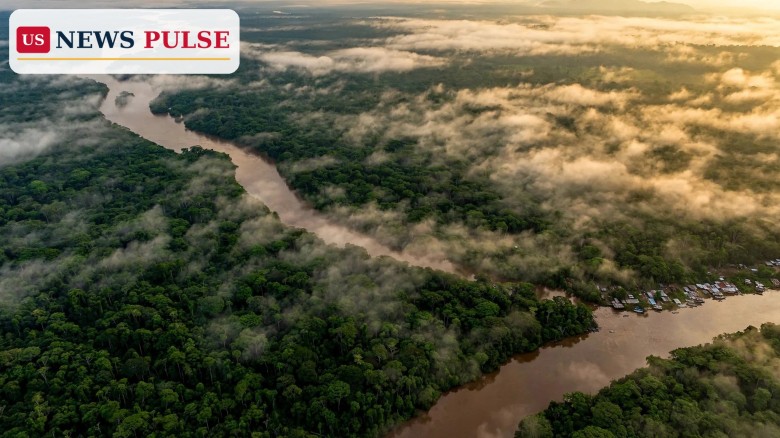
A senior Trump administration official floated the idea of Venezuela taking partial control of the Essequibo, the mineral-rich region that makes up the western two-thirds of Guyana, during a meeting with Guyanese officials in Washington in September, Reuters reported on Thursday, November 19, 2026, stunning one of the United States' closest allies in South America.
State Department policy chief Jeremy Lewin told Guyanese Foreign Secretary Robert Persaud he could help broker territorial talks with acting Venezuelan President Delcy Rodriguez, according to people familiar with the meeting.
Key Points
- Reuters reported on November 19, 2026 that State Department policy chief Jeremy Lewin floated Venezuela taking partial control of Guyana's Essequibo region.
- Lewin told Guyanese Foreign Secretary Robert Persaud he could help broker territorial talks with acting Venezuelan President Delcy Rodriguez.
- Guyanese officials were stunned and sought urgent clarification; other State Department officials assured them US policy on the boundary had not changed.
- Lewin said the talks were "preliminary" and "fully directed and authorized by the White House", after Rodriguez wrote to President Donald Trump in May seeking US mediation.
- The Essequibo covers the western two-thirds of Guyana and is rich in gold, diamonds and bauxite; Venezuela has claimed it for over 180 years and Guyana took the dispute to the International Court of Justice in 2018.
What Happened
The meeting took place in Washington in September 2026, when Lewin was the State Department's director of policy planning. According to Reuters, which cited three sources familiar with the discussion, Lewin told Persaud he could help broker talks over the Essequibo and raised the possibility of Venezuela taking partial control of the region. The report, by Sarah Kinosian, Gram Slattery and Humeyra Pamuk, said the suggestion shocked Guyana's side.
Lewin confirmed to Reuters that he held talks with both sides. He said the conversations were "preliminary" and "fully directed and authorized by the White House", and that they followed a letter Rodriguez sent to Trump in May 2026 asking the United States to mediate the dispute. Lewin said he also raised the issue with Rodriguez during a visit to Caracas in July, and discussed possible American business in the Essequibo.
Guyanese officials moved quickly to clarify what they had heard, seeking urgent reassurance from other State Department officials, who said American policy on the boundary had not changed. Guyana maintains the Essequibo's status is non-negotiable. The White House did not say whether it directed the talks or received Rodriguez's letter. Lewin, a former DOGE alumnus, left his post at the end of October 2026.
Background and Context
Venezuela has claimed the Essequibo for more than 180 years, arguing it belongs to Venezuela under colonial-era boundaries. Guyana, which took the dispute to the International Court of Justice in 2018, says the border was settled by an arbitration award in 1899 and is final. The court is still hearing the case.
The episode comes at a moment of dramatic change in Caracas. The United States captured Venezuelan leader Nicolas Maduro in January, and Rodriguez, his former vice president, became acting president. Washington and Caracas have since moved toward closer ties. One day before the Reuters report, Pentagon chief Pete Hegseth signed a military-cooperation deal with Rodriguez in Caracas on Wednesday, November 18. Read more: US and Venezuela sign deal to re-establish military ties, Hegseth announces.
The Essequibo Dispute: Why Venezuela Claims Guyana's Land
The Essequibo is named for the river that runs through it and covers two-thirds of Guyana's land. It is thinly populated jungle and savannah, rich in gold, diamonds and bauxite, and the waters off its coast are part of the offshore area where Guyana has become one of the world's fastest-growing oil producers.
Venezuela's claim dates to the colonial period, when the boundary between British Guiana and Venezuela was fixed by arbitration in 1899. Venezuela later rejected that award as invalid, and the dispute has flared repeatedly ever since. Guyana asked the International Court of Justice in 2018 to confirm the 1899 award is valid and binding, while Venezuela has pressed for direct talks, the kind Lewin offered to broker.
Reactions and Quotes
Guyana's position has not shifted. The government maintains the Essequibo is non-negotiable, and its officials sought and received assurances from the State Department that American policy on the boundary had not changed. Georgetown has long treated any suggestion of redrawing the border as a direct threat to its sovereignty.
Lewin defended the contacts as limited and authorised, telling Reuters the talks were "preliminary" and "fully directed and authorized by the White House". The White House has not confirmed his account, or said whether it directed the talks or received Rodriguez's letter. Lewin's departure from the State Department at the end of October was covered in our earlier report: Rubio tightens grip on State Department after Guilfoyle exit, Lewin ouster. No public comment from Rodriguez or Caracas has been reported.
Why It Matters
For Guyana, the disclosure touches the core of its security. It is a small country and a close American partner, and the idea that a senior United States official would even float giving away part of its land will shake confidence in Georgetown, whatever assurances followed.
The episode also sets a precedent beyond South America: if territory can be put on the table with a neighbour that claims it, other countries with long-running border disputes will take note. The timing matters too: Washington is rebuilding ties with Caracas after Maduro's capture, and Hegseth's visit showed how fast that thaw is moving. Read more: Hegseth makes unannounced Venezuela visit to meet interim leader Delcy Rodriguez. The Essequibo question now sits inside that wider negotiation.
What Happens Next
The International Court of Justice case continues, and Guyana is expected to press Washington for a clear public reaffirmation that the boundary is not up for discussion. Attention will also turn to the White House, where lawmakers and allies are likely to ask whether it directed Lewin's talks and whether any territorial discussion is still on the table. If Caracas treats Lewin's approach as an opening, it may push for formal talks; if Washington closes the door, the episode may fade, but the distrust in Georgetown will linger.
Frequently Asked Questions
What is the Essequibo?
The region covering the western two-thirds of Guyana, named for the Essequibo River. It is rich in gold, diamonds and bauxite, and its coastal waters are part of Guyana's offshore oil area.
Why does Venezuela claim it?
Venezuela has claimed it for more than 180 years, rejecting an 1899 award that fixed the border with then British Guiana. Guyana took the dispute to the International Court of Justice in 2018.
Who is Jeremy Lewin?
A former DOGE alumnus who served as the State Department's director of policy planning from August until he left at the end of October 2026.
What did the White House say?
It did not say whether it directed the talks or received Rodriguez's May letter. The State Department said its position on the boundary had not changed.
What happens next?
The court case continues, Guyana is expected to seek a public reaffirmation of the boundary, and attention will focus on whether Washington or Caracas pursues further talks.
© 2026 US News Pulse. All rights reserved.
 Print
 Save