
Senate Rejects Iran War Powers Resolution 51-48, Backing Trump - US News Pulse
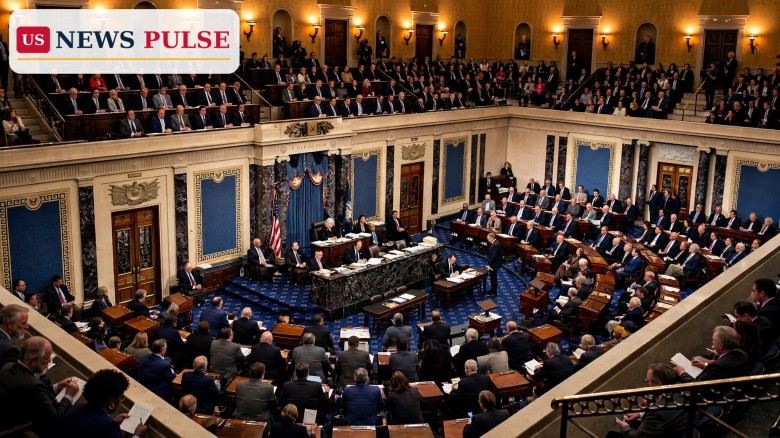
The United States Senate voted 51-48 on Thursday to defeat a war powers resolution that would have directed President Donald Trump to end the war in Iran or obtain Congress' approval to continue it, handing the White House a narrow victory in the first major Iran vote since the midterm elections.
The resolution had already passed the House, so the Senate was the final hurdle. Its defeat means the administration can continue the war without a new authorisation, and it leaves the question of who decides when America goes to war where it has been since February 28, 2026: with the president.
Three Republicans backed the measure: Susan Collins of Maine, Lisa Murkowski of Alaska and Rand Paul of Kentucky. One Democrat, John Fetterman of Pennsylvania, voted with Republicans against it. The margin was decided by a single vote.
Key Points
- The Senate voted 51-48 on Thursday, November 19, 2026, to defeat a war powers resolution on the Iran war.
- The resolution would have directed President Donald Trump to end the war in Iran or obtain Congress' approval to continue it.
- Three Republicans voted for it: Susan Collins of Maine, Lisa Murkowski of Alaska and Rand Paul of Kentucky.
- One Democrat, John Fetterman of Pennsylvania, voted with Republicans against the resolution.
- It was the first major Iran war vote since the November 3 midterm elections.
What Happened
The vote came in a Senate still controlled by Republicans in the final weeks before the new Congress takes office in January. The resolution was a privileged measure under the War Powers Resolution, so it could not be buried in committee or blocked by a filibuster, and it forced every senator to take a public position on a war now in its ninth month.
The tally was 51 against and 48 in favour. Because the measure needed a simple majority, the three Republican defections were not enough. Had one more senator crossed over, the result would have flipped.
Background: The War and the War Powers Fight
The United States and Israel went to war with Iran on February 28, 2026, in a conflict now in its ninth month. The war has dominated American politics all year, driving debates over defence spending, fuel prices and presidential power, and it was central to the November 3 midterms, in which Democrats won control of both chambers.
The War Powers Resolution, passed by Congress in 1973 over President Richard Nixon's veto, requires the president to consult Congress before sending American forces into hostilities and to withdraw them within 60 days unless Congress authorises the action. Presidents of both parties have long argued the law is unconstitutional, and Congress has rarely forced a vote on it. But the Iran war has revived the fight. Democratic Senator Tim Kaine of Virginia has led the effort to reclaim Congress' war-declaration powers, arguing the Constitution gives Congress, not the president, the power to declare war.
The Iran War Powers Resolution Vote: How Senators Split
The three Republican yes votes each carried their own message. Susan Collins of Maine has long defended Congress' institutional prerogatives and has voted for war powers measures before. Lisa Murkowski of Alaska, another frequent critic of executive overreach, joined her. Rand Paul of Kentucky, the Senate's most consistent critic of undeclared wars, has opposed military action without congressional approval for more than a decade.
On the Democratic side, the surprise was John Fetterman of Pennsylvania, the only Democrat to vote against the resolution. Fetterman has been one of the Senate's most outspoken supporters of the administration's Iran policy, and his vote showed the war does not divide the Senate neatly along party lines. The closeness matters: a 51-48 defeat is not a landslide, and a war powers majority is within reach in the new Congress, where Democrats will control both chambers from January.
Reactions and Quotes
Senator Tim Kaine, the resolution's leading sponsor, said the midterm result reflected Americans' unhappiness about the war and higher prices for food, fuel and other goods linked to the conflict. Voters had already rendered a verdict on November 3, he argued, and the Senate should follow it by reasserting Congress' constitutional role.
The administration's position is that the president must have the flexibility to conduct the war without seeking new permission from Congress for each phase of the fighting. Supporters of the resolution argued the opposite: that a war entering its ninth month, with costs in the tens of billions of dollars, is exactly the kind of conflict the Constitution requires Congress to authorise. Pentagon estimates put the war's cost above 47 billion dollars by mid-October.
Why It Matters
The vote matters for three reasons. First, it settles, for now, whether the administration needs Congress' permission to keep fighting. The Senate's answer was no, and that answer will stand until the new Congress takes office in January.
Second, it shows how close the war powers question has become: three Republican defections and a single-vote margin mean the administration's position is far from secure. Third, it puts the war at the centre of the lame-duck session, with a December 11 funding deadline approaching and Democrats demanding that any short-term funding bill restrict the use of appropriated money to continue the war.
What Happens Next
The war continues without a new congressional authorisation, and military operations will proceed as before. But the vote sets up the next round: when the new Congress convenes on January 3, 2027, Democrats will hold majorities in both chambers, and the same resolution can be reintroduced.
The December 11 funding deadline is the more immediate flashpoint. Democrats have said a short-term funding bill must restrict the use of appropriated funds to continue the war, and the administration will need Democratic votes to keep the government open. The war powers vote was a preview of that negotiation.
Frequently Asked Questions
What was the Senate vote on the Iran war powers resolution?
The Senate voted 51-48 on Thursday, November 19, 2026, to defeat a war powers resolution that would have directed President Donald Trump to end the war in Iran or obtain Congress' approval to continue it.
Which Republicans voted for the war powers resolution?
Susan Collins of Maine, Lisa Murkowski of Alaska and Rand Paul of Kentucky. One Democrat, John Fetterman of Pennsylvania, voted against it.
Had the resolution already passed the House?
Yes. The resolution had previously passed the House, so the Senate was the final hurdle. Its defeat means the measure will not become law in this Congress.
Why is this vote significant?
It was the first major Iran war vote since the November 3 midterms, and the 51-48 margin shows a war powers majority is within reach in the new Congress.
What happens next on Iran war powers?
The war continues without a new authorisation, but the resolution can be reintroduced on January 3, 2027, and the December 11 funding deadline is the next flashpoint.
More on the war funding fight: Four Senators Demand Iran War Funding Cut in Shutdown Bill and Massie Files Eight Impeachment Articles Against Hegseth, Forcing House Vote. On the Senate's Iran debate: Senate Republicans Call Trump's Steam Catapult Order a 'Nonstarter'.
© 2026 US News Pulse. All rights reserved.
 Print
 Save