
DHS Flags 1,579 Federal Contractors Over $53 Billion E-Verify Crackdown - US News Pulse
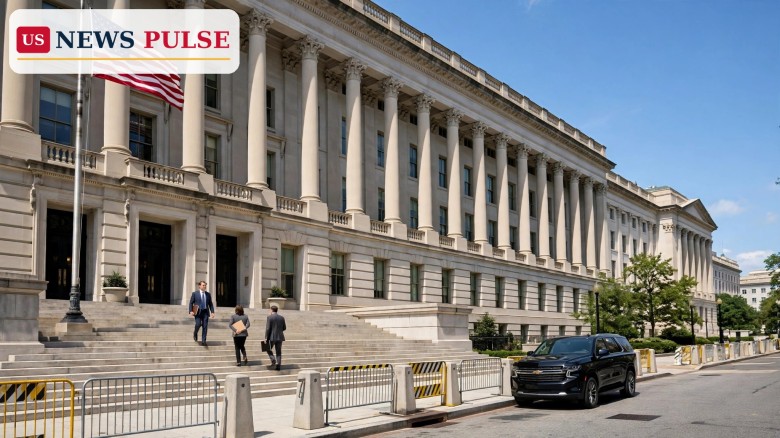
WASHINGTON — The Department of Homeland Security and the General Services Administration announced on Thursday that they have flagged 1,579 federal contractors holding more than $53 billion in government contracts for possible violations of E-Verify rules, the system that checks federal workers are legally allowed to work in the United States. Notified by letter on November 16, the firms have 30 days to prove compliance or explain their fixes, by December 16, 2026. The sweep is the first major enforcement action from the White House Task Force to Eliminate Fraud, chaired by Vice President JD Vance.
Key Points
- DHS and GSA flagged 1,579 federal contractors holding more than $53 billion in federal contracts for possible E-Verify noncompliance.
- The firms have 30 days to respond, with a deadline of December 16, 2026, to document compliance or explain corrective steps.
- The agencies stressed the flags are “potential compliance discrepancies”, not findings, and did not accuse any firm of employing unauthorized workers.
- Contractors that fail to comply, or falsely claim compliance, face contract cancellation, suspension or debarment from future federal contracting.
- Mullin and Forst also wrote to Senior Procurement Executives urging agencies to strengthen compliance screening.
What Happened
The two agencies announced the enforcement effort on Thursday, November 19, 2026, in coordination with the White House Task Force to Eliminate Fraud. To find the firms, DHS and GSA compared federal contracting records against E-Verify enrollment records. The cross-check turned up three kinds of problems: companies not enrolled in E-Verify at all, tax identification numbers or other entity identifiers missing or not matching the government’s SAM.gov registration system, and apparent failures to open the E-Verify cases the rules require for covered employees.
Each firm received a notice, signed by Mullin and Forst on November 16, requiring proof of compliance within 30 days or an explanation of its corrective steps. The agencies said the notices start an enforcement process: firms that show they are enrolled and using the system properly will clear the flag, while firms that cannot may face serious consequences.
Background: What Is E-Verify?
E-Verify is a free online system run by U.S. Citizenship and Immigration Services (USCIS). It helps employers confirm that newly hired employees are authorized to work in the United States. An employer enters information from the worker’s required Form I-9, and E-Verify compares it against federal records, flagging cases where the information does not match.
The system has been required for covered federal contractors since 2009, under Federal Acquisition Regulation clause 52.222-54: companies that take public money should not undercut lawful hiring by skipping checks on their workers. In practice, enforcement has been uneven: the Government Accountability Office reported in 2023 that agency monitoring was inconsistent, leaving gaps the new task force is now trying to close.
E-Verify Enforcement: How the Crackdown Works
The enforcement effort has two tracks. The first is the notices themselves. Each flagged firm must respond within 30 days with documents proving it is enrolled in E-Verify and using it as required, or with a plan explaining how it will fix the gap. Firms that ignore the notice, or that cannot show compliance, risk losing their contracts. The agencies were explicit that companies which falsely claim to comply face the same penalties as companies that do not comply at all.
The second track targets the agencies that award the contracts. Mullin and Forst sent letters to Senior Procurement Executives, who oversee buying across the federal government, urging them to strengthen screening and spot E-Verify violations before contracts are signed, so enforcement starts at the award stage, not only after a problem is found.
Reactions and Quotes
Homeland Security Secretary Markwayne Mullin said: “American taxpayer dollars should never be used to employ illegal aliens,” Mullin said. “For too long, federal contractors have been raking in billions of dollars with too little scrutiny. That ends now. Under Vice President Vance’s leadership of the White House Fraud Task Force, we are holding federal contractors accountable. If you want to do business with the federal government, you must follow the law and hire a lawful workforce. Hardworking Americans deserve nothing less.”
GSA Administrator Edward C. Forst said: “Federal contracts should only be awarded to companies that follow the law,” Forst said. “Under President Trump and Vice President Vance’s leadership, GSA is working with DHS to stop taxpayer dollars from flowing to contractors that employ illegal aliens and ignore E-Verify requirements. Doing business with the federal government is a privilege, and it requires integrity, accountability, and a legal workforce.”
Scott Brady, the task force’s executive director, said: “Federal contractors need to make sure they are only employing individuals who may legally work,” Brady said. “It’s the law and most would agree it’s common sense. Unfortunately, the prior administration thought otherwise.” A firm flagged over a mismatched tax ID may be fully compliant once the paperwork is corrected.
Why It Matters
The announcement matters for three reasons. First, the money is enormous: $53 billion in contracts is a large slice of federal spending, covering construction, technology, cleaning and catering. Second, it tests whether the government can enforce rules on the books for 17 years: a crackdown that follows through on cancellations and debarments would change the calculation for every contractor that treated enrollment as a formality. Third, it is part of a wider immigration-enforcement push: the administration has already taken the fight over Temporary Protected Status for Venezuelan migrants to the Supreme Court, and the E-Verify sweep extends the same logic into the workplace.
What Happens Next
Flagged firms have until December 16, 2026 to respond with proof of compliance or a corrective plan. DHS and GSA will then review the responses and decide which firms have cleared the flag and which face contract cancellation, suspension or debarment. If screening tightens at the award stage, future contracts could be blocked before they are signed. The task force has signalled that the E-Verify review is only one part of its work, so further compliance announcements are likely in the weeks ahead.
Frequently Asked Questions
What is E-Verify?
E-Verify is a free USCIS online system that helps employers confirm new hires are authorized to work in the United States, by comparing Form I-9 information against federal records.
Does being flagged mean a company broke the law?
No. The flags are “potential compliance discrepancies”, not findings, and no firm was accused of employing unauthorized workers.
What happens if a firm does not respond?
They face contract cancellation, suspension or debarment from future federal contracting.
Which companies were flagged?
The agencies did not publish the names; the notices went directly to the companies.
How long has E-Verify been required for federal contractors?
Since 2009, under Federal Acquisition Regulation clause 52.222-54.
Related: Trump Asks Supreme Court to Block Venezuelan TPS Restoration; White House Sidelines DHS Secretary Mullin; Mullin Blames AI for Bank Outage.
© 2026 US News Pulse. All rights reserved.
 Print
 Save