
US Approved Nearly 900,000 AI Chips for Chinese Firms, House Panel Reveals - US News Pulse
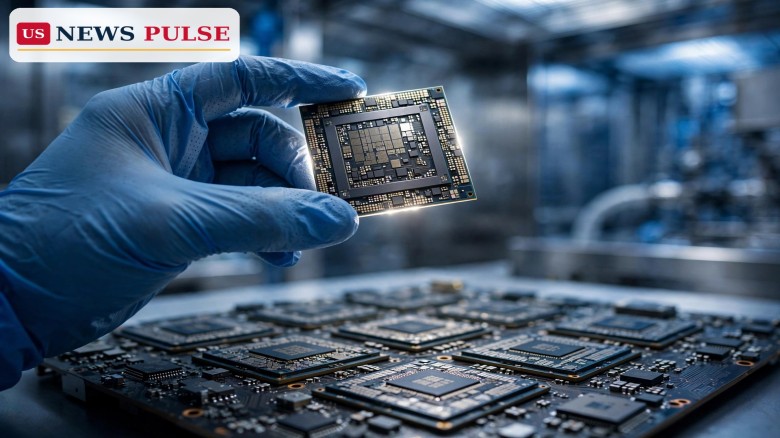
WASHINGTON — The Trump administration approved the sale of nearly 900,000 advanced artificial intelligence chips to Chinese companies over six months, including tens of thousands for firms the Pentagon has identified as backed by China’s military, according to export-license data released on Thursday by the House Foreign Affairs Committee.
The disclosure, covering December 2025 through May 2026, is the most detailed public accounting ever released of American AI chip exports to China. It lands as Congress presses former Nvidia chief Jensen Huang over his reported ties to a suspected Chinese intelligence operative, raising new questions about the Commerce Department’s licensing decisions.
Key Points
- The Commerce Department’s Bureau of Industry and Security approved 879,000 advanced AI chips for Chinese buyers between December 2025 and May 2026, out of 3.4 million companies had sought to ship.
- The approvals included 150,000 chips for Tencent, 75,000 for Alibaba, 43,000 for Baidu and 4,000 for BYD — all four are on the Pentagon’s list of alleged Chinese military-backed companies.
- More than 30% of the approved chips went to firms the Department of War has designated as Chinese military companies.
- The chips included Nvidia’s H200 and AMD’s MI325X, two of the most powerful AI processors available.
- Committee chair Brian Mast called it “the most detailed public disclosure in the history of the Export Control Reform Act.”
What Happened
The House Foreign Affairs Committee published the license data on Thursday, November 19, 2026, after its chair, Representative Brian Mast of Florida, used Export Control Reform Act authorities to make the normally confidential figures public. The data covers every AI chip export license approved for China by the Bureau of Industry and Security, known as BIS, over the six-month window.
The headline number is 879,000 approved chips, roughly one in four of the 3.4 million requested. The committee did not say how many approved licenses resulted in chips actually reaching China — a gap now central to the debate. The biggest recipients were named: Tencent was approved for 150,000 chips, Alibaba for 75,000, Baidu for 43,000 and the electric vehicle maker BYD for 4,000.
Background: A Year of Mixed Signals
The chips at issue are not ordinary processors. Nvidia’s H200 and AMD’s MI325X are among the most powerful AI accelerators on the market, used to train large AI models and run data centres. Washington has spent years tightening controls on exactly this class of chip, arguing that the most capable AI hardware should not reach China’s military or its state-backed technology champions.
Yet the license data shows approvals for China continued at a large scale through the first half of 2026, even as the administration said it would keep advanced AI technology out of Chinese hands. In May 2026, Reuters reported the U.S. had cleared about 10 companies to buy Nvidia’s H200; in July, a Commerce official told Congress shipments had begun but were “very few.” Nvidia said on Thursday that the approvals were “subject to strict conditions and limited volumes” and that it has since stopped shipping H200 chips to China. For more on that halt, read our earlier report: Nvidia Stops Shipping Hopper AI Chips to China, Interim CEO Says.
AI Chips for China: The Scale of the Approvals
The scale of the approvals is what makes the disclosure so striking. The 879,000 chips cleared in six months dwarfs the handful of H200 sales publicly acknowledged earlier in the year. Even if only a fraction became delivered hardware, the numbers suggest American AI chips kept flowing to China’s biggest technology firms at a pace few outside government had understood.
Tencent alone was cleared for 150,000 chips — more than the total H200s Nvidia is reported to have shipped to China in any previous year. What the data does not show matters too: the committee did not publish license dates, attached conditions, or how many chips were actually shipped.
Reactions and Quotes
Reaction in Washington was swift. “It’s astonishing, and calls into question whether Commerce conducted any serious national security review before approving these licenses,” said Chris McGuire, a former U.S. official, in comments reported alongside the release. The licenses were approved while the administration was publicly warning about the risks of advanced AI reaching China.
Mast framed the release as transparency, calling it “the most detailed public disclosure in the history of the Export Control Reform Act.” Nvidia, for its part, sought to draw a line between approval and delivery. Our earlier reporting on how H200 chips reached China-linked firms is here: Nvidia H200 Chips Reached China-Linked Firms Despite U.S. Blacklist Ties, NYT Finds.
Why It Matters
AI chips are now treated in Washington as a strategic asset on par with fighter jets or advanced missiles. The most powerful AI processors underpin modern military and intelligence capability, from weapons design to surveillance and cyber operations. Keeping them out of the hands of a rival military is one of the few points of bipartisan agreement in American politics.
The timing matters too. The release comes as the Huang scandal unfolds, and the license data adds a new dimension: it is no longer only about one executive’s conduct, but about the system that approved nearly a million advanced chips for China. It also gives the president’s critics, in both parties, concrete numbers to argue the licensing system did not match the rhetoric on China.
What Happens Next
The committee is expected to use the disclosure for further oversight, asking the Commerce Department to explain, license by license, why approvals were granted, what conditions were attached and how many chips were shipped. Hearings on the licensing system and the Huang affair are already being discussed. See also our report on the committee’s demand that Huang brief Congress: Nvidia CEO Jensen Huang Asked to Brief Congress on Nov. 18 Over China Spy Claims.
The Commerce Department has not yet responded in detail, but it is likely to face pressure to publish shipment figures. If it confirms large numbers were delivered, the fallout could grow quickly — and the era of large-scale AI chip approvals for China may be over.
Frequently Asked Questions
How many AI chips did the U.S. approve for China?
The Commerce Department approved 879,000 advanced AI chips for Chinese companies between December 2025 and May 2026, out of about 3.4 million requested.
Which Chinese companies received the most chips?
Tencent was approved for 150,000 chips, Alibaba for 75,000, Baidu for 43,000 and BYD for 4,000. All four are on the Pentagon’s list of alleged Chinese military-backed companies.
What kind of chips were approved?
The approvals covered Nvidia’s H200 and AMD’s MI325X, two of the most powerful AI processors available, used to train large AI models and run data centres.
Did all of the approved chips actually reach China?
It is not yet clear. The committee did not say how many approvals became actual shipments, and Nvidia says it has since stopped shipping H200 chips to China.
Why is the disclosure controversial?
More than 30% of the approved chips went to firms the Department of War has designated as Chinese military companies, while Washington was publicly warning about the national security risks of advanced AI reaching China.
© 2026 US News Pulse. All rights reserved.
 Print
 Save