
US Army Postpones Iowa Lead Azide Detonation to Monday After Lawsuit and Outcry - US News Pulse
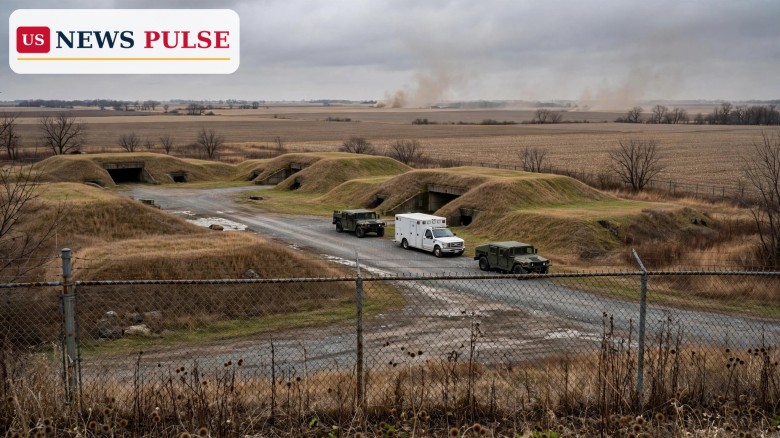
MIDDLETOWN, Iowa — The US Army has postponed Friday’s planned detonation of 68 barrels of unstable lead azide at the Iowa Army Ammunition Plant, pushing the blast back to Monday, November 23, after a federal lawsuit and an outcry from Iowa officials and residents who said they were given almost no warning.
Acting Secretary of the Army Adam Telle announced the delay on Thursday evening, saying he had directed Army Materiel Command to hold off on the two controlled detonations set for about noon on Friday, November 20.
Key Points
- The US Army has postponed Friday’s controlled detonation of 68 barrels of unstable lead azide in Middletown, Iowa, until Monday, November 23, 2026.
- Acting Army Secretary Adam Telle announced the delay on Thursday evening on X, calling Monday the latest possible moment before a forecast temperature drop could further destabilise the explosive.
- The Iowa Environmental Council and the Sierra Club Iowa Chapter, represented by Earthjustice, sued on Thursday in the 8th US Circuit Court of Appeals, challenging the EPA’s November 13 emergency permit and seeking a stay by 10 a.m. Friday.
- The Army’s own plume model showed toxic lead dust could travel up to 100 miles into Iowa and Illinois, and the EPA itself says there is no safe level of lead exposure.
- Schools had been closed and neighbourhood evacuations planned for Friday morning, while Iowa’s governor-elect and senator-elect both publicly criticised the Army’s handling of the plan.
What Happened
The detonation was supposed to happen on Friday, November 20, in two controlled blasts at about noon at the Iowa Army Ammunition Plant in Middletown, a small community in south-east Iowa. The Army planned to destroy 68 barrels holding about 9,500 pounds — roughly five tons — of lead azide, a powerful primary explosive used to set off other explosives, which had become too unstable to move after two decades in storage. Residents near the plant had been told to leave their homes between 8 a.m. and 2 p.m. on Friday, and schools in the area had announced closures for the day.
Then, on Thursday evening, Telle intervened. In a post on X, he said he had directed Army Materiel Command to postpone the detonation until Monday, November 23.
Background: How 68 Barrels Became Too Dangerous to Move
Lead azide is one of the oldest and most sensitive primary explosives in military use. A small shock, a knock or a change in temperature can set it off, which is why it is handled under strict controls and usually destroyed long before it reaches the state this stockpile is in. The 68 barrels at Middletown had been stored for about 20 years, and a survey in March found the material had recrystallised and become so sensitive that it could no longer be moved safely.
That left the Army with few options. Moving the barrels by road risked an explosion in transit, and leaving them in place risked an uncontrolled blast as the material continued to degrade.
Iowa Lead Azide Detonation Postponed: Why Monday Is the Deadline
The reason for the three-day delay is the weather. Telle said Monday, November 23, is “the latest possible moment prior to a forecasted temperature drop, which would risk further destabilization of the material.” The Army believes it can hold the stockpile safely for the weekend, but a cold snap after Monday could make the already unstable lead azide even more dangerous.
The short delay also buys time. It gives the 8th Circuit time to consider the environmental groups’ request for a stay: if the court blocks the detonation, the Army would have to find another way to deal with the stockpile.
Reactions and Quotes
The strongest criticism came from Iowa’s incoming leaders. Governor-elect Rob Sand criticised an “unacceptable lack of communication and clarity” from the Army, saying residents had been left to learn about a toxic blast in their community from the news rather than from the officials responsible for it. Senator-elect Josh Turek called for a delay until the health risks were better understood, arguing that no detonation should go ahead while basic questions about the lead dust remained unanswered.
Governor Kim Reynolds’ office said it only learned of the plan on November 16, four days before the scheduled blast, a timeline that fuelled the sense in Iowa that the state had been treated as an afterthought.
Why It Matters
This is not a routine disposal. Lead is a cumulative poison, and children are especially vulnerable: the CDC states that no safe blood lead level has been identified in children, and even low exposure can affect learning and development. A plume of lead dust travelling up to 100 miles would cross county lines, state lines and farmland, and the people downwind would have no way to avoid it beyond staying indoors and waiting for the dust to settle.
The case also matters beyond Iowa.
What Happens Next
The detonation is now scheduled for Monday, November 23, unless the 8th Circuit Court of Appeals intervenes first. The environmental groups asked for a stay by 10 a.m. on Friday, and the court could still act over the weekend. Residents should watch for fresh guidance from the Army, the EPA and local emergency officials, including whether the Friday evacuation and school-closure plans will simply move to Monday. Read our earlier report on the planned detonation of the 68 barrels of unstable lead azide in Iowa, and see how a federal agency pressed ahead with another contested order despite a court ruling and how a federal headquarters closure showed the strain on US emergency agencies.
Frequently Asked Questions
Why was the Iowa lead azide detonation postponed?
Acting Army Secretary Adam Telle ordered the delay on Thursday evening, November 19, after a lawsuit challenged the EPA’s emergency permit and Iowa officials criticised the lack of warning given to residents.
When will the detonation happen now?
Monday, November 23, which the Army calls the latest possible moment before a forecast temperature drop that could further destabilise the lead azide.
How dangerous is lead azide?
It is a highly sensitive primary explosive that can detonate from shock or temperature change.
How far could the lead dust travel?
The Army’s plume model showed toxic lead dust could travel up to 100 miles into Iowa and Illinois, through a corridor between Iowa City, Cedar Rapids, Clinton and Davenport, and as far north as Maquoketa.
Is there a safe level of lead exposure?
No.
© 2026 US News Pulse. All rights reserved.
 Print
 Save