
Haiti Martissant Offensive: Forces Retake Gang Corridor, at Least 34 Killed
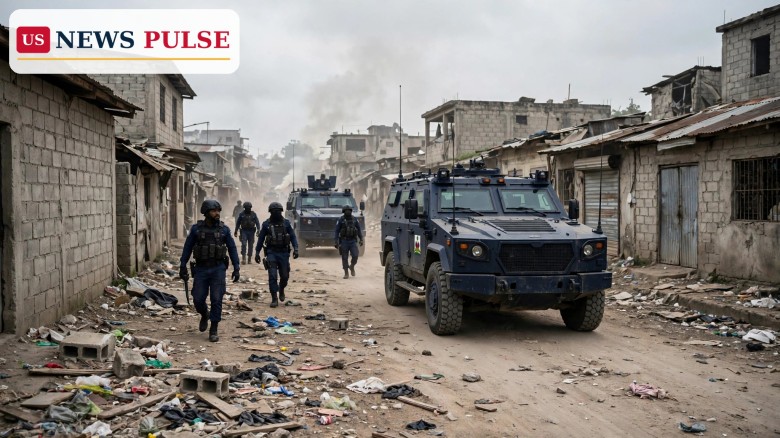
PORT-AU-PRINCE, Haiti — Haitian armed forces and police launched their first major offensive in five years on Thursday, November 19, 2026, to retake Martissant, the gang-held corridor that links the capital to Haiti’s west and south, killing at least 34 suspected gang members, the National Police said.
Police released video of armoured vehicles moving through the district as officers advanced along Route 2, the highway through Martissant that connects Port-au-Prince to the southern peninsula and the western departments.
Key Points
- Haitian armed forces and police launched an offensive on Thursday, November 19, 2026, to retake Martissant, a Port-au-Prince district along Route 2 linking the capital to Haiti’s western and southern regions.
- Haiti’s National Police said at least 34 suspected gang members were killed in the clashes, the first significant operation in the corridor in five years.
- The operation involved personnel from Vectus Global, a private security firm founded by former US Navy SEAL and Blackwater founder Erik Prince.
- Local media reported heavy gunfire and explosive drones in the area during the fighting.
- The UN-backed Gang Suppression Force is advancing in Tabarre and Artibonite, and about 2,500 Salvadoran troops deployed last month are attacking gang leaders’ homes.
What Happened
The offensive began on Thursday in Martissant, a district in southern Port-au-Prince on Route 2, the main road out of the capital toward the south and west. Gangs seized control of the corridor in June 2021, and no major operation to retake it had been attempted in the five years since.
Haiti’s National Police said at least 34 suspected gang members were killed as Haitian forces pushed into the area. The police posted video showing armoured vehicles moving through the district. Local media reported heavy gunfire and explosive drones during the fighting.
The operation was carried out by a task force that included personnel from Vectus Global, a private security firm founded by former US Navy SEAL and Blackwater founder Erik Prince. The firm’s involvement reflects how far Haiti’s government has gone in seeking outside help against gangs that often outgun the police. The police have published no independent count of the dead, and no civilian toll has been reported.
Background: Five Years Under Gang Control
Martissant fell to the gangs in June 2021, when rival groups fought over the district and then held it. The takeover drove at least 19,000 residents from their homes, according to the United Nations in July 2022. Since then, the gangs have controlled movement through the corridor, charging tolls or firing on vehicles trying to pass.
Route 2 is one of the main arteries out of Port-au-Prince, and its closure has cut the capital off from the south, strangling trade, aid deliveries and travel for ordinary Haitians. Armed groups now dominate much of Port-au-Prince, and earlier operations were smaller and often reversed within days as gangs returned once security forces withdrew.
A UN-backed Gang Suppression Force is now operating in the country, and about 2,500 Salvadoran troops deployed last month. The Salvadoran contingent has been attacking gang leaders’ homes, the force said. Read our report on El Salvador’s first major Haiti operation against gang strongholds.
The Haiti Martissant Offensive and the Fight for Route 2
Route 2 links Port-au-Prince to the cities and farming regions of the south and west, and whoever controls Martissant controls who and what can move in and out of the capital by land. For five years, that control has belonged to the gangs: trucks carrying food, fuel and medicine have had to pay, turn back or risk being shot at.
Reopening the corridor would restore one of the country’s most important lifelines and show Haitian forces can take and hold ground the gangs treated as their own. The gangs are no longer street groups with handguns: they have drones, heavy weapons and organised supply lines.
Reactions and Responses
Haiti’s National Police presented the operation as a success, reporting at least 34 suspected gang members killed and releasing video of armoured vehicles advancing through Martissant. It was the clearest signal yet that the government intends to fight for the corridor.
The UN-backed Gang Suppression Force said its units are advancing in Tabarre and in central Artibonite, clearing gang barricades along Route 5 near Gros-Morne. The 2,500 Salvadoran troops deployed last month are part of that push, and they helped retake the Sylvio Cator stadium from gang control earlier this year. Read our report on how Bukele’s troops retook Haiti’s Sylvio Cator stadium from the gangs.
For the people of Martissant, the test will be whether the streets are still safe next week and whether the families driven out in 2021 can come home. At least 19,000 residents fled the district when the gangs took it.
Why It Matters
First, this is the first significant operation in Martissant in five years, and every previous effort has ended with the gangs still in control. If Haitian forces can hold the district, it would be the clearest sign yet that the balance of power in Port-au-Prince is shifting.
Second, it tests Haiti’s new security model: Haitian police and soldiers backed by a UN-authorised force, Salvadoran troops and private contractors. Third, Haiti is preparing for its first elections in more than a decade, and no vote can be credible while armed groups control the roads in and out of the capital.
Finally, the fight reaches beyond Haiti’s borders. Hundreds of thousands of Haitians have fled the violence, many toward the United States, and the gang crisis has become a regional security problem. Read our report on the Haitian boy detained by ICE and later reunited with his family.
What Happens Next
The immediate question is whether Haitian forces can hold Martissant once the first push is over. Taking ground in a day is one thing; keeping it, with police posts and patrols, is where earlier operations failed. The Gang Suppression Force is expected to keep pressing in Tabarre and Artibonite.
Haiti’s government will also face questions about the operation: the civilian toll, the role of Vectus Global personnel, and the use of force in a densely populated district. For now, the armoured vehicles in Martissant are the strongest signal in years that the government intends to take its capital back, street by street.
Frequently Asked Questions
Where is Martissant?
Martissant is a district in southern Port-au-Prince, Haiti’s capital, along Route 2, the highway linking the capital to Haiti’s western and southern regions.
How many people were killed in the operation?
At least 34 suspected gang members, according to Haiti’s National Police. No independent count has been published.
Why has Martissant been under gang control for so long?
Gangs seized it in June 2021, driving at least 19,000 residents from their homes, according to the United Nations. No major operation to retake it had been attempted since.
What is the Gang Suppression Force?
It is the UN-backed multinational force supporting Haiti’s security forces against the gangs. It is advancing in Tabarre and Artibonite, and about 2,500 Salvadoran troops deployed last month are part of the effort.
© 2026 US News Pulse. All rights reserved.
 Print
 Save