
First US Deep-Sea Mining Lease Sale Draws $6 Million Off American Samoa - US News Pulse
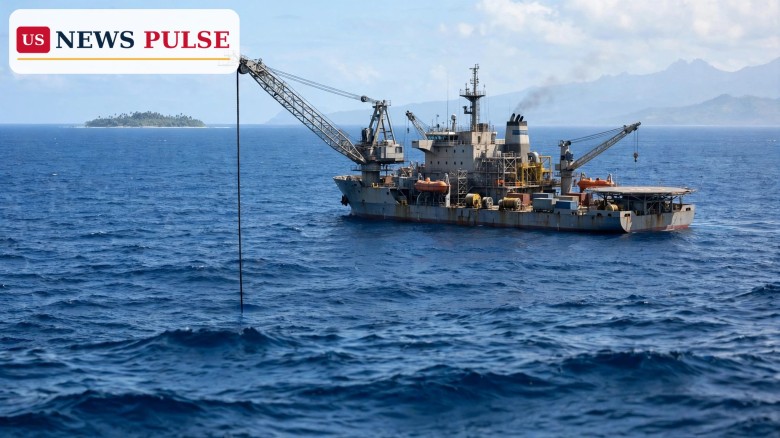
The United States has held the first deep-sea mining lease sale in its history, drawing $6 million in bids for two vast areas of Pacific seabed off American Samoa. The deep-sea mining lease sale, held on Thursday, November 19, 2026, covered about 31.5 million acres of ocean floor — an area larger than the state of New York — the first time Washington has auctioned seabed exploration rights in its own waters.
Key Points
- The Trump administration held Lease Sale PACM-1 on Thursday, November 19, 2026, drawing $6 million in high bids — $3 million for each of two lease areas totalling about 31.5 million acres off American Samoa.
- The provisional winner is New York-based Wetstone US Ventures, founded in 2024; Norway-based Adepth Minerals also took part. Wetstone has 10 business days to sign and pay the remaining bonus.
- The 20-year leases allow research and pilot tests only and do NOT authorise mining. Royalties would start at 2% of production value for the first five years, rising to 5%.
- The sale went ahead three days after a federal judge ruled the government's wildlife review violated the Endangered Species Act, and days after a new lawsuit was filed to strike the leases down.
- The lease areas lie 150 to 240 miles east of Pago Pago in waters 4,630 to 20,100 feet deep, near the Rose Atoll Marine National Monument, home to threatened whales, turtles and coral.
What Happened
The Bureau of Ocean Energy Management opened bidding on Thursday morning for two Pacific lease areas, OCS-P 0568, about 16.3 million acres, and OCS-P 0569, about 15.2 million acres. Together they span roughly 31.5 million acres of seabed 150 to 240 miles east of Pago Pago, at depths of 4,630 to 20,100 feet. Each area drew a high bid of $3 million, matching the government's minimum price, for a combined $6 million.
The provisional winner of both tracts is Wetstone US Ventures, founded in New York in 2024; Norway-based Adepth Minerals also took part. Interior Secretary Doug Burgum called the sale "a historic step for America's energy and mineral security" and "the first time the United States has held an offshore critical minerals lease sale in the Pacific". The 20-year leases allow research and pilot tests only; any extraction would need further approvals. Wetstone has 10 business days to sign the leases and pay the remaining bonus balance.
Background: The Race to Mine the Seabed
The sale is the centrepiece of a drive to open American waters to deep-sea mining that began with an executive order signed by President Donald Trump in April 2025. The order directed federal agencies to fast-track seabed mining, framing seabed minerals — cobalt, nickel, copper and rare earths — as a matter of national security and independence from China, which dominates critical-mineral processing.
The minerals sit on the seabed as polymetallic nodules, potato-sized lumps of manganese, nickel, cobalt and copper, and as ferromanganese crusts holding cobalt, nickel, platinum and rare earths. Both are used in batteries, electronics and defence equipment. our report on the court ruling. The push followed a request from Impossible Metals, and the sale followed less than 19 months later. American Samoa banned deep-sea mining in its own waters in 2024, and the Marine Minerals Administration received more than 76,000 public comments, overwhelmingly opposed.
Deep-Sea Mining Lease Sale: What the $6 Million Buys
The $6 million figure is small by the standards of offshore energy auctions, where oil and gas leases routinely draw billions. The areas were offered at a $3 million minimum each, and the bids matched that floor exactly — a sign of a young industry cautious about a sale shadowed by litigation.
What the money buys is narrow. The 20-year leases allow research and pilot tests only, not mining, and they do not guarantee mining will ever be allowed. The leaseholder must still clear environmental reviews and meet the royalty terms: 2% of production value for five years, rising to 5%. The economics remain unproven — no company has yet mined the deep seabed at commercial scale anywhere in the world, and the $6 million is best read as a bet on the future.
Reactions: What the Government, the Winner and Opponents Said
Secretary Burgum framed the sale as a matter of national strength, calling it "a historic step for America's energy and mineral security". Wetstone US Ventures has said little publicly about its plans for the two tracts, and Adepth Minerals has also stayed quiet since the sale closed.
The opposition was swift. Finafinau, an American Samoa youth group, and the Natural Resources Defense Council have sued, asking the court to strike down any leases from the sale. Their case follows an earlier Earthjustice challenge by Fa'asao Amerika Samoa and the Conservation Council for Hawaii, filed on August 18, 2026. On Monday, November 16, US District Judge Jill Otake of Hawaii ruled that the National Marine Fisheries Service violated the Endangered Species Act in approving the sale, calling its consultation "cramped, expedited" and warning bidders they would proceed "on notice".
Why It Matters
First, the precedent: this is the first deep-sea mining lease sale ever held by the United States, and the first anywhere run by a national government in its own waters. Second, the minerals: the nodules and crusts contain metals the United States now imports, much of it through Chinese-controlled supply chains, for batteries, electronics and weapons systems. our Senate permitting bill report. Third, the ocean: the lease areas lie near the Rose Atoll Marine National Monument, home to threatened whales, turtles and coral, in little-studied waters.
What Happens Next
The immediate deadline is Wetstone's: 10 business days to sign the leases and pay the remaining bonus. If it does, the lawsuits move to the front of the queue, and the courts will decide whether the sale can stand, given Judge Otake's ruling that the wildlife review was unlawful. The government may appeal or redo the endangered-species consultation, a process that could take months. Longer term, pilot testing will show whether deep-sea mining can work without destroying the seabed.
Frequently Asked Questions
What is Lease Sale PACM-1?
The first-ever US deep-sea mining lease sale, held on Thursday, November 19, 2026, offering two areas totalling about 31.5 million acres off American Samoa for $6 million.
Who won the lease sale?
Provisional winner Wetstone US Ventures of New York, founded in 2024, bid $3 million per tract; Norway-based Adepth Minerals also took part. Wetstone has 10 business days to sign and pay.
Does the sale allow mining?
No. The 20-year leases allow research and pilot tests only. Further approvals would be needed for extraction, with royalties from 2%, rising to 5%.
Why is the sale controversial?
The areas lie near the Rose Atoll Marine National Monument. A federal judge ruled on November 16 that the wildlife review violated the Endangered Species Act, and more than 76,000 public comments were overwhelmingly opposed.
What happens next?
Wetstone has 10 business days to sign. Lawsuits by Finafinau and the Natural Resources Defense Council, plus the earlier Earthjustice case, will test the leases in court.
© 2026 US News Pulse. All rights reserved.
 Print
 Save