
Senate Passes BAAJA Permitting Overhaul 62-33, Sending Bill to House - US News Pulse
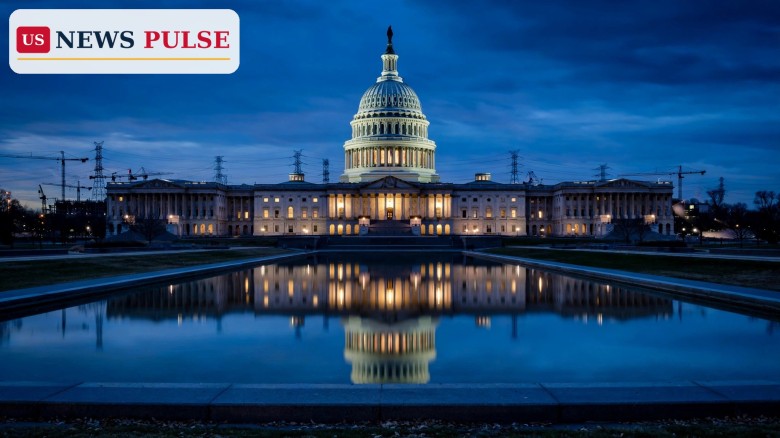
The United States Senate passed the Bipartisan American Affordability and Jobs Act on Thursday night, approving the biggest rewrite of federal permitting law in a generation and sending the sweeping energy and infrastructure bill to the House of Representatives. The BAAJA permitting bill cleared the chamber by a vote of 62 to 33, with 14 Democrats joining nearly all Republicans in support. President Donald Trump has said he will sign the measure if it reaches his desk, and House Speaker Mike Johnson, a supporter, has predicted he has the votes to pass it before the current Congress ends in January.
Key Points
- The Senate passed the BAAJA permitting bill 62-33 on Thursday, November 19, 2026; the bill now goes to the House.
- The nearly 500-page bill sets two-year deadlines for environmental impact statements and one-year deadlines for environmental assessments.
- Court challenges under the National Environmental Policy Act would face a 150-day filing window.
- Large artificial intelligence data centres must pay the extra grid costs of connecting, shielding household ratepayers.
- President Donald Trump has said he will sign the bill; Speaker Mike Johnson says the House has the votes.
What Happened
The vote came on Thursday evening, November 19, ten days after the Senate voted 73-25 on November 9 to take up the measure. Fourteen Democrats crossed the aisle to support final passage, while two Republicans voted against it, according to The Wall Street Journal. The bill passed as an amendment to H.R. 2347, carrying the manager’s amendment the four sponsors introduced on November 10. At nearly 500 pages, it rewrites the rules for building pipelines, power plants, transmission lines, mines and data centres. Its centrepiece is speed: a two-year deadline for full environmental impact statements and one year for shorter environmental assessments. Parties seeking to challenge a project in court under the National Environmental Policy Act, known as NEPA, would have 150 days to file, down from years. The bill also gives the Federal Energy Regulatory Commission a stronger hand in siting interstate transmission lines, and makes developers of large AI data centres pay the extra cost of connecting to the grid.
Background: The Long Road to Passage
Permitting reform has been debated in Washington for years. Reviews under NEPA, the Clean Water Act and the Endangered Species Act can stretch for years, with lawsuits adding years more. Supporters say the delays push up electricity prices and slow the grid build-out that artificial intelligence now demands. The bill’s four authors — Republican Senators Shelley Moore Capito of West Virginia and Mike Lee of Utah, and Democratic Senators Sheldon Whitehouse of Rhode Island and Martin Heinrich of New Mexico — spent months assembling a package that could win 60 votes. The path was long: the Senate voted 73-25 on November 9 to begin debate, agreed 62-21 on November 10 to proceed, and cleared two more cloture votes, 70-27 on November 16 and 65-31 on November 18, before adopting the substitute amendment 69-27. Democrats swept the November 3 midterms and take control of both chambers in January, so Republicans used the lame-duck session for a priority that may not survive a Democratic majority. The sponsors dropped two provisions Tribal nations opposed most — a federal definition of sacred places and a plan to shift Tribal preservation-office functions to the Interior Department — but objections to the Section 106 rewrite remained. The National Congress of American Indians urged a no vote, and former Vice President Al Gore pressed Congress not to pass the bill.
Reactions and Quotes
Senator Capito, the bill’s lead Republican author, celebrated the vote as a breakthrough. “Tonight, the passage of permitting reform in the Senate finally became reality and we took a major step towards addressing the affordability concerns of the American people,” she said in a statement after the vote. Senator Whitehouse, the lead Democratic negotiator, was one of the few Democrats on the Environment and Public Works Committee to back it. President Donald Trump has said he will sign it if it reaches his desk. Sierra Club executive director Loren Blackford called the bill “a deeply flawed bill” that “furthers the buildout of fossil fuels, strips away power from communities and Tribes, threatens our clean water and public lands, and endangers wildlife,” and urged the House to reject it. Critics also warn a “forever permits” provision would bar agencies from revoking or materially changing permits in effect on or after November 6, 2026. Speaker Mike Johnson, a supporter, predicts the House has the votes, and more than 100 moderate House Democrats are said to be warming to it.
Why It Matters
This is the most significant rewrite of federal environmental review law in a generation, and its effects would reach almost every large project built in the United States. Pipelines, gas plants, wind and solar farms, transmission lines, mines and the data centres powering the artificial intelligence boom would all move through a faster, more predictable process. For households, the promise is lower utility bills: the bill’s supporters say it will shield residential ratepayers from the grid costs of new data centres and speed the transmission lines that carry cheaper power. Senator Whitehouse has argued the package could save consumers about 60 to 80 dollars a month. For Tribal nations and conservationists, the stakes run the other way: shorter review periods and narrower court windows, they argue, will weaken protections for clean water, public lands and wildlife, and limit the voice of communities living beside big projects.
What Happens Next
The bill now moves to the House of Representatives, where its future is uncertain. Speaker Johnson says he has the votes, and more than 100 moderate Democrats are said to be open to supporting it, but many Democrats have voiced opposition, and Republicans are bracing to lose seats after the midterm losses. The House must pass the bill before the current Congress ends in January 2027, or it dies and the whole process starts over. If it passes, President Trump has said he will sign it into law. Federal agencies would then begin writing the rules to carry out the new deadlines, and environmental groups are expected to challenge the law in court.
Frequently Asked Questions
What is BAAJA? The Bipartisan American Affordability and Jobs Act of 2026, S. 5653, is a nearly 500-page bill rewriting federal permitting rules for energy and infrastructure projects.
How did the Senate vote? The Senate passed the bill 62-33 on Thursday, November 19, 2026. Fourteen Democrats voted for it and two Republicans voted against it.
What does the bill change? It sets two-year deadlines for environmental impact statements, one-year deadlines for environmental assessments, a 150-day window for court challenges, and a rule making large AI data centres pay their own grid-connection costs.
What happens next? The bill goes to the House, which must pass it before the current Congress ends in January 2027. If it passes, President Trump has said he will sign it.
Why do critics oppose it? Environmental groups and Tribal nations say it weakens protections for clean water, public lands and wildlife, and favours fossil-fuel development.
© 2026 US News Pulse. All rights reserved.
 Print
 Save