
Kamala Harris Weighs 2028 Run as Democrats Move On and Ossoff Leads Poll - US News Pulse
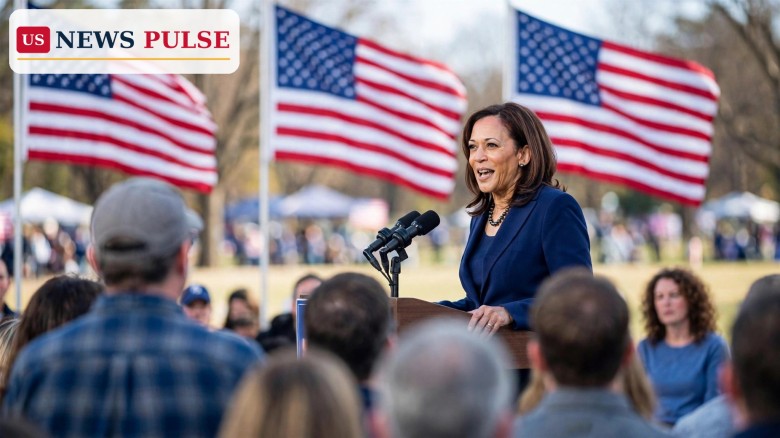
Former Vice President Kamala Harris has still not said whether she will run for president in 2028, and a new national poll suggests the Democratic field is already moving on without her. An Emerson College survey released on November 19 put Georgia Senator Jon Ossoff at the front of the Democratic primary field with 17 percent support, ahead of Representative Alexandria Ocasio-Cortez at 12 percent and California Governor Gavin Newsom at 8 percent. Harris, the party's 2024 nominee, drew just 6 percent, tied with former Transportation Secretary Pete Buttigieg.
Key Points
- Emerson College's November 19 poll puts Jon Ossoff first in the Democratic 2028 field at 17 percent, ahead of Alexandria Ocasio-Cortez at 12 percent and Gavin Newsom at 8 percent.
- Kamala Harris drew 6 percent, tied with Pete Buttigieg, ahead of Kentucky Governor Andy Beshear at 4 percent and Senator Mark Kelly at 3 percent.
- A Reuters/Ipsos poll this month found 23 percent of Democratic voters rated Harris an "excellent" candidate, against 29 percent each for Buttigieg and Ossoff.
- At least two candidates are considering December announcements, and hopefuls have begun collecting resumes for campaign staff.
- Al Sharpton has advised candidates to decide by Martin Luther King Jr. Day in late January, while Harris allies say she could wait until the first primary debate.
What Happened
The Emerson poll, conducted among Democratic primary voters and released on November 19, gives the clearest picture yet of a race that is still wide open. Ossoff, freshly re-elected in Georgia on November 3, leads with 17 percent. Ocasio-Cortez, who has built the party's largest grassroots following, is second at 12 percent. Newsom, who leaves the California governorship on January 4, takes 8 percent. Behind Harris and Buttigieg at 6 percent sit Beshear at 4 percent and Kelly at 3 percent.
The survey landed as USA TODAY reported on November 20 that Harris remains undecided while more than two dozen Democrats weigh runs of their own, including Maryland Governor Wes Moore. At least two candidates are toying with December announcements, and Democrats considering bids have already started collecting resumes for campaign staff.
Background: Harris and the 2028 Field
Harris has been the subject of 2028 speculation since her 2024 defeat, but she has refused to commit. In October she told interviewers she was going back and forth on the question, and she spent the midterm campaign rallying younger voters, including an appearance in Georgia for Ossoff, rather than building a campaign of her own. Our earlier report on Harris saying she goes back and forth on 2028 captured that uncertainty as the midterm campaign reached its climax.
The field has not waited. A Reuters/Ipsos poll released earlier in November also found a wide-open race, with Secretary of State Marco Rubio and Vice President JD Vance leading the Republican side and Ossoff and Buttigieg bunched among Democrats. Our coverage of that early 2028 field showed no clear Democratic favourite. Ossoff's position rests on a fresh win: he beat Trump-backed Mike Collins in Georgia on November 3, as reported in our account of Ossoff's re-election victory in Georgia.
Kamala Harris 2028: A Decision That Shapes the Whole Field
Harris's decision matters beyond her own candidacy because several of the strongest potential contenders are waiting on her. Newsom has said he will decide at the beginning of the year and will not run if Harris does, a pledge that effectively gives the former vice president a veto over one of the best-funded and most nationally visible Democrats in the country.
Other hopefuls face the same calculation. Moore is weighing a bid. Ocasio-Cortez, second in the Emerson survey, would have to decide whether to challenge a former vice president for the party's progressive lane. Those close to Harris are split: former Harris backer Bakari Sellers put her chances of running at 50-50, while her allies say she could wait until the first primary debate.
Reactions and Quotes
Sharpton's advice reflects a wider worry that a long, crowded primary could drain money and energy before the general election. He has urged the whole field to settle its plans early, pointing to Martin Luther King Jr. Day in late January as the moment for decisions.
Sellers, a former South Carolina state representative who backed Harris in 2024, was blunt about the odds, putting her chances at 50-50. Newsom's position has been the clearest of any potential rival: he will decide at the beginning of the year and will not run if Harris enters the race. The Reuters/Ipsos numbers drew the sharpest reaction, with only 23 percent of Democratic voters rating Harris "excellent", against 29 percent each for Buttigieg and Ossoff.
Why It Matters
The 2028 primary will decide who leads the party after its 2024 defeat and its midterm recovery in November, when Democrats won control of the House and Senate. The next nominee inherits a party still arguing over why it lost in 2024, whether its message or its messenger was at fault.
Harris sits at the centre of that argument. Supporters call her the most experienced candidate available, a former vice president who ran a national campaign two years ago. Critics say a second run would re-litigate a losing campaign and block a new generation, including Ossoff, Newsom and Ocasio-Cortez. Ossoff's lead is real but narrow, and it comes before any candidate has announced or spent serious money.
What Happens Next
December will be the first test of how serious the field is. At least two candidates are considering announcements next month, and the resume-collecting already under way suggests staffs are being assembled now. Any December launch would pressure Harris to clarify her plans sooner than she might like.
January brings the deadlines that matter. Newsom has said he will decide at the beginning of the year. Sharpton's Martin Luther King Jr. Day marker in late January is the point by which he wants every candidate to have decided.
Frequently Asked Questions
Is Kamala Harris running for president in 2028?
She has not said. Harris remains undecided, and her allies say she could wait until the first primary debate, while others close to her put her chances at 50-50.
Who leads the Democratic 2028 field in the latest poll?
Georgia Senator Jon Ossoff leads the Emerson College poll released November 19 with 17 percent, ahead of Alexandria Ocasio-Cortez at 12 percent and Gavin Newsom at 8 percent. Harris drew 6 percent, tied with Pete Buttigieg.
When will Harris decide on 2028?
There is no set date. Al Sharpton has advised candidates to decide by Martin Luther King Jr. Day in late January, while Harris allies say she could wait until the first primary debate.
Who else is considering a 2028 Democratic run?
More than two dozen Democrats are looking at runs, including Maryland Governor Wes Moore, California Governor Gavin Newsom, Representative Alexandria Ocasio-Cortez, Pete Buttigieg, Kentucky Governor Andy Beshear and Senator Mark Kelly.
What did the Reuters/Ipsos poll find about Harris?
It found 23 percent of Democratic voters rated Harris an "excellent" candidate, compared with 29 percent each for Buttigieg and Ossoff, suggesting voters are open to a new standard-bearer.
© 2026 US News Pulse. All rights reserved.
 Print
 Save