
Russian Missiles Land in Poland as Warsaw Suspects Deliberate Provocation
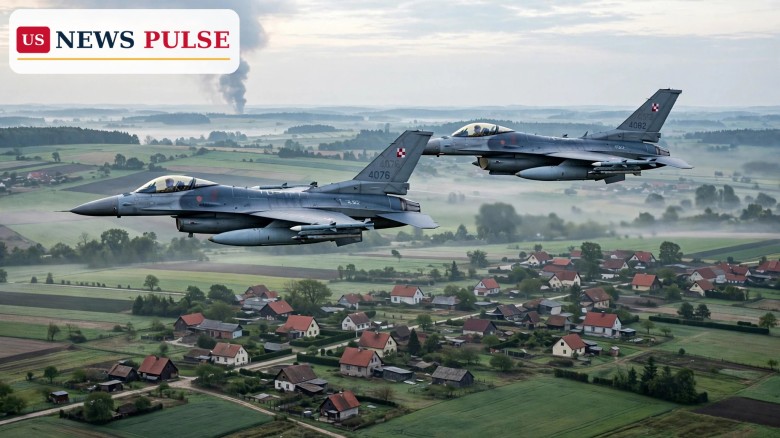
Russian missiles in Poland landed on NATO soil on Friday, when two Russian cruise missiles and a jet-powered drone came down in south-eastern Poland during Moscow's massive overnight attack on Ukraine — and Warsaw says the strikes look like a deliberate provocation, not an accident. Polish Defence Minister Wladyslaw Kosiniak-Kamysz confirmed the landings on Friday, November 20, 2026, as Polish F-16s and Swedish Gripens stayed airborne and air-raid alerts sounded across 20 districts.
Key Points
- What fell in Poland: Two Russian missiles — one confirmed as a Kh-101 cruise missile — and a jet-powered drone came down in south-eastern Poland during Russia's overnight attack on Ukraine.
- Where they landed: Nowy Lipowiec, about 62 kilometres from the border; Rudnik nad Sanem, about 100 kilometres; and the drone at Molodycz, about 38 kilometres, in Lublin and Podkarpackie.
- No casualties: No one was injured and no critical infrastructure was damaged, Polish officials said.
- Warsaw's verdict: Defence Minister Kosiniak-Kamysz said Poland and its allies suspect "intentional provocation", adding "it does not look like an accident".
- The NATO response: Poland requested additional NATO forces, Polish F-16s and Swedish Gripens stayed airborne all night, and Prime Minister Donald Tusk called an emergency meeting.
What Happened
Overnight, roughly 100 ballistic and cruise missiles plus 404 drones were fired at Ukraine. In Kyiv, at least eight people were killed and 28 injured across nine regions, while strikes hit power, water and heating supplies.
Polish officials said the first missile came down at Nowy Lipowiec, about 62 kilometres from the Ukrainian border, and was confirmed as a Kh-101 cruise missile — a long-range weapon Russia has used repeatedly against Ukrainian cities. A second missile landed at Rudnik nad Sanem, roughly 100 kilometres inside Poland, and a jet-powered drone fell at Molodycz, about 38 kilometres from the border. Air-raid alerts went out in 20 districts, Polish F-16s scrambled alongside Swedish Gripens, and Prime Minister Donald Tusk called an emergency meeting on Friday.
Background and Context
The landings are the most serious spillover of the war in Ukraine onto NATO territory since Russia's full-scale invasion began. They follow the massive attack on Ukraine that Russia launched hours after talks between Donald Trump and Vladimir Putin, killing at least eight people in Kyiv and striking bridges and energy infrastructure.
Poland has been NATO's frontline state throughout the war, hosting allied troops and serving as the main hub for military aid to Ukraine. Russian drones have crossed into neighbouring airspace before, but three Russian weapons deep inside Polish territory is a sharp escalation. The timing has drawn the most attention in Warsaw: the landings came during Exercise Koalicja, the Coalition of the Willing exercise running from November 9 to November 22 at Nowa Deba, where allied forces are preparing for postwar troop deployments to Ukraine. One of the missiles landed less than a two-hour drive from the drill.
Russian Missiles in Poland: What the Debris Revealed
The confirmed Kh-101 at Nowy Lipowiec anchors the Polish account. The Kh-101 is a long-range, air-launched cruise missile fired by Russian strategic bombers from well inside Russian airspace, and its wreckage is identifiable. Polish authorities secured the impact sites and examined the debris, confirming the missile type within hours.
The drone came down at Molodycz, about 38 kilometres from the border; the Kh-101 at Nowy Lipowiec, about 62 kilometres inside Poland; and the second missile at Rudnik nad Sanem, about 100 kilometres from the border. Weapons that travel that far into a NATO member state do not drift there by accident, Polish officials argue. Investigators will now trace the flight paths of all three weapons: where they were launched from, and whether they were aimed at the border or deliberately sent across it.
Reactions and Quotes
Defence Minister Wladyslaw Kosiniak-Kamysz left little doubt about Warsaw's reading. He confirmed the two missile landings and the drone, and said Poland and its allies suspect "intentional provocation". "It does not look like an accident," he said, pointing to the timing of the landings during the Coalition of the Willing exercise at Nowa Deba.
Prime Minister Donald Tusk convened an emergency meeting of ministers, military and security chiefs as the scale became clear. Poland also requested additional NATO forces, a step that underlines how seriously Warsaw is taking the landings. Polish F-16s stayed airborne through the night alongside Swedish Gripens, patrolling south-eastern Poland as the attack on Ukraine continued.
Why It Matters
Russian weapons landing on NATO territory is one of the most dangerous kinds of incident in this war, because it tests the alliance's unity and red lines. Poland is not a bystander: it is the main conduit for Western military aid to Ukraine, it hosts allied forces including a permanent US military base backed by the Pentagon, and it sits on the alliance's eastern flank. An attack on Polish soil, even one Moscow might describe as accidental, carries risks no other spillover incident has carried.
When a defence minister says publicly that his country and its allies suspect "intentional provocation", he is not describing a mishap. He is saying Warsaw believes Moscow chose to send weapons into Poland while allied troops rehearsed postwar deployments to Ukraine nearby. If that reading is right, the landings were a message. The pattern adds to the concern: the barrage was one of the largest of the war, it came hours after Trump-Putin talks, and the peace talks agreed in Berlin have yet to produce a ceasefire as Russia steps up attacks on Ukrainian energy infrastructure.
What Happens Next
The immediate next step is the investigation. Polish teams are examining the debris from all three sites, and the flight-path analysis will determine whether the weapons were aimed across the border or went astray. Warsaw is expected to share its findings with NATO allies, and Poland's request for additional NATO forces is likely to be taken up quickly by the alliance.
Attention will also turn to the Coalition of the Willing exercise at Nowa Deba, which runs until November 22. With peace talks stalled and Russian attacks intensifying, further spillover onto NATO territory cannot be ruled out. For now, Poland's skies are being watched more closely than at any point in the war.
Frequently Asked Questions
What fell in Poland?
Two Russian missiles — one a confirmed Kh-101 — and a jet-powered drone, which came down in south-eastern Poland during Russia's overnight attack on Ukraine.
Was anyone hurt?
No. Polish officials said no one was injured and no critical infrastructure was damaged in Poland.
Where exactly did the weapons land?
At Nowy Lipowiec, about 62 kilometres from the border; Rudnik nad Sanem, about 100 kilometres; and the drone at Molodycz, about 38 kilometres, in Lublin and Podkarpackie.
Why does Poland call it a deliberate provocation?
Defence Minister Wladyslaw Kosiniak-Kamysz said Warsaw and its allies suspect "intentional provocation" and that "it does not look like an accident", pointing to the timing during the Coalition of the Willing exercise at Nowa Deba.
What is NATO doing?
Poland has requested additional NATO forces. Polish F-16s and Swedish Gripens stayed airborne all night, alerts sounded in 20 districts, and Prime Minister Donald Tusk called an emergency meeting.
© 2026 US News Pulse. All rights reserved.
 Print
 Save