
US Deportees Went Hungry in South Sudan as Guards Pocketed Families' Money
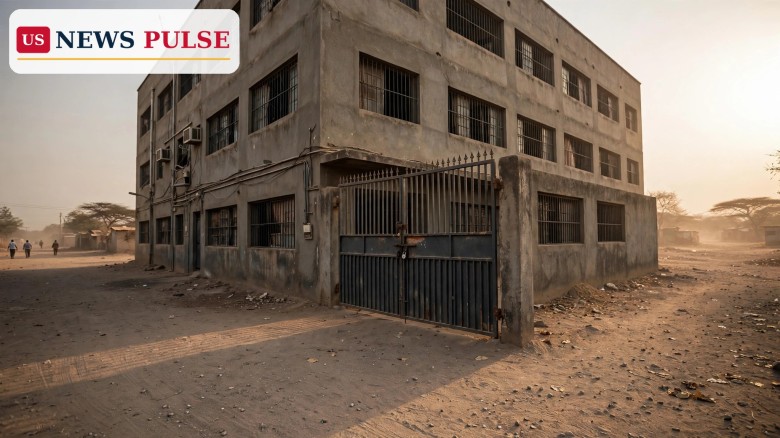
US deportees in South Sudan went hungry for days while guards pocketed money their families sent for food and water, an Associated Press investigation published on Friday, November 20, 2026, found. Relatives paid thousands of dollars to guards at a detention building in Juba, only for the men inside to receive a few bananas, apples and peanuts after each payment.
The AP investigation found that migrants deported by the Trump administration to countries other than their own have endured hunger, thirst and indefinite detention with little oversight. In South Sudan, guards took money from families, promised food and water, and kept most of it.
Key Points
- An Associated Press investigation published on Friday, November 20, 2026, found that US deportees held in South Sudan went hungry while guards pocketed money their families sent for food and water.
- Ngoc Phan, a US citizen, said she sent roughly $4,000 for her husband Tuan Phan, 44, who lost about 20 pounds while held in a gated three-storey building in Juba.
- Guards gave Tuan Phan only a few bananas, apples and peanuts after each payment, and first asked for $300 in November 2025 after a lawyer warned that food had run out.
- The AP interviewed six other people familiar with the detainees' treatment, including relatives and lawyers, and reviewed money-transfer receipts and messages between guards and four families, with payments ranging from $100 to $1,000 at a time.
- Five of the eight men deported to South Sudan in July 2025 remain in custody. South Sudan's Foreign Ministry denied the claims.
What Happened
The investigation centres on eight men from Cuba, Laos, Mexico, Myanmar, Sudan and Vietnam who were deported to South Sudan in July 2025, after a Supreme Court ruling cleared the way for the transfers. They were held in a gated three-storey building in Juba, the South Sudanese capital.
Ngoc Phan, a US citizen, told the AP she sent roughly $4,000 to guards for her husband, Tuan Phan, 44, who lost about 20 pounds during his detention. After each payment, the guards gave him only a few bananas, apples and peanuts, she said. The guards first asked her for $300 in November 2025, after a lawyer warned that food had run out. The AP reviewed money-transfer receipts and messages between guards and four families, and found payments ranging from $100 to $1,000 at a time.
Tuan Phan was repatriated to Vietnam in June 2026, after nearly a year in detention. Five of the eight men deported to South Sudan remain in custody, with no clear end to their detention in sight.
Background: Third-Country Deportations
The eight men were among thousands of migrants the Trump administration has deported to more than 30 third countries under agreements that have largely remained undisclosed. The policy sends people to countries they did not come from, with little public information about what happens to them afterwards.
The July 2025 transfer to South Sudan followed a Supreme Court ruling that allowed the administration to proceed with third-country removals. The AP investigation found that oversight of their treatment was minimal, leaving guards in day-to-day control of whether they ate or drank.
US Deportees in South Sudan: Hunger Behind the Gate
The detail that gives the investigation its force is the gap between what families paid and what the detainees received. Ngoc Phan sent about $4,000 over the months her husband was held. The return, after each payment, was a handful of fruit and nuts. A man who lost about 20 pounds was being fed, in effect, on the change left over from payments meant to keep him alive.
The pattern was not limited to one family. The AP interviewed six other people familiar with the detainees' treatment, including relatives and lawyers, and reviewed the receipts and messages of four families. The same shape repeated: a request for money, a promise of food and water, a payment of $100 to $1,000, and then very little arriving. The demand for $1,000 for suits, shirts and shoes shows how far the requests drifted from basic needs, turning a detainee's family into a source of income for the people guarding him.
Reactions
South Sudan's Foreign Ministry denied the claims. It said detainees receive adequate food, water and medical care, and regular contact with relatives and lawyers. The ministry also said the United States "fully relinquished responsibility and no longer has any legal jurisdiction over, or ties to, these individuals".
The denial puts the dispute in stark terms. The families and their lawyers describe men going days without food or clean water while their payments were pocketed. The ministry describes adequate care and regular contact. The AP's evidence, including receipts and messages between guards and four families, supports the families' account of money changing hands for food that largely never arrived.
Why It Matters
The investigation matters because it tests the claim at the heart of the third-country deportation policy: that people removed to another country will be treated safely and humanely there. The AP found the opposite for this group, with hunger, thirst and indefinite detention.
It also matters because of the scale. Thousands of migrants have been deported to more than 30 third countries under agreements that have largely remained undisclosed. If oversight failed in South Sudan, where eight men were held in a single building, the same failure may be happening elsewhere, out of sight and unreported.
What Happens Next
Five of the eight men remain in custody in South Sudan, and there is no public timetable for their release or transfer. Their lawyers and families will now have the AP's findings to press their cases, and the investigation is likely to draw questions in Congress about how the administration monitors the treatment of people it deports to third countries. Readers can follow that story in our coverage of DHS deportation spending hitting $41.7 billion, the leaked DHS messages showing Lewandowski ran deportations and ICE's record 483,200 deportations in fiscal 2026.
Frequently Asked Questions
What did the AP investigation find?
It found that migrants deported by the Trump administration to countries other than their own endured hunger, thirst and indefinite detention. In South Sudan, guards took thousands of dollars from families for food and water, then pocketed most of it.
Who is Tuan Phan?
Tuan Phan, 44, was one of eight men deported to South Sudan in July 2025. His wife, Ngoc Phan, a US citizen, said she sent roughly $4,000 to guards for his food, while he lost about 20 pounds in detention. He was repatriated to Vietnam in June 2026 after nearly a year.
How many deportees remain in South Sudan?
Five of the eight men deported to South Sudan in July 2025 remain in custody. The men came from Cuba, Laos, Mexico, Myanmar, Sudan and Vietnam.
What has South Sudan said?
South Sudan's Foreign Ministry denied the claims, saying detainees get adequate care and that the US "fully relinquished responsibility and no longer has any legal jurisdiction over, or ties to, these individuals".
How many countries have received third-country deportees?
The Trump administration has deported thousands of migrants to more than 30 third countries under agreements that have largely remained undisclosed.
© 2026 US News Pulse. All rights reserved.
 Print
 Save