
Magnitude 4.4 Earthquake Rattles Los Angeles Before Dawn, No Damage Reported
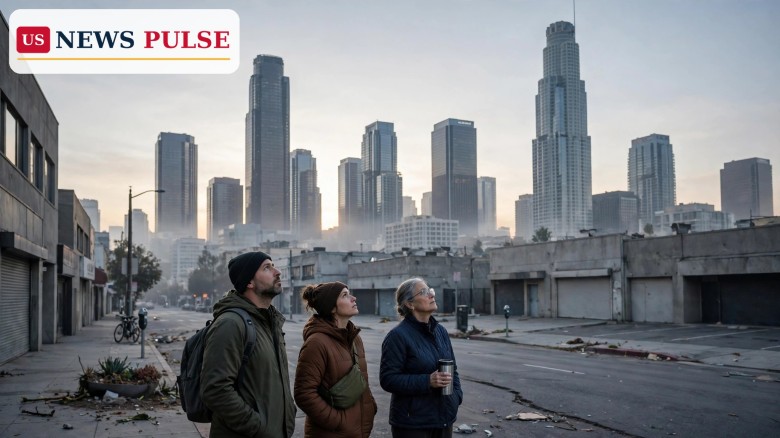
A magnitude 4.4 earthquake struck near Commerce, California, at 3:25 a.m. Pacific time on Friday, November 20, 2026, waking residents across the Los Angeles basin, the US Geological Survey said.
The quake was centred about one mile north-northwest of Commerce, near East Los Angeles and about five miles southeast of downtown Los Angeles, at a depth of about 10.6 miles (17.1 kilometres). The USGS first reported it as magnitude 4.2 and later revised it to 4.4.
Shaking was felt widely, including in Pasadena, North Hollywood, Gardena, Riverside and Long Beach, and more than 7,500 people submitted USGS "Did You Feel It?" reports within the first hour. The Los Angeles Fire Department reported no initial injuries or structural damage.
Key Points
- A magnitude 4.4 earthquake struck near Commerce, California, at 3:25 a.m. Pacific time on Friday, November 20, 2026, waking residents across the Los Angeles basin, the USGS said.
- The USGS first reported it as magnitude 4.2, then revised it to 4.4; the epicentre was about one mile north-northwest of Commerce, at a depth of about 10.6 miles.
- Shaking was felt in Pasadena, North Hollywood, Gardena, Riverside and Long Beach, and more than 7,500 people submitted USGS "Did You Feel It?" reports within the first hour.
- The Los Angeles Fire Department reported no initial injuries or structural damage and sent personnel from all 106 neighbourhood fire stations to survey the city's 470-square-mile area.
- The USGS PAGER system issued a green alert, signalling a low likelihood of casualties or damage, and no immediate damage was reported at LAX.
What Happened
It was 3:25 a.m. when the ground moved. Across the Los Angeles basin, people were jolted awake in the dark as the magnitude 4.4 earthquake rolled through one of the most densely populated parts of the United States. The epicentre lay near Commerce, so the shaking reached homes across a wide arc of the metro area within seconds.
Reports came in quickly from across the region. Within the first hour, more than 7,500 people had filed "Did You Feel It?" reports with the USGS, first-hand accounts that help scientists map how far and how strongly a quake was felt. The USGS first measured the earthquake at magnitude 4.2, then revised it upward to 4.4 as more seismic data arrived.
Background: Commerce, East Los Angeles and the LA Basin
Commerce sits in the heart of the Los Angeles basin, about five miles southeast of downtown Los Angeles, in a part of the county where homes, warehouses, freeways and rail yards sit close together. The epicentre, about a mile north-northwest of the city, put the quake almost directly beneath the urban core, which is why so many people felt it even though the magnitude was moderate.
Los Angeles is one of the most earthquake-aware cities in the world, and a magnitude 4.4 earthquake is strong enough to wake sleepers and rattle windows, but well below the size that typically causes serious structural damage to modern buildings. Only hours earlier, a magnitude 5.1 earthquake had struck near Soledad in Monterey County, a separate event in a different part of the state.
Magnitude 4.4 Earthquake: What the USGS Measured
The numbers behind Friday's quake explain why it was felt so widely and why it caused so little harm. At magnitude 4.4, the earthquake released far less energy than the magnitude 5.1 Soledad quake hours earlier, and its depth of about 10.6 miles put the source well below the surface, spreading the shaking over a broad area.
The revision from magnitude 4.2 to 4.4 shows how earthquake science works in real time: seismologists make a first estimate from the earliest seismic waves, then refine it as data arrives from more stations. The USGS PAGER system, which estimates the likely impact of an earthquake within minutes, issued a green alert, the lowest level on the scale.
Reactions and Quotes
The first official response came from the Los Angeles Fire Department, which moved onto its earthquake-response protocol as soon as the shaking stopped. The department sent personnel from all 106 of its neighbourhood fire stations out across the city's 470 square miles to check critical infrastructure. Its early report was reassuring: no initial injuries and no structural damage.
The department also asked residents to prepare for possible aftershocks, the standard guidance after any earthquake in California. At Los Angeles International Airport, officials reported no immediate damage or operational impacts, and flights continued, an early sign that the quake had not damaged the infrastructure the region depends on.
Why It Matters
It matters first because of where it happened. A magnitude 4.4 earthquake centred almost directly beneath the Los Angeles urban core is the kind of event that tests a city's readiness in real time. Millions of people live and work within a few miles of the epicentre, and the fact that the fire department could survey 470 square miles and report no injuries or structural damage is a measure of how the city's buildings and emergency systems performed.
It matters second because of the hour. A 3:25 a.m. earthquake wakes people in the dark, when they are least prepared, and the flood of more than 7,500 "Did You Feel It?" reports within the first hour shows how many people were awake and reaching for their phones within minutes. It was the second widely felt California earthquake in a single night.
What Happens Next
The USGS will keep monitoring the area around Commerce for aftershocks, and residents should expect smaller tremors in the coming hours and days. Aftershocks are a normal part of the sequence after an earthquake of this size, and the fire department's advice is the guidance to follow: keep shoes and a flashlight by the bed, know where to drop, cover and hold on, and check on neighbours who may need help.
The Los Angeles Fire Department will continue its survey of critical infrastructure in daylight, looking for cracked walls, damaged chimneys, gas leaks and any problems on roads and bridges.
Frequently Asked Questions
How strong was the Los Angeles earthquake?
Magnitude 4.4, according to the USGS, which first reported it as magnitude 4.2. It struck at a depth of about 10.6 miles (17.1 kilometres).
Where was the earthquake centred?
The epicentre was about one mile north-northwest of Commerce, California, near East Los Angeles and about five miles southeast of downtown Los Angeles.
When did the earthquake happen?
The quake struck at 3:25 a.m. Pacific time on Friday, November 20, 2026, waking residents across the Los Angeles basin.
Was there any damage or injuries?
No. The Los Angeles Fire Department reported no initial injuries or structural damage, and no immediate damage was reported at LAX.
Is this the same earthquake as the Soledad quake?
No. The magnitude 5.1 quake near Soledad on Thursday night, November 19, was a separate event in a different part of California.
Related coverage: Magnitude 5.1 Earthquake Strikes Near Soledad, California, Felt in San Francisco, LA County Evacuation Warnings as Storm Threatens Mudslides on Burn Scars, and Florida Flooding: Okeechobee Schools Close as 5.7 Inches of Rain Swamp Lake Area.
© 2026 US News Pulse. All rights reserved.
 Print
 Save