
Trump Threatens 'Tremendous Tax' on US Tech Firms Building AI Data Centres Abroad
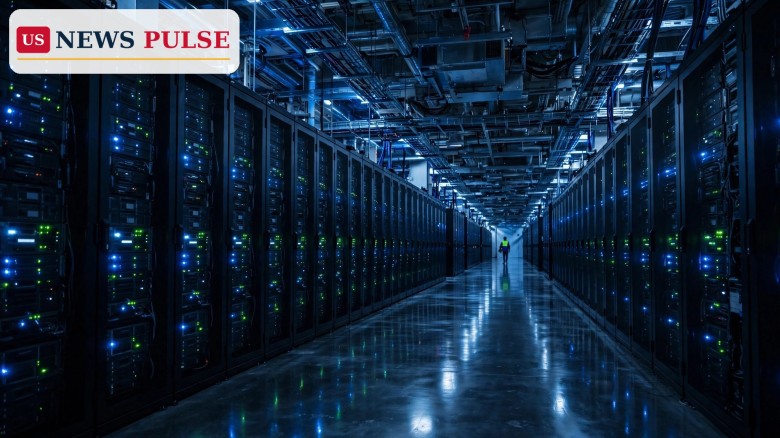
President Donald Trump has warned American technology companies they will face a "tremendous tax" if they build artificial intelligence data centres outside the United States, declaring at a White House news conference on Friday that Washington will not allow its firms to keep building the backbone of AI abroad. "We're not going to allow our companies to build data centers outside of our country," he said.
The threat, delivered hours after his return from a summit trip to Asia, puts Google, Microsoft, Amazon, Meta and OpenAI on notice that their projects overseas could soon carry a steep penalty at home.
Key Points
- Trump said US tech firms building AI data centres abroad will face "a tremendous tax" and "tremendous penalties" — White House news conference, Friday, November 20, 2026.
- He framed it as a contest with China: "We're not allowing data centers to go into other countries because China will take all of them."
- He admitted he had not yet told his own officials about the plan, and gave no details on how it would work, which companies it would cover, or when it would start.
- It follows Google's 13 billion euro AI investment in Finland — about 15 billion dollars, its largest single investment in Europe — and Finland has since ordered Google to halt work at two sites.
- A new tax would normally need Congress, which holds the constitutional power to impose federal taxes, so it is unclear how the White House could act alone.
What Happened
Trump spoke at a White House news conference on Friday, November 20, 2026, after returning from his trip to Asia, where he met President Xi Jinping of China and President Vladimir Putin of Russia. Asked about American firms building the giant computing facilities that power AI overseas, he said the United States would penalise them.
"We're not going to allow our companies to build data centers outside of our country," Trump said, adding that firms doing so would face "a tremendous tax" and "tremendous penalties". He gave no figure, timetable or legal mechanism, and admitted he had not yet told his own officials about the plan. He said he and Xi had agreed to joint guardrails on AI, but gave no details. By Friday afternoon, Microsoft, Google, Amazon, Meta and OpenAI had not commented.
Background: The Overseas AI Building Boom
The threat lands amid the largest infrastructure buildout in technology history. The data centres that train and run AI models are among the most expensive facilities ever built, and American firms have spread them worldwide, chasing cheap power, friendly regulators and fast-growing markets.
Google's 13 billion euro investment in Finland in September 2026, about 15 billion dollars, was its largest single investment in Europe; Finland has since ordered Google to halt work at two sites. Google has also committed 15 billion dollars to an AI hub in India, Microsoft has pledged 17.5 billion dollars there, Amazon has committed 35 billion dollars by 2030, and OpenAI is building a one-gigawatt Stargate cluster in the United Arab Emirates.
Washington has already tightened its grip on the AI supply chain: on Monday, November 16, the Commerce Department issued an interim rule requiring licences for advanced AI chips headed to data centres anywhere in the world that supply significant computing power to China and other countries of concern.
Trump's Data Centre Tax: What the Threat Would Cover
What exactly the president has in mind remains unclear. A tax on building abroad would be a new kind of penalty, and the White House has said nothing about which companies it would cover, whether it would apply to projects already under construction, or how it would be calculated.
The constitutional question is the most immediate obstacle. A new federal tax would normally need Congress, which holds the constitutional power to impose federal taxes, and Congress has not debated any such measure. It is unclear how the White House could carry the threat out alone, or whether it would try tariffs, export controls or other executive powers instead.
Reactions
The loudest reaction so far has been silence. Microsoft, Google, Amazon, Meta and OpenAI had not commented by Friday afternoon, and there was no immediate response from the industry groups that speak for them. The companies have billions of dollars committed to projects the president has now said he will not allow, and none has yet said whether it will pause, rethink or defend its overseas plans.
Trump's framing gives the industry little room to argue. By casting the issue as a contest with China — "China will take all of them" — he has presented foreign data centres as a strategic loss for the United States, not an ordinary business decision, echoing the chip-export rules that treat advanced computing power as a national security asset.
Why It Matters
The location of AI data centres has become one of the most consequential questions in the global technology race. The facilities are where the most powerful AI models are trained, and the computing power inside them is now treated by Washington as a strategic asset — the reason the Commerce Department moved on November 16 to require licences for advanced chips headed to data centres that serve China and other countries of concern.
A tax on building abroad would extend that logic from controlling chips to controlling construction, telling the companies building the AI era that the United States expects its physical backbone on American soil. The money at stake is enormous: the Stargate cluster, the tens of billions pledged in India, and Google's 13 billion euro Finland investment are among the largest private investments in the world.
What Happens Next
The first test is whether the threat becomes a proposal. Trump admitted he had not yet told his own officials about the plan, so the next days should show whether the White House drafts a mechanism — a tax that would need Congress, a tariff, an export control, or something else entirely — or whether the warning fades without follow-through.
The second test is the companies' response, and the third is Congress, which holds the power to impose a new tax. For more, read our coverage of the Commerce Department's new AI chip export rule and California's subpoena of Nvidia over China chip secrets, and our report on Trump's 17 billion dollar package of deals in Southeast Asia.
Frequently Asked Questions
What did Trump threaten?
He said US firms building AI data centres abroad would face "a tremendous tax" and "tremendous penalties".
When and where did he say it?
At a White House news conference on Friday, November 20, 2026, after returning from his Asia trip.
Why is he doing it?
He framed it as competition with China, saying "China will take all of them", and said he and Xi agreed joint AI guardrails.
Which companies would be affected?
He named none, but OpenAI, Microsoft, Google and Amazon all build abroad — Stargate in the UAE, and tens of billions pledged in India.
Can the president impose a new tax alone?
A new tax would normally need Congress, which holds the constitutional power to impose federal taxes. Trump gave no details.
© 2026 US News Pulse. All rights reserved.
 Print
 Save