
Washington Fines Nippon Dynawave Over $10 Million After Deadly Longview Mill Blast
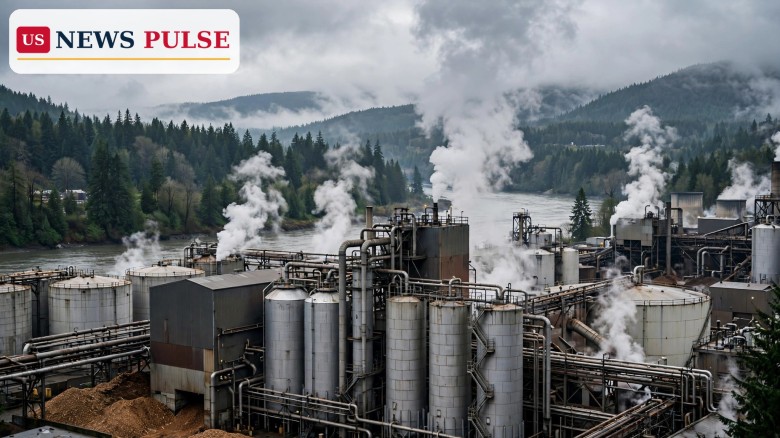
Washington state has fined Nippon Dynawave Packaging more than $10 million over the chemical-tank disaster at its Longview pulp and paper mill that killed 11 workers and injured 12 in May, after investigators found the company knew the tank was unsafe for nine months and kept it running anyway. The penalty is the largest workplace safety fine ever issued in Washington, and regulators say they will refer their findings to prosecutors for possible criminal charges.
The Nippon Dynawave fine, announced on Friday, November 20, 2026, totals $10,138,127. The Department of Labor and Industries issued more than $9 million for 75 workplace-safety violations, while the Department of Ecology added $961,000 for 34 air, water and dangerous-waste violations, plus emergency-response costs.
Key Points
- Washington fined Nippon Dynawave Packaging $10,138,127 over the May 26, 2026 tank rupture at its Longview mill that killed 11 workers and injured 12.
- Labor and Industries issued more than $9 million for 75 safety violations — the largest workplace safety penalty ever in Washington state.
- The Department of Ecology added $961,000 for 34 air, water and dangerous-waste violations, after some caustic liquid reached the Columbia River.
- Investigators found the company knew in August 2025 that tank G-10's walls were too thin and "not fit for continued service", but kept it running for 43 weeks.
- Regulators called the violations "egregious, willful, serious" and plan a criminal referral; the company disputes that characterisation.
What Happened
The fines were announced on Friday, November 20, 2026, after a joint six-month investigation by the Department of Labor and Industries and the Department of Ecology into the May 26 disaster at the Longview mill, a pulp and paper plant on the Columbia River in southwestern Washington.
Labor and Industries, known as L&I, cited the company for 75 workplace-safety violations and fined it more than $9 million — the biggest workplace safety penalty it has ever issued. Ecology fined the company $961,000 for 34 violations of air, water and dangerous-waste rules, and charged it for the cost of the emergency response.
On the morning of May 26, a 1.2-million-gallon tank known as G-10, holding "white liquor" — a highly corrosive chemical used in paper-making — ruptured. About 900,000 gallons of caustic liquid flooded the plant, blowing out building walls and overturning pickup trucks. Eleven workers were killed, including brothers Tyler and Brad Covington, and 12 others were injured.
Investigators found the company had known since August 2025 that the walls of the G-10 tank were dangerously thin and "not fit for continued service", yet kept it operating for 43 weeks without repairs. They also found it failed to inspect or fix deficiencies in 13 other tanks at the site.
Background: The May 26 Disaster at the Longview Mill
The Longview mill is a major pulp and paper operation on the Columbia River, and the May 26 rupture was immediately recognised as one of the worst workplace disasters in the Pacific Northwest in living memory.
The tank at the centre of the disaster held white liquor, a hot, highly alkaline solution used to dissolve the lignin that binds wood fibres together. It is corrosive enough to cause severe chemical burns, and a release of 900,000 gallons is a catastrophic event for anyone in its path.
The central question was whether the failure could have been foreseen — and the inquiry's answer was yes. The company had data showing the tank walls were thinning to a dangerous degree as early as August 2025, yet no repair or replacement followed.
Nippon Dynawave Fine: The Largest Workplace Safety Penalty in Washington History
The $10,138,127 total reflects both the death toll and the finding that the company knew the tank was unsafe. In workplace-safety enforcement, the difference between an accident and a willful violation is often what the employer knew and when it knew it. Here, regulators say the company had nine months of warning and did nothing.
The case also stands out because it pairs a workplace-safety penalty with a substantial environmental penalty, reflecting the release of caustic liquid into the environment, including some that reached the Columbia River.
Reactions and Quotes
L&I compliance manager Dan Pitts put the case in stark terms. "Without repair or replacement, the tank walls were a ticking clock," Pitts said, describing a vessel that investigators believe was deteriorating toward failure for months while it stayed in service.
L&I called the violations "egregious, willful, serious" and said it would refer its findings to prosecutors for possible criminal charges.
Nippon Dynawave disputes the state's characterisation. The company said it has hosted hundreds of regulator site visits since the disaster and is cooperating with L&I, Ecology, the EPA and the US Chemical Safety Board. It plans to restart operations at the Longview mill in December.
Why It Matters
The Longview case matters because it tests whether the heaviest available penalties can change how industrial employers handle known hazards. If the state's account holds, the disaster was not a bolt from the blue but a failure that was foreseeable and preventable.
It also matters for workers at pulp and paper mills, chemical plants and refineries across the United States, where ageing tanks are a constant concern. Corrosion thins metal over time, and the only defence is regular inspection and timely repair. The investigation found deficiencies in 13 other tanks at the same site, suggesting the problem was not confined to a single vessel.
What Happens Next
The immediate next step is the criminal referral. L&I plans to refer its findings to prosecutors, who will decide whether charges are warranted and against whom.
The company must also decide whether to appeal the fines before the Board of Industrial Insurance Appeals, a process that can stretch on for a year or more. Meanwhile, the Longview mill is preparing to restart operations in December under intense scrutiny, and the US Chemical Safety Board's investigation continues.
Frequently Asked Questions
How much was Nippon Dynawave fined?
Washington fined Nippon Dynawave Packaging $10,138,127: more than $9 million from the Department of Labor and Industries for 75 workplace-safety violations, and $961,000 from the Department of Ecology for 34 air, water and dangerous-waste violations plus emergency-response costs.
What happened at the Longview mill?
On May 26, 2026, a 1.2-million-gallon tank holding white liquor, a corrosive paper-making chemical, ruptured at the mill in Longview, Washington. About 900,000 gallons flooded the plant, killing 11 workers and injuring 12 — the worst industrial accident in Washington state history.
Did the company know the tank was unsafe?
According to the state's investigation, yes. Regulators found the company knew as early as August 2025 that tank G-10's walls were too thin and "not fit for continued service", but kept it operating for 43 weeks.
Could there be criminal charges?
Possibly. Labor and Industries plans to refer its findings to prosecutors for possible criminal charges. Prosecutors will decide whether charges are warranted and against whom.
When will the Longview mill reopen?
The company plans to restart operations in December 2026.
Related coverage: FBI, DHS and TSA Warn US Airlines of Al Qaeda Calls for Attacks Before Thanksgiving and YouTube Nears $3 Billion Settlement With US School Districts Over Addiction.
© 2026 US News Pulse. All rights reserved.
 Print
 Save