
Palisades Fire Arson Verdict: Rinderknecht Convicted Over Deadly Blaze - US News Pulse
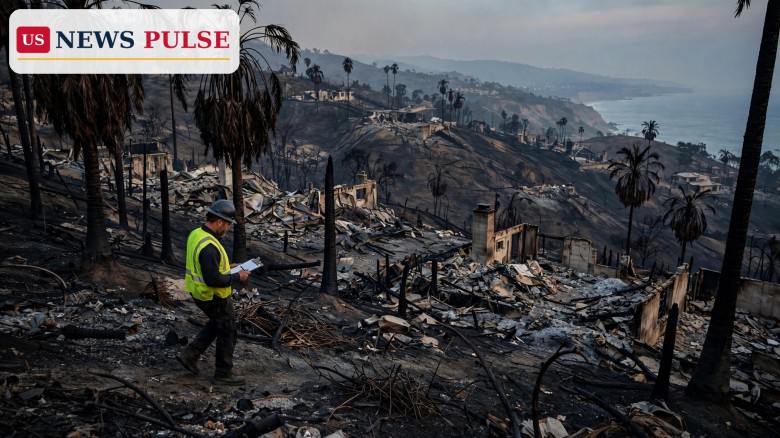
A federal jury in Los Angeles has convicted Jonathan Rinderknecht of arson over the fire that grew into the Palisades Fire, one of the deadliest and most destructive wildfires in the city's history. The Palisades Fire arson verdict, delivered on Friday, November 20, 2026, found the 30-year-old former Uber driver guilty on two federal arson counts, each carrying up to 20 years in prison. Prosecutors said the small brush fire he lit on New Year's Day 2025 smouldered unseen for a week before exploding into a blaze that killed 12 people and destroyed about 6,800 structures.
Key Points
- A federal jury in Los Angeles found Jonathan Rinderknecht, 30, guilty on Friday, November 20, 2026 of two federal arson counts over the deadly 2025 Palisades Fire.
- Prosecutors said Rinderknecht lit a small brush fire, the Lachman Fire, in the early morning of January 1, 2025, which burned undetected deep in root systems before flaring back up on January 7 as the Palisades Fire.
- The Palisades Fire killed 12 people, destroyed about 6,800 structures and caused property damage estimated at $35 billion to $150 billion.
- His first trial in June 2026 ended in a mistrial after jurors deadlocked 10-2 in favour of acquittal; prosecutors retried him from November 4 on a narrowed indictment after dropping a third charge.
- The retrial jury deliberated for nearly three days, and sentencing is set for March 17, 2027.
What Happened
The verdict came at the end of a retrial that began on November 4, 2026. After nearly three days of deliberations, the jury found Rinderknecht guilty of destruction of property by means of fire and of arson affecting interstate commerce. Each count carries up to 20 years in prison, so he faces up to 40 years at sentencing on March 17, 2027.
Prosecutors said Rinderknecht set the Lachman Fire in the hills above Pacific Palisades on January 1, 2025. It appeared to die down but kept burning deep in root systems for almost a week. On January 7, driven by powerful winds, it flared back up as the Palisades Fire. Rinderknecht, a former Uber driver with dual American and French citizenship, pleaded not guilty, saying he had merely witnessed the fire while watching New Year's fireworks and had called 911. The jury rejected that account.
Background: How a Small New Year's Fire Became a Catastrophe
The Palisades Fire began in the Santa Monica Mountains above Pacific Palisades, a coastal neighbourhood on the western edge of Los Angeles. The hills are steep, dry and covered in brush, and in early January 2025 they were primed to burn. When the Lachman Fire reignited on January 7, fierce Santa Ana winds pushed it downhill toward homes, schools and businesses with almost no warning.
The fire killed 12 people, destroyed about 6,800 structures and forced tens of thousands of residents to flee. Property damage has been estimated at $35 billion to $150 billion. Los Angeles County later issued evacuation warnings for residents near the burn scars, including the Palisades scar, when storms threatened mudslides, as US News Pulse reported. Fire officials traced the blaze back to the smaller Lachman Fire, and attention soon focused on Rinderknecht.
Palisades Fire Arson Verdict: What the Jury Decided
The retrial jury had to decide whether Rinderknecht lit the January 1 fire or simply happened to be there when it started. Prosecutors argued that the fire was deliberately set and that the man who called 911 was the same man who had started it. The defence said he was a bystander watching fireworks who saw the flames and reported them.
The jury deliberated for nearly three days and found him guilty on both counts. The verdict answers the central question, but not everything: at sentencing, the judge will decide how much of the maximum 40 years he will serve, and the defence is expected to consider an appeal. Federal arson charges are rarely brought in wildfire cases, so the verdict sends a clear signal that prosecutors will pursue the full weight of federal law when a fire kills people and destroys a community.
Reactions and Quotes
Rinderknecht has maintained his innocence throughout. He pleaded not guilty and told investigators and the court that he had only witnessed the January 1 fire while watching New Year's fireworks and had called 911. That account was the heart of his defence at both trials, and it persuaded 10 of the 12 jurors in his first trial to vote for acquittal.
Prosecutors argued the opposite: the fire was deliberately lit, it smouldered for a week before erupting into the Palisades Fire, and Rinderknecht was responsible for the deaths and destruction. The retrial jury agreed, and the verdict closes a long chapter for the families of the 12 people who died.
Why It Matters
The Palisades Fire was not a natural disaster nobody could have foreseen. It was, according to the jury, a crime. That matters to the people who lost family members, homes and businesses, and to a state that spends billions of dollars every year fighting wildfires and rebuilding after them. A deliberately set fire is measured in lives as well as money.
The case also matters because of the first trial. A jury deadlocked 10-2 in favour of acquittal shows how hard an arson case is to prove when the fire burned unseen for a week. Prosecutors narrowed the case, dropped a charge and tried again, and this time they won. Los Angeles is still rebuilding, and the burn scars remain a mudslide danger in heavy rain, as recent Los Angeles emergencies have shown.
What Happens Next
Rinderknecht will be sentenced on March 17, 2027, when the judge will decide his prison term within the maximum of 20 years on each count. Until then he remains in custody, and his lawyers are expected to weigh an appeal. Prosecutors are likely to seek a long term; the defence is likely to seek leniency, citing the first trial's deadlock.
The rebuilding of Pacific Palisades continues in parallel. Thousands of families are still working through insurance claims, permits and construction. The verdict will not settle how to rebuild safely, but it does close the question of how the fire started.
Frequently Asked Questions
Who was convicted over the Palisades Fire?
Jonathan Rinderknecht, a 30-year-old former Uber driver with dual American and French citizenship, was convicted by a federal jury in Los Angeles on Friday, November 20, 2026.
What was he convicted of?
Two federal arson counts: destruction of property by means of fire and arson affecting interstate commerce. Each carries up to 20 years in prison.
How did the Palisades Fire start?
Prosecutors said he lit the Lachman Fire in the early morning of January 1, 2025. It burned undetected in root systems for almost a week before flaring back up on January 7 as the Palisades Fire.
How many people died and how much was destroyed?
The fire killed 12 people, destroyed about 6,800 structures and caused damage estimated at $35 billion to $150 billion.
When will he be sentenced?
Sentencing is set for March 17, 2027. His first trial in June 2026 ended in a mistrial after jurors deadlocked 10-2 in favour of acquittal.
© 2026 US News Pulse. All rights reserved.
 Print
 Save