
Hormuz Tanker Mines Strike Again: Three Ships Hit, Two Supertankers Burning
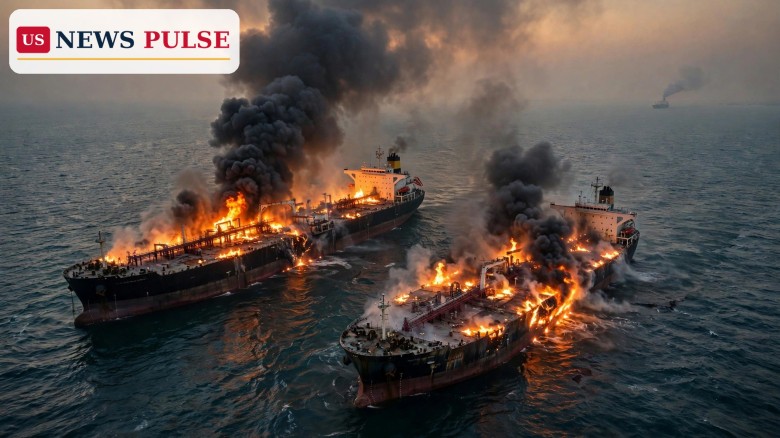
Three more oil tankers struck naval mines in the Strait of Hormuz on Thursday, November 19, 2026, Iran's military said, leaving two supertankers carrying more than 4 million barrels of crude oil burning near the strait's southern coast in the latest attack on shipping in the world's most important oil chokepoint.
A third tanker, sailing east of the strait with its tracking and identification systems switched off, also struck a mine in a restricted zone, caught fire and was forced to stop, according to a separate Iranian navy statement.
Key Points
- Iran's Revolutionary Guards Navy said two supertankers carrying more than 4 million barrels of crude hit mines on an unauthorised southern route through the Strait of Hormuz on Thursday, November 19, and exploded.
- A third tanker sailing east of the strait with its tracking systems switched off struck a mine in a restricted zone, caught fire and was forced to stop, the Iranian navy said.
- Iranian state media carried the statements on Friday, November 20, and early Saturday, November 21, with no vessel names, nationalities or casualty details, and the claims could not be independently verified.
- The Revolutionary Guards said the tankers were attempting a covert passage with US fighter-jet and surveillance-drone support, and warned vessels cooperating with the US military would be dealt with firmly.
- Oil rose on Friday on renewed war worries: Brent crude up about 0.9 percent to $92.77 a barrel, West Texas Intermediate up to $83.46, ahead of Thanksgiving.
What Happened
The Revolutionary Guards Navy said the two supertankers struck naval mines on an unauthorised southern route through the strait, exploded and were left burning near its southern coast. Iranian state media carried the statement on Friday and into early Saturday.
The Iranian navy's separate statement described the third vessel: a tanker sailing east of the strait with its tracking and identification systems switched off, which struck a mine in a restricted zone. That ship caught fire and was forced to stop. Neither statement named the vessels, their countries, or any casualties.
The Guards also released footage on Friday of a large smoke plume rising from a vessel it said was carrying liquefied gas and had hit a mine in the south of the strait. The footage, like the mine claims themselves, could not be independently verified. No independent source had publicly confirmed the three strikes.
Background/Context
The Strait of Hormuz is the narrow passage through which roughly a fifth of the world's seaborne oil normally flows, and it has been at the centre of the war between the United States and Iran since fighting began on February 28, 2026. Mines, drones and missiles have repeatedly struck tankers there, and shipping traffic has fallen sharply.
This is not the first wave of mine strikes. On November 17, at least four tankers were damaged in and around the strait within 24 hours, including the second strike on the LPG tanker Tara Gas: Four Tankers Damaged in Strait of Hormuz as Mines Strike Ships. Two supertankers exploded after hitting mines on November 12, three tankers caught fire on November 8, and two exploded on November 1: Two Supertankers Explode in Strait of Hormuz After Hitting Mines, IRGC Says.
Hormuz Tanker Mines and the Southern Route
The southern route is the thread running through almost every Iranian statement about the mine strikes. Tehran says tankers must use designated routes and coordinate with Iranian forces, and that vessels on unauthorised southern passages, especially those sailing with identification systems switched off, are legitimate targets for its minefields.
For shipowners, that leaves an impossible choice. The recognised transit lanes are the ones the United States says it has swept of mines, but Iran says vessels cooperating with the American military will be dealt with firmly. The southern route avoids US patrols but runs through waters Iran says it has mined. Either way, a tanker carrying millions of barrels of crude sails through a war zone where two armed sides disagree about the rules.
Reactions/Quotes
Iran's Revolutionary Guards Navy said the tankers were attempting a covert passage with US fighter-jet and surveillance-drone support, and warned vessels cooperating with the US military would be dealt with firmly. The Iranian navy said the third tanker had its tracking and identification systems switched off when it struck a mine in a restricted zone.
Neither statement gave vessel names, nationalities or casualty details, and neither claim could be independently verified. The United States military had not publicly responded. Oil traders reacted first: Brent crude rose about 0.9 percent on Friday to $92.77 a barrel, and West Texas Intermediate climbed to $83.46.
Why It Matters
It matters because the Strait of Hormuz is the artery of the global oil trade. About a fifth of the world's seaborne oil normally passes through it, and every burning tanker raises the price of the barrels still to come. Brent at $92.77 is already far above where it traded before the war, and each new strike adds a risk premium felt in fuel prices far from the Gulf.
It matters, too, because the mine campaign is now striking with a regularity that suggests a deliberate strategy. Three tankers on November 19, four damaged on November 16 and 17, two supertankers on November 12, three on November 8, two on November 1.
What Happens Next
The first question is verification. No independent source had confirmed the three strikes by early Saturday, and past Iranian claims have sometimes taken days to confirm, or never been confirmed. Trackers and insurers will watch for the vessels' identities and any rescue or salvage in the southern strait.
The second question is the market. Oil traders will watch Monday's open for whether Brent holds above $92 and whether insurers raise war-risk premiums again. If confirmed, and traffic falls further, the world's oil supply chain faces a chokepoint open in name but increasingly closed in practice.
Frequently Asked Questions
What happened in the Strait of Hormuz on November 19?
Iran's military said three oil tankers hit naval mines: two supertankers with over 4 million barrels of crude exploded and burned on an unauthorised southern route, and a third struck a mine in a restricted zone east of the strait.
Have the claims been independently verified?
No. Iranian state media carried the statements on November 20 and early November 21, with no vessel names, nationalities or casualty details, and they could not be independently verified.
Why are tankers being hit in the strait?
Iran says the tankers use unauthorised routes, switch off identification systems and sail with US military support; the US says Iran is mining international waters. The strait has been a battleground since the war began on February 28, 2026.
How did oil prices react?
Brent crude rose about 0.9 percent on Friday, November 20, to $92.77 a barrel, and West Texas Intermediate rose to $83.46, on renewed war worries ahead of Thanksgiving.
Is this the first tanker attack in the strait?
No. There have been repeated waves: four tankers damaged on November 16-17, two supertankers on November 12, three tankers on November 8 and two on November 1, with 17 confirmed incidents in the strait this month, according to Seatrade Maritime.
© 2026 US News Pulse. All rights reserved.
 Print
 Save