
Houthis Fire Three Ballistic Missiles at Riyadh After Saudi Strikes on Hodeida
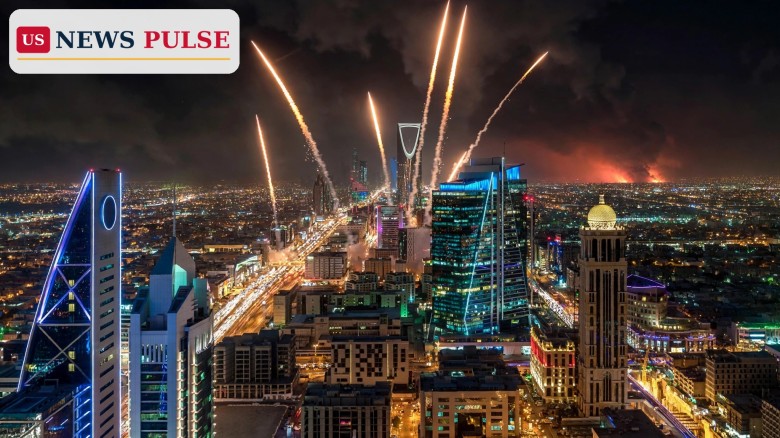
Yemen's Houthis fired three ballistic missiles at Riyadh on Saturday, November 21, 2026, in revenge strikes after a Saudi-led coalition "special operation" on the Red Sea port city of Hodeida. The coalition said it intercepted and destroyed all three missiles aimed at the Saudi capital, and an AFP journalist in the city heard two explosions shortly after the authorities warned Riyadh was "under a hostile aerial threat".
Key Points
- Yemen's Houthis fired three ballistic missiles at Riyadh on Saturday, November 21, 2026, calling the strikes revenge for a Saudi-led coalition "special operation" on Hodeida.
- The coalition said it intercepted and destroyed all three missiles; an AFP journalist heard two explosions after an alert warned Riyadh was "under a hostile aerial threat".
- Two more missiles were intercepted over Jizan, with debris falling in Al-Shuqaiq, and the Houthis claimed strikes on the Al-Shuqaiq power station and Jizan port.
- The Houthis warned airlines that Saudi airspace was "unsafe" except over Mecca and Medina, and threatened Riyadh's financial district and the Al-Shuqaiq power station.
- It is the second Houthi attack on the Saudi capital in three days, after a missile damaged the PIF Tower on Thursday, November 19.
What Happened
The attack came a day after the coalition's "special operation" on Hodeida, the Red Sea port held by the Houthis, and other targets on Friday, November 20. The Houthis said on X they were striking targets across Saudi Arabia, including in Riyadh, and called the missile fire revenge. The coalition said it destroyed the three missiles, and the alert was later lifted.
An AFP journalist in Riyadh heard two explosions shortly after the alert went out. No casualty figure was reported for the Riyadh intercepts, and no report said a missile reached the ground in the capital.
Two more ballistic missiles were intercepted over Jizan, with debris falling in Al-Shuqaiq. The Houthi military spokesman claimed "accurate and direct" strikes on the Al-Shuqaiq power station and Jizan port, causing "extensive damage", a claim not independently verified. The Houthis also said coalition strikes had killed 41 people in the previous 24 hours.
Background and Context
Saturday's attack was the second Houthi strike on the Saudi capital in three days. On Thursday, November 19, a Houthi missile struck the 80-storey Public Investment Fund Tower, blowing out windows across seven to eight floors. Saudi civil defence said the attack caused material damage but no injuries, and the King Abdullah Financial District was closed to visitors. Read more: Houthi Missile Strikes Riyadh's PIF Tower, Shattering Windows Across Seven Floors.
The Houthis claimed they targeted the financial district twice on Thursday, and also claimed attacks on King Khalid International Airport, the Khamis Mushait airbase and the SADAF plant in Jubail. On Friday, November 20, Saudi defences intercepted five drones and one ballistic missile, coalition spokesperson Maj. Gen. Turki al-Malki said. Read more: Saudi Arabia Shoots Down Houthi Missile and Five Drones in Friday Barrage.
The coalition has been carrying out major operations against Houthi targets in Sanaa, Saada and Taiz, and facilities at Hodeidah port.
Houthi Missiles Target Riyadh's Financial District and Power Plant
The Houthi threats were aimed at the heart of Saudi Arabia's economy. The group threatened Riyadh's financial district, the same district its missile damaged on Thursday, and the Al-Shuqaiq power station on the Red Sea coast. The spokesman's claim of "accurate and direct" strikes, with "extensive damage", was an attempt to present the day as a success even as the coalition reported every missile intercepted.
The warning to airlines was just as pointed. The Houthis warned that Saudi airspace was "unsafe" except over Mecca and Medina, a message aimed at carriers, travellers and the aviation industry. Saudi Arabia has not reported any closure of its airspace, and the alert over Riyadh was lifted after the intercepts.
Hodeida sits at the centre of this round of fighting. The port is the Houthis' main gateway to the Red Sea, and the coalition's operation there on Friday was the trigger the Houthis cited for Saturday's revenge strikes.
Reactions
The coalition's account was one of successful defence: three missiles destroyed before they could reach Riyadh, and two more intercepted over Jizan. The alert, warning that the city was "under a hostile aerial threat", and its later lifting, told the same story in miniature.
The Houthis told a different story. Their posts on X presented the strikes as revenge delivered, and their spokesman claimed "accurate and direct" hits on the Al-Shuqaiq power station and Jizan port. Neither side's account of damage could be independently verified.
There was no immediate word from Riyadh on any next step, and no casualty report from either side for the missile exchanges.
Why It Matters
Saturday's attack shows the pattern of this new round: a coalition operation on Hodeida is answered within a day by missiles aimed at the Saudi capital. Two attacks on Riyadh in three days mean the capital's air defences are being tested almost daily, and the financial district is explicitly in the Houthis' sights.
It matters beyond Saudi Arabia because the threats reach into the Red Sea. The vow to hit Jeddah and other Red Sea ports, the warning to airlines, and the claimed strikes on a power station and a port all point at shipping, energy and aviation.
It also matters because the escalation is accelerating. Hostilities reignited in July, the capital was struck on Thursday, five drones and a missile were fired on Friday, and five missiles were fired on Saturday. Each day has brought a larger salvo than the last.
What Happens Next
The next days will show whether the cycle holds. The coalition's operation on Hodeida drew Saturday's missiles; the question now is whether the coalition answers with another operation, and whether the Houthis then fire again.
Attention will also fall on Al-Shuqaiq and Jizan, where debris fell and the Houthis claim direct hits. Any confirmed damage there would change the picture of Saturday.
Frequently Asked Questions
What happened in Riyadh on Saturday, November 21, 2026?
Yemen's Houthis fired three ballistic missiles at Riyadh, calling the strikes revenge for a Saudi-led coalition "special operation" on Hodeida the day before. The coalition said it intercepted and destroyed all three.
Were there other missiles fired on Saturday?
Yes. Two more ballistic missiles were intercepted over Jizan. The Houthis claimed "accurate and direct" strikes on the power station and Jizan port, which has not been independently verified.
Why did the Houthis attack Riyadh?
The Houthis said the strikes were revenge for the coalition's "special operation" on Hodeida and other targets on Friday, November 20. They had vowed to hit Jeddah and other Red Sea ports if Hodeida was attacked.
Was this the first Houthi attack on Riyadh this week?
No. On Thursday, November 19, a Houthi missile struck the PIF Tower, blowing out windows across seven to eight floors. On Friday, November 20, Saudi defences intercepted five drones and one ballistic missile.
Did the Houthis warn airlines about Saudi airspace?
Yes. The Houthis warned airlines that Saudi airspace was "unsafe" except over Mecca and Medina, and threatened Riyadh's financial district and the Al-Shuqaiq power station.
© 2026 US News Pulse. All rights reserved.
 Print
 Save