
Hudson Valley Foie Gras Farm Fire Destroys Barns, Kills Birds in New York
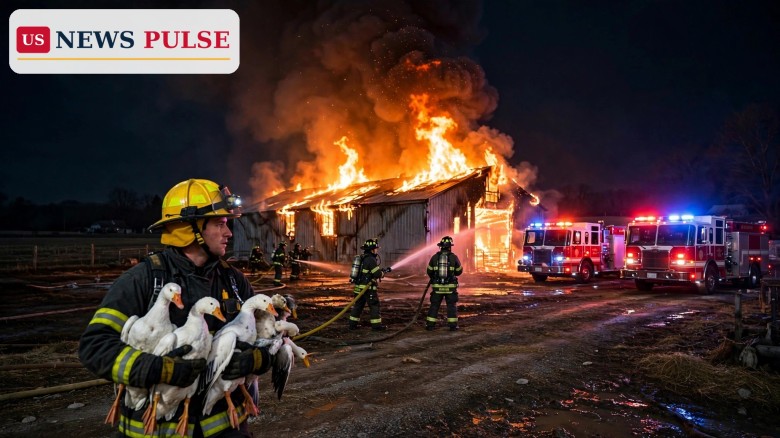
FERNDALE, New York — A fast-moving fire tore through two barns at Hudson Valley Foie Gras in the early hours of Thursday morning, destroying buildings that housed ducks and geese and killing an unknown number of birds at one of the last two major foie gras producers in the United States.
The blaze broke out at about 1:10 a.m. on Thursday, November 19, 2026, at the farm in Ferndale, a hamlet in the town of Bethel in Sullivan County, upstate New York. About 200 first responders from 37 fire departments rushed to the scene after the 911 call, but the flames spread too fast through the metal-clad, wood-frame barns for crews to get inside.
Key Points
- The fire broke out early Thursday, November 19, at Hudson Valley Foie Gras in Ferndale, New York, destroying two barns that housed ducks and geese.
- An unknown number of birds were killed. The company does not disclose how many birds it keeps, and commercial duck barns can hold thousands of birds at a time.
- About 200 firefighters from 37 departments answered the call, and hundreds of young birds and hatchlings were rescued from the danger zone.
- No workers or first responders were injured in the blaze.
- The cause is under investigation. Farm manager Marcus Henley suspects an electrical malfunction, which fire officials have not confirmed.
What Happened
When the first crews arrived, the barns were already burning hard. The metal cladding and wood framing let the fire run along their length, and by the time hoses were laid the roofs were collapsing. Firefighters fought the blaze from outside through the night while the fire consumed the buildings.
Farm manager Marcus Henley watched the buildings he works in every day disappear. “The building isn’t there anymore,” he said. Henley said he suspects an electrical malfunction started the fire, but fire officials have not confirmed a cause, and the investigation is still under way.
Amid the destruction, crews saved hundreds of young birds and hatchlings, carrying them out as the fire spread. No workers or first responders were injured. But the company does not disclose how many birds it houses, and commercial duck barns can hold thousands — so the full toll may not be known until the farm completes its count.
Background: America’s Foie Gras Industry
Hudson Valley Foie Gras is the largest foie gras producer in the United States and one of only two major producers left in the country. Foie gras — French for “fat liver” — is made from the livers of ducks or geese fattened through a feeding process called gavage, and is sold as a luxury food to high-end restaurants and speciality shops across America.
The product has been one of the most contested foods in the country for decades. Animal welfare campaigners say the force-feeding process is cruel and should be banned. Producers and chefs say it is a traditional farming practice that can be done humanely, and that bans would destroy rural jobs and a small but long-standing part of American agriculture.
That fight has followed the farm for years. It has challenged New York’s foie gras ban in court since 2019, arguing the state law would wipe out its business. And just weeks before the fire, voters in Washington, D.C., and Denver voted to ban foie gras sales in their cities — the latest local bans squeezing the small industry from both sides.
Hudson Valley Foie Gras Fire Threatens America’s Foie Gras Supply
With only two major producers left in the United States, the loss of two barns at the largest of them is a serious blow to the country’s foie gras supply. Restaurants and distributors that buy from Hudson Valley Foie Gras will now be waiting to hear how many birds were lost and how much production the farm can keep running from its remaining buildings.
The company has not yet said how the fire will affect output, and it may be days before the full picture is clear. Rebuilding barns, restocking birds and restoring production will take months, not weeks — and the other major American producer will meanwhile face more demand than it can easily meet.
Reactions and Quotes
Henley’s account captured the scale of the loss in a single sentence. “The building isn’t there anymore,” he said, describing a barn that had stood for years and was gone in a single night. He said he believes an electrical fault may have started the fire, though officials have not confirmed that.
Fire officials have said only that the cause remains under investigation. The speed of the fire — too fast for crews to enter the barns — will be part of what investigators examine, along with the buildings’ wiring and heating systems.
Why It Matters
The fire matters for three reasons. First, it strikes an industry that is already tiny and shrinking: with one of two major producers damaged, the American foie gras supply is suddenly fragile. Second, it lands in the middle of a fierce policy fight, with bans spreading city by city and a New York court case that could decide the farm’s future. Third, it is a reminder of how quickly a farm fire can turn deadly for animals kept in large barns — hundreds were saved this time, but an unknown number were not.
The timing also matters. The fire came just before the holiday season, when demand for foie gras peaks, and just weeks after voters in two American cities banned the product outright. Whatever investigators find, the blaze will feed a debate already running hot.
What Happens Next
Investigators will work through the wreckage to pin down a cause, and the company will count its losses and decide how quickly to rebuild. Its court fight against New York’s foie gras ban continues separately, and its outcome may matter more to the company’s future than the fire itself.
For now, the farm’s customers and the wider food industry are waiting for two answers: how many birds were lost, and when production can recover. Until Hudson Valley Foie Gras provides them, the full cost of Thursday morning’s fire will remain unknown.
Related coverage from New York: Mamdani Unveils Rikers Island Closure Plan; New York Unemployment System Goes Offline; Mamdani Tells Funeral of Slain Bronx Teen: ‘He Deserved Better’.
Frequently Asked Questions
Where did the Hudson Valley Foie Gras fire happen?
At Hudson Valley Foie Gras in Ferndale, in the town of Bethel, Sullivan County, upstate New York.
When did the fire break out?
Early Thursday, November 19, 2026. The 911 call came in at 1:10 a.m.
How many birds died in the fire?
Unknown. The company does not disclose how many birds it houses, and commercial duck barns can hold thousands at a time.
Was anyone hurt in the fire?
No. No workers or first responders were injured, and hundreds of young birds and hatchlings were rescued.
What caused the fire?
Under investigation. Farm manager Marcus Henley suspects an electrical malfunction, but fire officials have not confirmed it.
© 2026 US News Pulse. All rights reserved.
 Print
 Save