
CBO: Trump-Class Battleships Will Cost Billions More Than the Navy Claims
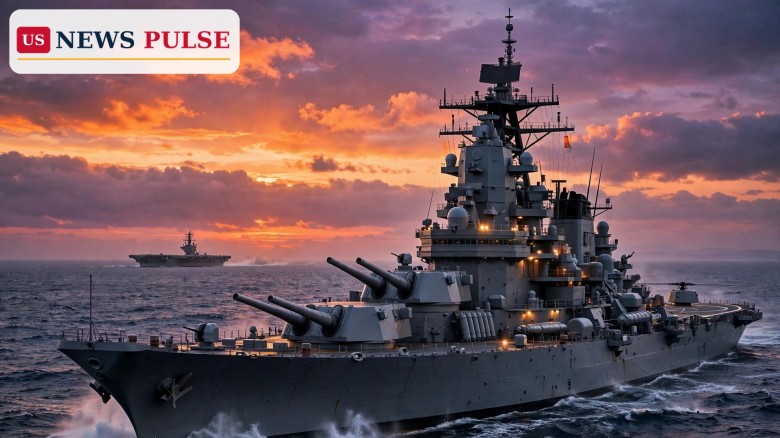
The US Navy’s plan to build 15 nuclear-powered Trump-class battleships — the centrepiece of President Donald Trump’s Golden Fleet — will cost billions more than the service has told Congress, the Congressional Budget Office warned on Thursday, November 19, 2026. The warning lands as the war with Iran stretches the existing fleet.
The CBO’s analysis of the Navy’s 2027 shipbuilding plan found total shipbuilding would average about $54 billion a year over three decades — roughly 18 percent more than the Navy estimates and 41 percent above recent appropriations.
Key Points
- The CBO found the Navy’s shipbuilding plan underestimates costs by billions, with some earlier estimates “unrealistically low”.
- Each Trump-class battleship would cost about $18.3 billion, the CBO estimates — the first about $23 billion, against the Navy’s just over $17 billion.
- Shipbuilding would average $54 billion a year, 18 percent above Navy estimates.
- Senate appropriators proposed cutting to zero the $1 billion sought in advanced procurement for the class this fiscal year.
- Acting Navy Secretary Hung Cao said the Iran war is “stretching” the fleet, with 10-to-11-month deployments and the USS Abraham Lincoln 265 straight days without a port visit.
What Happened
The Congressional Budget Office released its assessment on Thursday, November 19; UPI reported the findings on Saturday, November 21. The budget office concluded the Navy’s projections underestimate the cost of its planned fleet by billions: some designs proved more complicated than expected, and earlier estimates were “unrealistically low”.
The battleships sit at the centre of the gap. The CBO put the average cost of each of the 15 proposed ships at about $18.3 billion, with the first at about $23 billion, against the Navy’s just over $17 billion. For comparison, the Ford-class carrier USS John F. Kennedy cost just over $13 billion. Senate appropriators responded by proposing to cut to zero the $1 billion sought in advanced procurement for the class this fiscal year, as Congress weighs a nearly $1.1 trillion defence bill well short of the president’s $1.5 trillion request.
Background and Context
President Trump announced the battleships in December 2025 as part of his Golden Fleet, a plan to rebuild American sea power around a few very large, heavily armed warships. He said they would be “100-times more powerful” than any previous US warship and would “inspire fear in America’s enemies all over the world”. It came as the US has fallen behind China in shipbuilding output.
The battleship idea is a throwback: the US has not built one since the Second World War, and the last Iowa-class ships left service in the early 1990s. The Trump-class would revive it as a nuclear-powered platform carrying heavy missiles and guns, concentrating enormous firepower in a few hulls. The same week, the service said it has no intention of renaming the carrier USS Doris Miller for the president.
Trump-Class Battleships: Why the Price Keeps Climbing
The battleships are not just expensive — they cost more than the Navy has admitted, and the gap grows with every estimate. The budget office said the designs of some ships “have proven more complicated than expected”, and that earlier cost estimates were “unrealistically low”.
Nuclear propulsion is a major driver: a nuclear surface warship needs a reactor, shielding, specialist crews and a certified shipyard — capabilities found in only a handful of American yards. The CBO puts the lead vessel at about $23 billion, roughly $6 billion above the Navy’s figure. The CBO also questioned the programme’s logic: “Much of the additional costs in the 2027 plan stem from the Navy’s decision to purchase 15 large, heavily armed battleships, which would concentrate firepower in a few large ships and thus would be at odds with the Navy’s stated goal of distributing it among a greater number of ships or vessels.”
Reactions and Quotes
The warning reached Congress the same week the Navy conceded the strain of the Iran war. Acting Navy Secretary Hung Cao told a Senate hearing the conflict was wearing the fleet down. “This war, again, I know it’s a strain on our navy,” he said, conceding the war was “stretching” the fleet’s capacity. Deployments have run 10 or 11 months against a typical seven, and the USS Abraham Lincoln has spent 265 consecutive days without a port visit.
Democratic senators attacked the administration’s handling of the war. “The world is less safe as a result of the Iran war,” Senator Richard Blumenthal told Cao. “The Navy has been stretched beyond sustainable limits under your watch.” President Trump presents the battleships as a symbol of restored American strength; the White House has not publicly responded to the CBO’s estimates.
Why It Matters
The CBO report turns a political symbol into a budget problem. A shipbuilding programme averaging $54 billion a year, inside a Navy budget of about $415 billion a year, would require Congress to sustain defence spending far above recent levels for three decades. It also matters because the fleet the Navy wants is the fleet it needs for the war it is already fighting, with carriers at sea for nearly nine months without a port call.
What Happens Next
The immediate fight is over the $1 billion in advanced procurement the Navy sought for the class this fiscal year. Senate appropriators have proposed cutting it to zero, and that proposal will be tested in negotiations over the defence appropriations bill, with the CBO’s numbers giving sceptics fresh ammunition. The report does not kill the battleships — the president remains committed, and the Senate cut is a proposal, not a final decision — but the programme will now be debated with a price tag billions higher than first presented.
Frequently Asked Questions
How much will each Trump-class battleship cost?
The Congressional Budget Office estimates about $18.3 billion per ship on average, and about $23 billion for the first vessel. The Navy’s estimate for the lead ship is just over $17 billion.
Why does the CBO say the Navy underestimated the costs?
Some ship designs proved more complicated than expected, and earlier estimates were “unrealistically low”.
How big would the Navy grow under the plan?
The plan would grow the battle force from 286 ships to 381, with the CBO projecting 398 ships by 2056. It would require a total Navy budget of about $415 billion a year.
What did the Senate propose cutting?
Senate appropriators proposed cutting to zero the $1 billion the Navy sought in advanced procurement for the Trump-class ships this fiscal year.
How is the Iran war affecting the fleet?
Acting Navy Secretary Hung Cao said the war is “stretching” the fleet. Deployments run 10 to 11 months, and the USS Abraham Lincoln spent 265 straight days without a port visit.
© 2026 US News Pulse. All rights reserved.
 Print
 Save