
Wolbachia Mosquitoes Cut Dengue and Chikungunya by 69% in Brazil Study
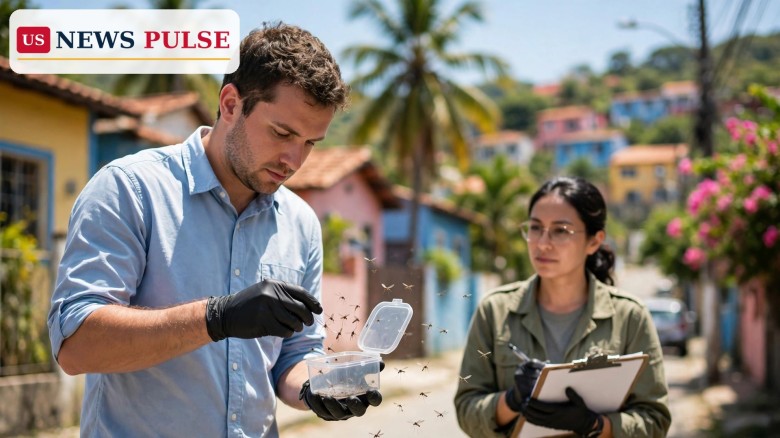
Specially bred mosquitoes carrying a harmless bacterium cut dengue and chikungunya infections by about 69% among schoolchildren in a major four-year study in Brazil, researchers reported on Saturday, November 21, 2026. The Wolbachia mosquitoes were released across neighbourhoods in Belo Horizonte, a city of more than two million people, and the protection held even through Brazil's severe dengue outbreak of 2024.
The study followed more than 5,700 children and tested their blood for dengue, chikungunya and Zika, catching mild infections that would never have reached a clinic. Half the neighbourhoods were randomly assigned to receive the specially bred mosquitoes, while all kept the same pesticide spraying and other mosquito-control measures.
Key Points
- A four-year study in Belo Horizonte, Brazil, found about a 69% reduction in dengue and chikungunya infections among schoolchildren in neighbourhoods where Wolbachia-carrying mosquitoes were released.
- The study followed more than 5,700 children and tested their blood for dengue, chikungunya and Zika to catch mild, undiagnosed cases.
- Half the neighbourhoods were randomly assigned to receive the specially bred mosquitoes, while all kept the same pesticide and mosquito-control measures.
- The protection held even during Brazil's severe 2024 dengue outbreak, when cases surged nationwide.
- The mosquitoes carry Wolbachia bacteria, harmless to people, which sharply reduce the insects' ability to transmit viruses, and females pass the bacteria to their offspring so it becomes established in the local population.
What Happened
The findings were presented on Saturday, November 21, 2026, by a research team that included Dr Sri Edupuganti of Emory University. The study ran for four years in Belo Horizonte, the capital of Minas Gerais, and enrolled more than 5,700 schoolchildren. Researchers divided the neighbourhoods at random: half received releases of mosquitoes bred to carry Wolbachia bacteria, while the other half did not. Every neighbourhood kept the same pesticide spraying and other routine control measures.
Instead of counting only children who turned up sick at a clinic, the team tested the children's blood for dengue, chikungunya and Zika. That matters because most infections are mild or cause no symptoms, so counting only diagnosed cases would have missed many of them. The blood tests showed about 69% fewer infections among children in the release neighbourhoods, and the gap did not close when Brazil's dengue epidemic of 2024 hit.
Background and Context
Dengue is one of the world's fastest-growing mosquito-borne threats. The virus, spread by Aedes aegypti mosquitoes, causes fever, severe joint pain and, in a minority of cases, haemorrhagic fever that can be fatal. Chikungunya, spread by the same mosquito, brings fever and joint pain that can linger for months. There is no specific treatment for either virus, and a dengue vaccine exists, but its use is limited by cost and supply.
The Wolbachia idea turns the mosquito itself into the intervention. Wolbachia is a naturally occurring bacterium found in many insects but not, normally, in Aedes aegypti. When mosquitoes are bred to carry it, the bacterium interferes with the viruses inside the insect, sharply reducing its ability to pass dengue, chikungunya or Zika on to the next person it bites. Female mosquitoes pass Wolbachia to their offspring, so once the bacteria are established in a local population, they persist without endless new releases.
Wolbachia Mosquitoes: How the Brazil Study Worked
The design of the Belo Horizonte trial is what makes its result hard to dismiss. Randomly assigning whole neighbourhoods removed the risk that the release areas were already healthier or better served. Keeping pesticide and other control measures identical in both groups removed the risk that the difference came from extra spraying. Testing blood, rather than relying on clinic visits, removed the risk that the result reflected who bothered to seek care.
The four-year duration matters just as much. Mosquito populations rise and fall with the seasons, dengue epidemics come in waves, and a short trial can easily catch a quiet year and overstate its case. This study ran through ordinary seasons and through the severe 2024 outbreak, when Brazil recorded one of the worst dengue years in its history. That the protection held through the outbreak is the finding that will matter most to health officials weighing whether to adopt the approach.
Reactions
No direct quotations from the researchers or health officials were included in the reports that broke the story, so the first reactions have come in the form of the study's reception among public health specialists rather than statements. The significance they point to is the combination of scale and rigour: a randomised trial, thousands of children, blood-test outcomes and four years of follow-up, including an epidemic year, is a much stronger evidence base than the smaller observational studies that preceded it.
The World Mosquito Program has argued for years that the approach is safe, sustainable and cheaper over time than repeated insecticide campaigns, because the bacteria maintain themselves in the mosquito population once established. The Belo Horizonte numbers give that argument its strongest backing yet.
Why It Matters
The result matters for three reasons. First, it offers a tool that works against two diseases at once, dengue and chikungunya, with the same mosquito population. Second, it is self-sustaining: once Wolbachia is established, the protection does not depend on a health system remembering to spray every week. Third, it arrives as dengue spreads. Warmer temperatures are letting Aedes aegypti survive further from the equator, and outbreaks are appearing in new places, including the southern United States, where Florida is facing its largest dengue outbreak since at least the 1940s.
What Happens Next
The next step is scale. The World Mosquito Program already operates in more than a dozen countries, and the Belo Horizonte evidence is likely to push more governments to adopt releases, particularly in Latin America and Southeast Asia, where dengue is endemic. Researchers will also watch the Belo Horizonte mosquito population to confirm that Wolbachia stays established over the long term.
Related coverage: Florida dengue outbreak hits 485 local cases in largest surge in decades and US measles cases surge past 7,700 as 13 deaths reported in 2026.
Frequently Asked Questions
What did the Brazil Wolbachia study find?
It found about a 69% reduction in dengue and chikungunya infections among more than 5,700 schoolchildren in neighbourhoods of Belo Horizonte where Wolbachia-carrying mosquitoes were released.
What is Wolbachia?
Wolbachia is a naturally occurring bacterium found in many insects. When Aedes aegypti mosquitoes are bred to carry it, the bacterium sharply reduces their ability to transmit dengue, chikungunya and Zika viruses.
How long did the study run, and how many children took part?
The study ran for four years in Belo Horizonte, Brazil, and followed more than 5,700 schoolchildren, testing their blood for dengue, chikungunya and Zika.
Did the protection hold during Brazil's 2024 dengue outbreak?
Yes. The roughly 69% reduction was sustained even during Brazil's severe 2024 dengue outbreak, when cases surged across the country.
Why does this matter for the United States?
Florida is facing its largest dengue outbreak since at least the 1940s, and Aedes aegypti mosquitoes are spreading further north as temperatures warm.
© 2026 US News Pulse. All rights reserved.
 Print
 Save