
Kim Jong Un Ghosted Trump as North Korea's Nuclear Arsenal Grew to 60 Warheads
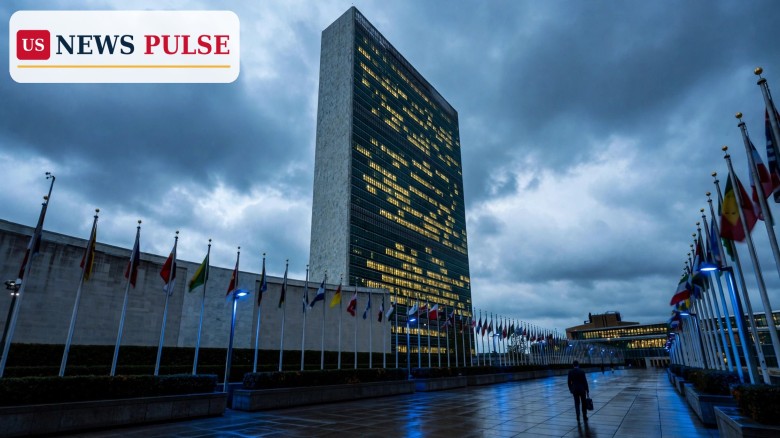
Kim Jong Un ghosted President Donald Trump. The North Korean leader ignored the president's phone calls, returned his letter unopened, and refused a face-to-face meeting during Trump's Asia trip this week, even as Pyongyang's nuclear arsenal grew to about 60 warheads, The Wall Street Journal reported on Saturday, November 21, 2026. The account describes a year of silence from a leader Trump once courted in person, and a North Korea far more heavily armed than when the two men last met.
Key Points
- Trump tried to reach Kim Jong Un last year through established phone lines, and nobody called back, The Wall Street Journal reported on Saturday, November 21, 2026.
- Trump then wrote Kim a letter, handed by White House officials to a North Korean diplomat outside the UN mission in Manhattan; the diplomat later tossed it, unopened, in front of an American representative.
- During Trump's Asia trip this week, the two sides explored a last-minute meeting, but Kim set conditions Washington could not accept.
- Since Kim last met Trump in June 2019, North Korea's arsenal has grown from an estimated 20 to 30 warheads to about 60, with solid-fuel missiles able to reach the United States.
- Kim wants the US to recognise North Korea as a nuclear power, and US officials have discussed ending the Korean War formally in exchange for limits on nuclear and missile testing.
What Happened
The Journal's report reconstructs more than a year of failed outreach. Trump first tried to contact Kim last year through the phone lines and channels the two governments had established during his first term. No one in Pyongyang answered. According to the report, the North Koreans simply did not respond.
Trump then tried a letter. White House officials went to North Korea's permanent mission to the United Nations in Manhattan and waited outside for a diplomat to pass by, so they could press the letter into his hands. At a later UN meeting, the diplomat tossed the unopened letter in front of an American representative. The latest attempt came during Trump's Asia trip this week, first in Manila for the ASEAN and Quad summits and then in China. The two sides explored a last-minute meeting, but Kim set conditions Washington could not accept, and no meeting took place.
Background and Context
The silence is a sharp break from Trump's first term, when the two leaders met three times: a summit in Singapore in June 2018, a second meeting in Hanoi in February 2019, and a handshake at the Demilitarised Zone in June 2019, when Trump briefly stepped into North Korea. The Hanoi summit collapsed over sanctions relief.
Since that last meeting, North Korea has not stood still. Its nuclear arsenal has grown from an estimated 20 to 30 warheads to about 60, and it has developed solid-fuel intercontinental ballistic missiles capable of reaching the United States. Solid-fuel missiles can be launched with far less warning than liquid-fuelled ones. Pyongyang has also kept testing: on October 29, 2026, it fired around 10 short-range ballistic missiles into the East Sea. After Manila, Trump held a first-ever three-way meeting with Xi Jinping and Vladimir Putin in Shenzhen on Thursday, November 19, agreeing to talks on preventing nuclear proliferation.
Kim Jong Un Ghosted Trump: The Unanswered Calls and the Unopened Letter
The details in the Journal's report are what make the rebuff so striking. Trump used the established channels, the ones built during his first term, and waited for a reply that never came. When a letter followed, the White House had to resort to waiting outside a diplomatic mission in Manhattan and pressing it into a passing official's hands, an undignified delivery for a message from a president. The diplomat tossed it, unopened, in front of an American representative at the United Nations.
Reactions
Kim has made his own position clear in public. In a February speech, he said the United States could win peaceful coexistence by accepting North Korea's nuclear programme, or face what he called "eternal confrontation". He offered acceptance of the programme, or the consequences of refusing it.
The White House, for its part, has not moved. It says its denuclearisation position is unchanged, and an administration official said on Saturday that there have been no efforts to broker a meeting with Kim. US officials have discussed groundwork proposals: a formal end to the Korean War, which has technically continued under an armistice for more than 70 years, and a statement that would neither formally recognise North Korea as a nuclear-weapons state nor explicitly demand that it dismantle its programme, in exchange for limits on nuclear and missile testing.
Why It Matters
The story matters because it shows how far the North Korea problem has moved since Trump's first term. In 2018 and 2019, the question was whether personal diplomacy could break the deadlock. In 2026, it is whether the United States has any channel to Pyongyang at all. A leader who will not answer the phone or open a letter cannot be negotiated with. South Korea and Japan live under its shadow every day, depending on American assurances that the United States will defend them.
What Happens Next
For now, there is no next step on the calendar. No meeting is planned, no channel is open, and the White House says it is not trying to arrange one. What could change the picture is pressure from a third party. China, which hosted Trump this week, has more influence over Pyongyang than any other country. The trilateral talks in Shenzhen on preventing nuclear proliferation were a start, but they did not include North Korea, and there is no sign yet that Beijing is prepared to press Kim back to the table. If Kim ever wants sanctions relief or a formal end to the Korean War, he will need to talk. Until then, the calls will keep going unanswered.
Related coverage: Trump says he may meet Kim Jong Un in China during Asia trip this week and North Korea fires around 10 missiles toward East Sea as border tensions surge.
Frequently Asked Questions
Did Kim Jong Un really ignore President Trump's calls?
Yes. The Wall Street Journal reported that Trump tried reaching Kim last year through established phone lines and nobody called back.
What happened to the letter Trump wrote to Kim?
White House officials handed it to a North Korean diplomat outside the UN mission in Manhattan. At a later UN meeting, the diplomat tossed the unopened letter in front of an American representative.
How big is North Korea's nuclear arsenal now?
About 60 warheads, according to the Journal, up from 20 to 30 when they last met in June 2019. North Korea also has solid-fuel missiles able to reach the United States.
Why did Trump and Kim not meet during the Asia trip?
The two sides explored a last-minute meeting, but Kim set conditions Washington could not accept, so no meeting happened.
What is the White House's position on North Korea now?
The White House says its denuclearisation position is unchanged, and an administration official said on Saturday that there have been no efforts to broker a meeting with Kim.
© 2026 US News Pulse. All rights reserved.
 Print
 Save