
China's Spy Agency Ran a Secret Two-Year Campaign to Smuggle AI Chips, NYT Reports
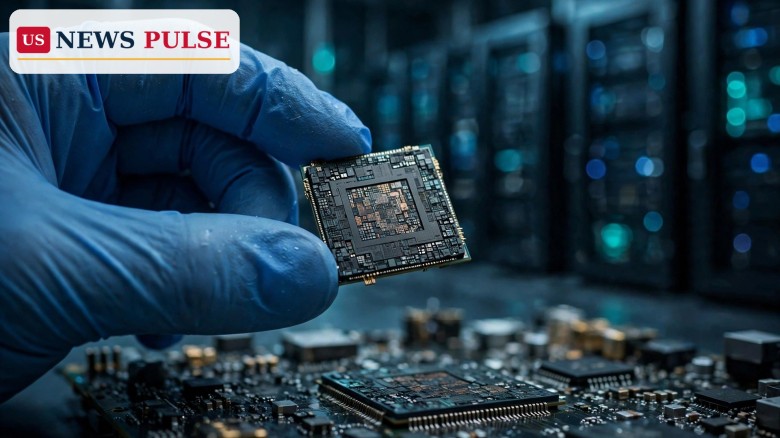
China's intelligence agency has run a secret campaign for at least two years to acquire advanced artificial intelligence chips and smuggle them past American export controls, The New York Times reported on Saturday.
The Ministry of State Security set up a working group reporting directly to its chief, Chen Yixin, to lead the effort, the report said, citing serving and former security and intelligence officials from Asia, the United States and Europe. The group helped Chinese companies acquire and smuggle advanced chips into the country and collected intelligence on the global semiconductor industry.
Key Points
- China's Ministry of State Security has run a secret campaign for at least two years to acquire advanced AI chips and gather intelligence on the global chip industry, the Times reported.
- MSS chief Chen Yixin created a working group reporting directly to him to help Chinese companies acquire and smuggle advanced chips into China.
- The campaign is part of a wider Communist Party push for technological self-reliance, coordinated by the Central Science and Technology Commission, set up by Xi Jinping in 2023.
- Xi told the Politburo in January that China must "adopt extraordinary measures" to win core technologies.
- The report comes as the US investigates businesswoman Alice Huang, whom American officials allege worked with the MSS to spy on Nvidia co-founder Jensen Huang; China calls the claims "pure fabrication".
What Happened
The Times published its report on Saturday, November 21, 2026. The newspaper said the MSS made acquiring advanced semiconductor chips and gathering intelligence on the global chip industry a priority for at least two years.
At the centre of the operation is a working group set up under Chen Yixin, who became China's state security minister in late 2022. It reports directly to Chen, helping Chinese companies acquire and smuggle advanced chips into China and collecting intelligence on the semiconductor sector. The report did not name the companies or routes, or say how many chips reached China. Until now the public record has focused on individual companies accused of moving Nvidia chips to China; this report describes a standing intelligence operation run from the top of China's security apparatus.
Background: The Chip Controls and the Huang Case
The United States has spent years tightening controls on the sale of advanced AI chips to China, arguing that the most powerful processors can train military AI systems and build advanced weapons. The rules bar the most advanced chips and now cover the data-centre capacity that gives Chinese firms access to the same computing power from abroad. Read our report on the US move to close the cloud loophole for AI chips.
The report lands in the middle of the Alice Huang affair. Huang ran Megaspeed, a Singapore-based data-centre company that bought billions of dollars' worth of Nvidia chips, and is alleged by American officials to have worked with the MSS to spy on Nvidia co-founder and former chief executive Jensen Huang. Megaspeed is under investigation by the US Justice Department over suspected illegal shipments of advanced chips to China.
On Friday, November 20, the Times reported separately that about $3.6 billion in Chinese government funding flowed through companies associated with Huang's family or business associates, based on a confidential Strider Technologies analysis. The money financed technology projects including data centres that received Nvidia chips, running through firms linked to China's defence industry, though the research did not establish whether the Chinese military had used that computing power. Read our report on the $3.6 billion Huang network investigation. Huang resigned as Nvidia's chief executive earlier this month.
China's AI Chip Smuggling Campaign
The campaign is not a one-off smuggling ring but part of a political programme ordered from the top. The Times said it is coordinated at the party level by the Central Science and Technology Commission, a body Xi established in 2023 to drive China's push for technological self-reliance, led by Ding Xuexiang. Xi told the Politburo in January that China must "adopt extraordinary measures" to win core technologies, and Chen unveiled the expanded mission in April, calling for officials to "deepen the struggle against blockades".
That language shows the chip hunt is not a rogue operation but a declared priority of the Chinese state, run by its intelligence chief and framed by Xi himself as a struggle against a blockade. Advanced chips are the bottleneck of the AI age: whoever controls them controls the training of the most capable models.
Reactions and Quotes
China has rejected the espionage allegations as "pure fabrication", a denial Beijing has repeated as the Huang case has grown. It has not commented directly on the two-year campaign claim, and the Times said Huang's role in the chip-procurement operation has not been established.
US officials are examining whether Megaspeed helped supply Nvidia chips to data centres linked to Chinese military research. Last week the Trump administration announced a new rule requiring overseas data centres to obtain a government licence before supplying significant computing power to companies headquartered in countries including China, Russia and Iran. The restriction is due to take effect in about 90 days.
Why It Matters
The report changes the frame of the chip war. If advanced chips are reaching China through a campaign run by its intelligence service, export controls are not being evaded by greedy middlemen but defeated by a state programme with the resources of a major intelligence agency behind it.
The stakes are military as well as commercial: the same chips that train chatbots can train AI systems used in weapons, surveillance and cyber operations.
What Happens Next
The most immediate next step is the new overseas data-centre licensing rule, due in about 90 days. It will require data centres outside China to get US permission before supplying large amounts of computing power to Chinese-headquartered companies.
The Justice Department's investigation of Megaspeed will continue, and any charges would be the first concrete enforcement outcome of the affair. President Donald Trump has also said he may raise the Nvidia spying allegations with Xi when the two leaders meet in Shenzhen.
Frequently Asked Questions
What did The New York Times report on Saturday?
China's Ministry of State Security has run a secret campaign for at least two years to acquire advanced AI chips and gather intelligence on the global chip industry.
Who is Chen Yixin?
Chen Yixin is China's minister of state security, a post he has held since late 2022, and he created the working group behind the chip campaign.
What is Alice Huang accused of?
American officials allege Huang, who ran the Singapore data-centre firm Megaspeed, worked with the MSS to spy on Nvidia co-founder Jensen Huang.
How much Chinese state money was linked to Huang's network?
A Times investigation published on November 20, 2026, found about $3.6 billion in Chinese government funding flowed through companies linked to Huang's family or business associates.
What is the United States doing about it?
The Trump administration announced a new rule requiring overseas data centres to obtain a US licence before supplying significant computing power to companies headquartered in China, Russia and Iran, due in about 90 days.
Related reading: NYT investigation links Alice Huang network to China military suppliers.
© 2026 US News Pulse. All rights reserved.
 Print
 Save