
Deborah Murphy: Florida Prosecutors Drop Charges in Grandmother's Publix Death
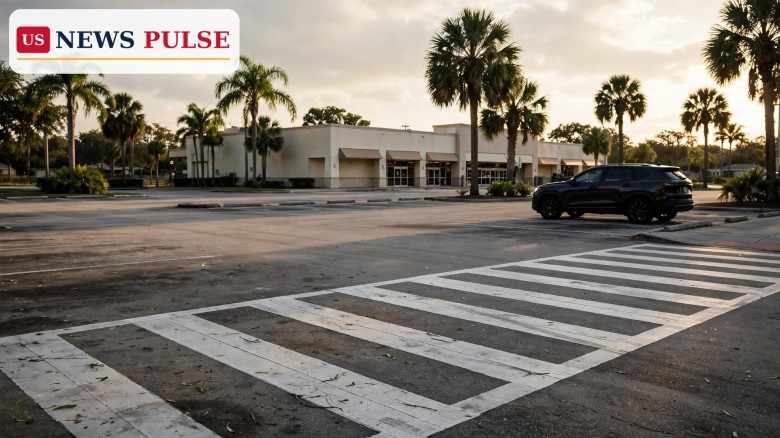
PANAMA CITY BEACH, Florida — Florida prosecutors will not bring criminal charges against the driver who backed over and killed 82-year-old Deborah Murphy in a Publix crosswalk in May, leaving the grandmother’s family devastated and demanding the case be looked at again. The Deborah Murphy case turns on a single legal line: prosecutors said the driver’s conduct was careless and negligent, but not reckless enough to prove vehicular homicide.
Murphy was crossing a marked crosswalk outside the Publix in Panama City Beach on May 17, 2026, toward her car, when a Toyota 4Runner moving in reverse struck her. Surveillance video shows she was facing away and did not see it coming. She died from blunt-force injuries less than an hour later at a hospital.
Key Points
- Florida prosecutors announced on Thursday, Nov. 13, 2026, that they will not charge Carlos Suarez-Contreras, 26, over the death of 82-year-old Deborah Murphy outside a Publix in Panama City Beach.
- Murphy was struck on May 17, 2026, while walking through a marked crosswalk toward her car; video shows she was facing away from the reversing Toyota 4Runner and did not see it coming.
- State Attorney Larry Basford said the driver was careless and negligent but not reckless enough to prove vehicular homicide: “Not every tragedy amounts to a crime.”
- Investigators found his Georgia driver’s license had been canceled only a day before the crash; he had been charged with driving with a canceled license and causing a death, a third-degree felony.
- After the case was dropped, Suarez-Contreras was transferred into Immigration and Customs Enforcement custody on Nov. 15, 2026, awaiting deportation.
What Happened
On the morning of May 17, 2026, Deborah Murphy left the Publix in Panama City Beach and crossed a marked crosswalk toward her car. A Toyota 4Runner driven by Carlos Suarez-Contreras, 26, a Venezuelan national living in the United States without legal status, was reversing through the same area and struck Murphy from behind.
Store surveillance video captured the moment: Murphy was facing away from the reversing SUV and had no chance to see it coming or move out of its path. Both sets of the vehicle’s tires passed over her body before the 4Runner came to a stop. Emergency responders took her to a hospital, where she died from blunt-force injuries less than an hour later.
Background: Six Months of Investigation
Suarez-Contreras was initially charged with driving with a canceled license and causing a death, a third-degree felony: his Georgia license had been canceled only a day before the crash, leaving him without a valid license.
But the more serious question — whether the crash itself amounted to vehicular homicide — required prosecutors to prove more than a fatal mistake. Under Florida law, vehicular homicide requires proof of reckless driving likely to cause death or great bodily harm. Carelessness, even with fatal consequences, is not the same thing in the eyes of the law, and Basford concluded the evidence showed negligence, not recklessness.
Deborah Murphy and the Decision Not to Prosecute
Basford’s explanation was brief and direct: after almost six months of investigation, the evidence showed careless and negligent conduct, but not reckless enough to prove vehicular homicide. “Not every tragedy amounts to a crime,” he said, drawing the line between a terrible accident and a criminal act.
For Murphy’s family, that line is impossible to accept. Her daughters, Amy Edge and Beth Schulz, said they are devastated by the decision and by the account of their mother’s final moments. “We know the man killed her. He never got out of the car,” the family said. They have launched a petition demanding reconsideration, arguing that a death in a marked crosswalk — in daylight, with a pedestrian who had the right of way — should carry criminal consequences. Prosecutors have not said whether the petition could change anything, and such decisions are rarely reversed without new evidence.
Reactions: Grief, Anger and a Legal Line
Reaction to the decision has split along the line Basford himself drew. Legal observers note that vehicular homicide is deliberately hard to prove: the law reserves criminal punishment for driving that shows a conscious disregard for the safety of others, not for every fatal error behind the wheel. On that reading, a driver who fails to check behind him while reversing has committed a serious civil wrong, but not necessarily a crime.
Murphy’s family sees it differently: their 82-year-old mother was walking in a marked crosswalk, facing away, and a reversing SUV ran over her. The case has also drawn attention because of the driver’s immigration status, which played no part in the charging decision but shaped what happened next: two days after the case was dropped, on Nov. 15, 2026, he was transferred into US Immigration and Customs Enforcement custody, where he awaits deportation.
Why It Matters
The case matters because it exposes the gap between what feels like justice and what the criminal law can deliver. A family that lost a mother in a crosswalk hears “not reckless enough” as a dismissal of her life; prosecutors hear the same words as the boundary of their power: they cannot charge a crime the evidence does not support.
It also matters for a practical reason. Parking lots and reversing vehicles are among the most common settings for pedestrian deaths involving older people. When a pedestrian is killed in a marked crosswalk and no criminal charge follows, other families will ask what would have to be different for the outcome to change.
What Happens Next
Suarez-Contreras remains in ICE custody as deportation proceedings move forward; his removal would close the practical chapter of the case, with no criminal trial to follow. Murphy’s family, meanwhile, is pressing ahead with its petition demanding reconsideration, though prosecutors have given no sign the decision will be revisited. The case is also likely to be cited in the wider debate over pedestrian safety in Florida, one of the most dangerous states in the country for people on foot.
Frequently Asked Questions
Who was Deborah Murphy?
She was an 82-year-old grandmother from the Panama City Beach area of Florida, killed on May 17, 2026, when a reversing SUV struck her in a marked crosswalk outside a Publix supermarket.
Why were charges dropped against the driver?
State Attorney Larry Basford said the evidence showed careless, negligent conduct, but not reckless enough to prove vehicular homicide under Florida law.
What had the driver been charged with?
He had been charged with driving with a canceled license and causing a death, a third-degree felony. His Georgia license had been canceled only a day before the crash.
Where is the driver now?
He was transferred into US Immigration and Customs Enforcement custody on Nov. 15, 2026, where he awaits deportation proceedings.
What does the family want?
Her daughters, Amy Edge and Beth Schulz, have launched a petition demanding the decision be reconsidered: “We know the man killed her. He never got out of the car.”
Related coverage: Three killed, including teen girl, in Parma, Ohio baby shower shooting and Virginia Senate leader Louise Lucas pleads not guilty in federal racketeering case.
© 2026 US News Pulse. All rights reserved.
 Print
 Save