
US Ports Under Cyber Siege as Hackers Launch Thousands of Attacks a Day
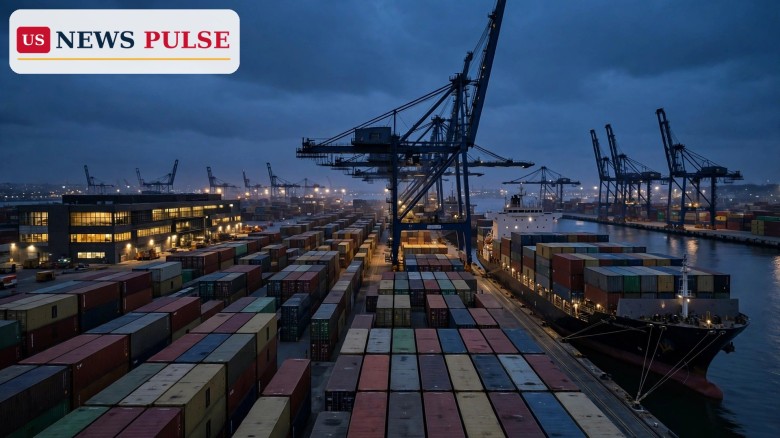
Hackers are hammering America's ports thousands of times a day, probing the computer systems that keep cargo moving and energy exports flowing, the Financial Times reported on Sunday, November 22, 2026. The Port of Los Angeles blocked 120 million attacks in August, nearly double its monthly average in 2023.
Key Points
- Hackers are stepping up attacks on US ports and cargo ships, the Financial Times reported on Sunday.
- Corpus Christi, the largest US crude-oil export hub, faces hundreds or even thousands of attempted intrusions daily, chief executive Kent Britton said.
- The Port of Los Angeles blocked 120 million attempted attacks in August alone, nearly double its monthly average in 2023.
- The Coast Guard reported a 17 percent rise in maritime cyber incidents last year, and boarded two foreign-flagged oil tankers in the Gulf of Mexico.
- The FBI warned last week that hackers use an AI tool called Artex to automate attacks; experts link the hacking to actors tied to Iran, North Korea and China.
What Happened
The Financial Times report describes a campaign, not isolated incidents. At Corpus Christi, attackers probe the port's networks daily and send messages impersonating senior executives to trick staff into handing over access. The port handles about 2.3 million barrels of crude a day, roughly 60 percent of all US crude exports.
Los Angeles tells a similar story at a different scale. America's busiest container port blocked 120 million attempted attacks in a single month, showing the volume of the assault and the scale of the defences now needed.
The pressure is not limited to the quayside. The Coast Guard reported a 17 percent rise in maritime cyber incidents last year. With the FBI, it boarded two foreign-flagged oil tankers in the Gulf of Mexico on August 21 and 24 after signs their networks were compromised near the Strait of Gibraltar. One, the Liberian-flagged VL Prosperity, bound for Galveston from Egypt, lost communications for 30 hours. On August 4, a cyberattack disrupted all three North Carolina Ports facilities, at Wilmington, Morehead City and Charlotte, forcing staff to process gates by hand. Maersk said hackers stole data in a breach this month, although its operations were not disrupted.
Background and Context
Ports have become prime targets in cyberspace because so much depends on them and so much of their work is now digital. Cranes, gates, cargo tracking, customs paperwork and fuel loading all run through networked systems. When those systems stop, ships wait and cargo sits. When breached, the intruder can see what is moving and where it is going.
The United States moves an enormous share of its trade through its ports, and Corpus Christi's role in energy exports makes it a strategic prize. A disruption there would ripple through global oil markets within hours. The Coast Guard's 17 percent rise came before the latest wave described by the Financial Times, and the August boardings showed the threat follows ships at sea as well as terminals.
US Ports Cyberattacks: Why the Siege Is Getting Worse
Three forces are driving the surge. The first is automation. The FBI warned last week that hackers are using an AI tool called Artex to automate attacks, turning work that once took a team of intruders days into something software can do in minutes. The bureau had already warned the tool lets attackers move at machine speed.
The second is impersonation. At Corpus Christi, attackers send messages pretending to be senior executives, a classic social engineering trick aimed at the people behind the firewalls.
The third is motive. Experts link the maritime hacking to actors associated with Iran, North Korea and China, countries with both the capability and the reason to probe American trade and energy infrastructure. The attacks serve several purposes at once: intelligence gathering, disruption, and a demonstration that even the busiest ports can be reached.
Reactions and Quotes
Port operators have been blunt about the scale of what they face. Kent Britton, the chief executive of the Port of Corpus Christi, described hundreds or even thousands of attempted intrusions each day, with attackers probing networks and impersonating senior executives to trick staff into granting access.
The shipping industry has confirmed the threat from its own experience. Maersk, the world's second largest container carrier, said hackers stole data in a breach this month, while stressing that its operations were not disrupted. US agencies have responded: the Coast Guard and the FBI boarded the two tankers in August, and the FBI's Artex warning shows attackers now use artificial intelligence to scale up their campaigns.
Why It Matters
Ports are the arteries of the American economy. Almost everything the country buys and sells crosses a dock at some point, and the oil that leaves Corpus Christi heats homes, fuels cars and feeds refineries around the world. A successful attack on a major port would mean delayed cargo, higher prices and, for energy exports, a shock to global markets.
The attacks also matter because they show how the contest between states is now fought. No shots are fired and no ships are seized, but networks are probed thousands of times a day and crews lose communications for 30 hours at sea. For the public, the risk is practical: the North Carolina incident showed what happens when the systems fail, with gates processed by hand.
What Happens Next
Port operators are hardening their defences, and the figures from Los Angeles show that blocking attacks is possible, at least for now. The question is whether defences can keep pace as attackers automate. The FBI's Artex warning suggests the next phase will be faster and harder to spot.
Washington is likely to face pressure for a more coordinated response. The Coast Guard already plays a central role in maritime security, and the boardings in the Gulf of Mexico show it is willing to act on intelligence about compromised vessels. Expect more attention on port software security, on its vendors, and on training the staff being targeted. The ports will keep counting the attempts. The number that matters is the one that gets through.
Frequently Asked Questions
How many cyberattacks do US ports face?
Los Angeles blocked 120 million attempted attacks in August alone; Corpus Christi faces hundreds or thousands of attempted intrusions daily.
Which ports have been hit?
An August 4 cyberattack disrupted all three North Carolina Ports facilities. Corpus Christi and Los Angeles are under constant attack, and two tankers were boarded in the Gulf of Mexico.
What is Artex?
Artex is an AI tool the FBI says hackers use to automate attacks at machine speed, from reconnaissance to data theft.
Who is behind the attacks?
Experts link the hacking to actors associated with Iran, North Korea and China, the Financial Times reports. No single attack has been formally attributed.
Has cargo been disrupted?
North Carolina Ports processed gates manually after its August attack, and Maersk said hackers stole data in a breach this month, though its operations were not disrupted.
Related coverage: FBI Warns AI Hacking Tool Artex Is Automating Cyberattacks at Machine Speed and AI Agents Are Stealing API Keys at Industrial Scale, Amazon and FBI Warn and Google Warns Autonomous AI Cyberattacks Have Arrived as Hackers Automate Exploits.
© 2026 US News Pulse. All rights reserved.
 Print
 Save