
Nvidia China Chip Sales: Bessent Demands Answers on Who Ran Compliance
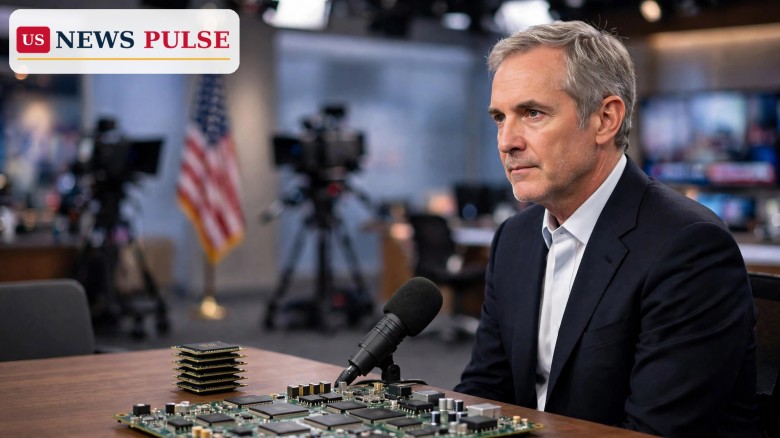
WASHINGTON. — Treasury Secretary Scott Bessent said on Sunday that the United States is demanding answers from Nvidia about its sales of advanced computer chips to China and about who was in charge of compliance while Jensen Huang was chief executive. Speaking on CBS's "Face the Nation" on November 22, 2026, Bessent said Washington has been in direct contact with Nvidia's temporary management and its lead directors.
"We've been in touch with the temporary management, with the lead directors, with their lawyers, and we do need answers," Bessent said. "It behooves Nvidia to move quickly on this because we want to know what the culture was."
Key Points
- Treasury Secretary Scott Bessent said the US is seeking answers from Nvidia on its chip sales to China and will find out who ran compliance under Jensen Huang.
- "We've been in touch with the temporary management, with the lead directors, with their lawyers, and we do need answers," Bessent said on Sunday. "It behooves Nvidia to move quickly."
- "We do need to see who was in charge of compliance there. Was it at the lower levels? Was it at the middle level? Did it go all the way to the top?"
- Bessent said Nvidia's board is working to determine what happened and he expects "fulsome and robust answers".
- President Donald Trump said on Friday, November 20, that he would like Huang to apologise and return to Nvidia. Bessent said more information is needed first: "I think we have to see where the buck stops."
What Happened
Bessent spoke two days after Trump publicly urged Huang to apologise and return to the company he led for 33 years. The Treasury Secretary struck a more cautious note than the president: where Trump has backed Huang's return, Bessent said the facts must come first. "We do need to see who was in charge of compliance there," he said. "We will see which level of the business knew about this."
The framing matters. If knowledge stopped at junior staff, it looks like a control failure; if it reached senior executives, it is far more serious. Bessent said he expects "fulsome and robust answers", and he did not endorse Trump's call for Huang to return. "I think we have to see where the buck stops," he said.
Background: How Nvidia Reached This Point
The crisis began on November 12, when Huang resigned as Nvidia's chief executive after reports of his relationship with a woman US intelligence suspects of being a Chinese spy, and an affair with a company executive. At the centre of the scrutiny is Megaspeed, a Singapore firm under investigation for allegedly diverting advanced Nvidia AI chips to China. US regulators and the FBI are examining how the chips moved.
The Securities and Exchange Commission has opened an accounting probe into Nvidia, lawmakers have demanded that its chip-export records be preserved, and the Commerce Department has tightened AI chip export rules. Interim chief Colette Kress runs the company, and chairman Harvey Jones has said the board will not rehire Huang. Nvidia says it has no reason to believe sensitive information was exposed, though its investigation is in its early stages; Beijing has denied the espionage claims as "purely a smear".
Bessent has given Nvidia 10 days to explain how its chips reached China through shell companies. Trump said on November 20 that he wants Huang to apologise and return — after saying he discussed Huang with China's Xi Jinping, a claim Bessent contradicted.
Nvidia China Chip Sales: The Questions Bessent Wants Answered
Advanced AI chips are among the most tightly restricted American technologies, and the rules depend on the companies that make them policing their own sales channels. If Nvidia's compliance operation failed — or was overruled — the controls fail with it.
The first question is factual: which chips reached China, in what quantities, and through which intermediaries? The Megaspeed inquiry is examining whether shell companies moved Nvidia hardware past the restrictions. The second is about people: who ran compliance, and what did they — and the executives above them — know? The third is about culture. "We want to know what the culture was," Bessent said. A compliance failure can be fixed with new procedures; a culture that put sales first would demand a deeper overhaul.
Reactions
Trump's position remains the most supportive of Huang in Washington. He has played down concerns about Huang's relationship with Alice Huang, a former Megaspeed executive suspected by US intelligence of links to China's Ministry of State Security, saying: "Nobody's proven that she's a spy. She may not be a spy." He has also ruled out replacing Commerce Secretary Howard Lutnick.
Silicon Valley leaders have also called for Huang's reinstatement, and more than 1,600 Nvidia employees have signed a petition demanding his return. But the board has held its line, and in Congress the mood is closer to Bessent's: Huang testifies in public before the Senate Banking Committee in early December.
Why It Matters
Nvidia's chips power the AI systems both the United States and China regard as central to their economic and military futures, which is why Washington restricts their sale. If the world's leading AI chipmaker cannot account for where its products went, the entire export-control system is called into question.
The episode also matters for investors. Nvidia's shares have fallen sharply since Huang's resignation, dropping below a $4 trillion market value, even though third-quarter revenue doubled to $115.8 billion. It also matters for the administration: Trump and Bessent are now publicly pulling in different directions on Huang's future.
What Happens Next
Nvidia's board is expected to deliver its account of what happened, and Bessent will be watching whether the answers are, in his words, "fulsome and robust". The company's internal review is still in its early stages.
The next fixed date is early December, when Huang testifies to the Senate Banking Committee in public and to House lawmakers behind closed doors — the first time he will answer questions in person since his resignation.
Frequently Asked Questions
What did Scott Bessent say about Nvidia?
On Sunday, November 22, 2026, Bessent said the US is seeking answers from Nvidia on its chip sales to China and who ran compliance under Jensen Huang.
Who was in charge of compliance at Nvidia under Huang?
That is what Bessent wants to find out: whether knowledge of the chip diversions sat at lower levels, middle levels, or "all the way to the top".
Will Jensen Huang return as Nvidia CEO?
Trump wants him to apologise and return, but the board has ruled out rehiring him. Bessent said: "We have to see where the buck stops."
What is the Megaspeed investigation?
Megaspeed is a Singapore firm under investigation for allegedly diverting advanced Nvidia AI chips to China, with US regulators and the FBI examining how the chips moved.
When will Huang testify to Congress?
In early December 2026: in public before the Senate Banking Committee and behind closed doors to House lawmakers.
Read more: Trump Says He Discussed Huang With Xi, Contradicting Bessent — SEC Nvidia Accounting Probe Examines Chipmaker's Books, Sources Say — Jensen Huang Resigns as Nvidia CEO After Spy Affair Scandal Ends 33-Year Reign
© 2026 US News Pulse. All rights reserved.
 Print
 Save