
Three Twin Cities Churches Challenge Federal Surveillance of ICE Protests
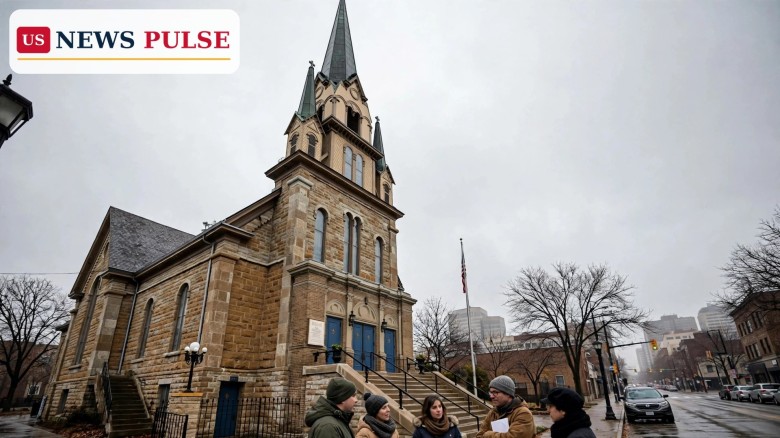
MINNEAPOLIS — Three Twin Cities churches went to federal court on Wednesday, November 18, 2026, demanding fuller disclosure of undercover federal surveillance of immigration protesters, after court records revealed Homeland Security agents infiltrated churches, schools and encrypted chat groups during the February immigration enforcement surge in Minneapolis and St. Paul. The churches say the records show agents watched worshippers who had committed no crime, and they want a judge to order the government to hand over more of what it collected.
Key Points
- Three Twin Cities churches filed an amicus brief on Wednesday, November 18, 2026, asking a federal court to order fuller disclosure of undercover surveillance of ICE protesters in Minnesota.
- Court records describe Homeland Security agents in “Operation Puppet Master” infiltrating churches, schools, libraries, restaurants, union halls and encrypted Signal chats.
- One agent joined a protest organisers’ Signal chat as “peanutbutterjelly”, offering help with fundraising, flyers and donation platforms.
- An undercover agent attended a Sunrise Movement meeting at First Universalist Church in December 2025, reported no crime, but said more attendance was needed to decide whether violations had occurred.
- Federal prosecutors oppose broader disclosure, and no ruling on the churches’ request has yet been issued.
What Happened
The brief was filed by attorney Irina Vaynerman of Groundwork Legal, supporting defence attorney Kevin Riach’s request for more disclosure of government investigative materials in the federal prosecution of 15 people — the “Minnesota 15” — charged by a grand jury in June 2026 with conspiring to impede or injure federal officers during protests and blockades around the Bishop Henry Whipple Federal Building. All 15 have pleaded not guilty.
The three churches are First Universalist Church and Hennepin Avenue United Methodist Church in Minneapolis, and St. John the Evangelist Episcopal Church in St. Paul. Their brief asks the court to force the government to reveal how deeply undercover agents penetrated the protest movement — and the congregations caught up in it.
According to the records, agents recorded meetings, photographed licence plates and obtained years of financial records from unions and progressive groups. They observed activities at Hennepin Avenue United Methodist and attended a meeting at St. John the Evangelist, as well as the Sunrise Movement gathering at First Universalist.
Background: The February Surge and Operation Puppet Master
The surveillance took place during the February 2026 immigration enforcement surge in the Minneapolis-St. Paul area, when federal officers carried out large-scale operations and protests flared around the Whipple Federal Building, the local hub for federal immigration enforcement. Demonstrators gathered there repeatedly, and blockades and confrontations followed.
The records name the undercover effort “Operation Puppet Master”, with a related effort called “Project Whipple Shield”. Agents moved through the places where protesters gathered: churches, schools, libraries and union halls, and into the encrypted Signal chats where organisers coordinated.
One agent joined a Signal chat as “peanutbutterjelly”, offering to help organisers with fundraising, flyers and donation platforms, while reporting back to the government.
At First Universalist Church, an undercover agent attended a Sunrise Movement meeting in December 2025 and reported no crime, but said more attendance was needed to determine whether violations occurred.
Twin Cities Churches Challenge Federal Surveillance
The churches’ brief turns that December report into the centre of their argument. If agents could sit in a church meeting, find nothing criminal and still keep coming back, the churches say, then the surveillance was not tied to any suspected offence. It was surveillance of a congregation that trusted the church as a safe place to meet.
First Universalist Senior Minister Jen Crow told MPR News that some members have stopped attending in person since learning of the surveillance, and described agents repeatedly circling the church during a January memorial service — one of the most private moments in a congregation’s life.
The brief does not ask the court to judge the underlying prosecution. It asks for disclosure: a fuller account of what the government collected, from whom, and how it was used. The Cato Institute, the Foundation for Individual Rights and Expression and the Society for the Rule of Law have also filed briefs supporting disclosure.
Reactions: Prosecutors Push Back
Federal prosecutors oppose broader disclosure. In a filing on September 10, Assistant US Attorney Tory Sailer called the request “excessively broad”, arguing that the defence is asking for far more material than the case requires. The government’s position is that it has already handed over what the law demands.
The churches disagree, arguing the surveillance reached places the government had no business watching and only a fuller record can show how far it went. No final ruling has been issued.
Why It Matters
It matters first because of where the surveillance happened. Churches, schools and libraries are where communities meet, organise and grieve. When undercover agents move through them, the damage is not only to the people watched, but to the trust that makes those places work. Jen Crow’s account of members staying away shows that damage in concrete terms.
It matters second because of how the surveillance worked. An agent who joins a chat under a false name and offers to help with fundraising is not merely observing a protest. The agent is shaping it, earning trust under false pretences.
It matters third because the disclosure fight decides what the public learns. The Minnesota 15 case is about a blockade at a federal building, but the records describe a far wider operation. Whether the full picture emerges depends on a judge’s ruling on transparency.
What Happens Next
The judge will rule on the disclosure request, deciding how much more of the surveillance record becomes public. Until then, the churches’ concerns remain unresolved, and their brief sits on the court record as a formal challenge to the government’s secrecy.
The prosecution of the Minnesota 15 continues, with all 15 defendants maintaining their not-guilty pleas. Any further disclosures could become part of the trial record.
Frequently Asked Questions
Which churches filed the brief?
First Universalist Church and Hennepin Avenue United Methodist Church in Minneapolis, and St. John the Evangelist Episcopal Church in St. Paul, on Wednesday, November 18, 2026.
What is Operation Puppet Master?
The name in court records for the undercover Homeland Security operation that infiltrated churches, schools, libraries and encrypted Signal chats to monitor ICE protesters during the February 2026 immigration surge in Minnesota.
Who are the “Minnesota 15”?
Fifteen people charged by a grand jury in June 2026 with conspiring to impede or injure federal officers during protests and blockades around the Bishop Henry Whipple Federal Building. All have pleaded not guilty.
Did the agents find any crime at the churches?
The report from the December 2025 Sunrise Movement meeting at First Universalist Church identified no crime, but said more attendance was needed to determine whether violations had occurred.
What happens next?
A judge will rule on the request for fuller disclosure. No final ruling has been issued, and the prosecution of the Minnesota 15 continues.
Related coverage: ICE Blocks Hospital ER Entrance in Los Angeles as Immigration Arrests Continue • ICE Seattle Airport Arrests: Masked Agents Drag Two Off Jet Bridge at Sea-Tac • GEO Group Sells Tacoma ICE Detention Center to US for $453 Million
© 2026 US News Pulse. All rights reserved.
 Print
 Save