
Bessent Warns Fed Against Overtightening as Markets Swoon Before December
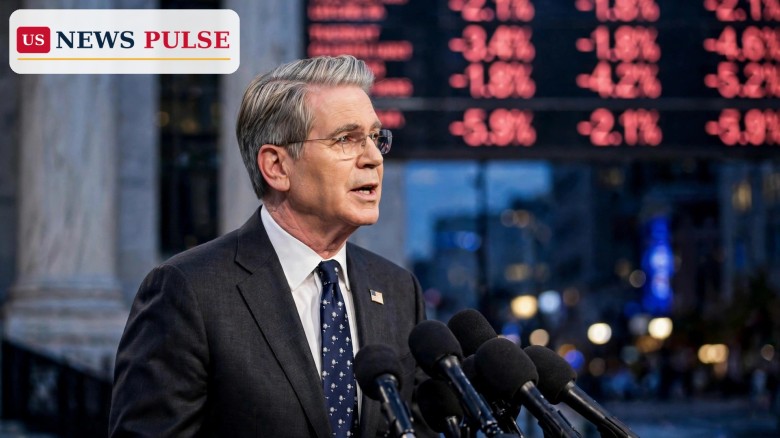
WASHINGTON — Treasury Secretary Scott Bessent warned on Sunday that the Federal Reserve risks damaging the US economy if it tightens monetary policy too far, saying the central bank “may be making a policy mistake if they overtighten” in response to the latest inflation data. Bessent, speaking on CBS’s Face the Nation on November 22, pointed to hawkish Fed comments and said financial conditions have tightened substantially in recent months, with signs of fragility in the system. The warning landed as Wall Street reels, with the S&P 500 in correction just weeks before the Fed’s December decision.
Key Points
- Bessent said the Fed “may be making a policy mistake if they overtighten” on recent inflation data.
- He cited hawkish Fed remarks and substantially tighter financial conditions.
- The Fed’s target range is 3.75% to 4.00% after a September hike; its next decision is due December 9.
- A quarter-point December hike is close to fully priced; Governor Christopher Waller has argued for considering a 50-basis-point move.
- The S&P 500 fell 3.70% on Friday, November 20, into correction; the Nasdaq dropped 5.28%.
What Happened
Bessent framed it as a concern shared well beyond the Treasury. “Many people believe that they may be making a policy mistake if they overtighten,” he said, adding: “We’ve seen a substantial tightening in financial conditions over the past few months.” He pointed to “very hawkish remarks from the Federal Reserve”, a reference to governors arguing stubborn inflation justifies another increase — possibly larger than markets expect.
The Fed’s benchmark rate sits in a target range of 3.75% to 4.00%, after a quarter-point increase in September and no change in October. Its next decision is due on December 9, with a quarter-point hike close to fully priced. But the debate inside the central bank is live: Governor Christopher Waller has argued for considering a 50-basis-point rise in December, taking the range to 4.25% to 4.50%. Bessent did not say what outcome he wants, and he named no Fed officials.
Background and Context
Bessent has made the same argument all month. In CNBC interviews on November 13 and November 20, he said it would be a mistake to hike aggressively into an energy supply shock that was already easing, and he described the recent inflation data as noisy rather than a sign of a lasting price surge. The warning is therefore the third instalment of a sustained Treasury campaign against a December hike, and against a 50-basis-point move in particular.
Minutes of the Federal Open Market Committee’s October 27–28 meeting showed almost all participants saw a further increase as likely. That is the backdrop Bessent is pushing against: a central bank whose own record points toward tightening as markets fall. On Friday, November 20, the S&P 500 slid 3.70% into correction, more than 10% below its October 6 peak, and the Nasdaq fell 5.28%. Bessent, on the same programme, called the sell-off a “combination of things”, including investors’ worries about the Democrats’ artificial-intelligence stance and hawkish Fed signals. Read our report on Wall Street’s slide.
Bessent’s Warning on Fed Overtightening
The warning puts the Treasury secretary at odds with the central bank’s independence. The Federal Reserve sets interest rates free of political direction, and Bessent’s comments reflect the Treasury’s view, not that of the officials who set rates. A Treasury secretary publicly telling the Fed it risks a “policy mistake” is unusual, and it comes as the administration presses to remove Fed Governor Lisa Cook, with a White House hearing set for December 14. Read our report on the Lisa Cook hearing.
Bessent’s case rests on conditions, not prices: financial conditions — the cost and availability of credit — have already tightened substantially, and another rise would squeeze households and businesses already under strain. The same CBS appearance also covered Nvidia, where Bessent said the US wants answers on its chip sales to China and who ran compliance. Read our report on Bessent and Nvidia.
Reactions and Quotes
Bessent’s central line was unambiguous: “Many people believe that they may be making a policy mistake if they overtighten.” On credit markets, he said conditions have “tightened considerably over the past few months”, and he warned about the impact another rate increase could have on markets and the broader economy. He made the same point twice before this month, telling CNBC on November 13 it would be a mistake to hike aggressively into an easing energy shock, and repeating the warning on November 20.
Markets reacted quickly, with traders trimming expectations for a December hike as the warning circulated. Waller, who argues for a possible 50-basis-point move, has not responded publicly. The split inside the Fed remains the story: stubborn inflation against the fear that overtightening tips a fragile economy into a slowdown.
Why It Matters
The December decision will set borrowing costs for millions of Americans. Mortgage rates, credit-card interest and business loans all track the Fed’s benchmark, so a quarter-point rise, a half-point rise or no move at all is felt in household budgets within weeks. Tighten too far and growth chokes just as markets signal stress; hold back and inflation could take hold again. Bessent argues the first danger is now the greater one.
It also matters politically. The Treasury secretary is the administration’s chief economic voice, and his public break with the Fed’s hawkish wing signals the White House wants cheaper money heading into the new year. If the Fed hikes in December anyway, the disagreement is on the record; if it holds, Bessent can say the central bank listened.
What Happens Next
All eyes turn to December 9, when the Federal Open Market Committee announces its decision. Before then, traders will watch every Fed governor’s speech for signs of which way the committee leans, and fresh inflation and jobs data could still shift the odds. The White House hearing on Governor Lisa Cook’s future follows on December 14. Bessent has shown he will keep making his case in public — and the Fed must decide whether to heed the Treasury’s warning or trust its own read of the inflation data.
Frequently Asked Questions
What did Bessent say about the Fed?
On CBS’s Face the Nation on November 22, he said “many people believe that they may be making a policy mistake if they overtighten”, citing hawkish Fed comments and tighter financial conditions.
What is the Fed’s current interest rate?
The target range is 3.75% to 4.00%, after a September 2026 quarter-point hike and no change in October.
When is the Fed’s next decision?
December 9, 2026. A quarter-point hike is close to fully priced, while Governor Christopher Waller has argued for considering a 50-basis-point move.
How far have US markets fallen?
On Friday, November 20, the S&P 500 fell 3.70% into correction, more than 10% below its October 6 peak; the Nasdaq dropped 5.28%.
© 2026 US News Pulse. All rights reserved.
 Print
 Save