
Israel Kills Hezbollah Chief of Staff Tabatabai in Beirut Strike, Five Dead
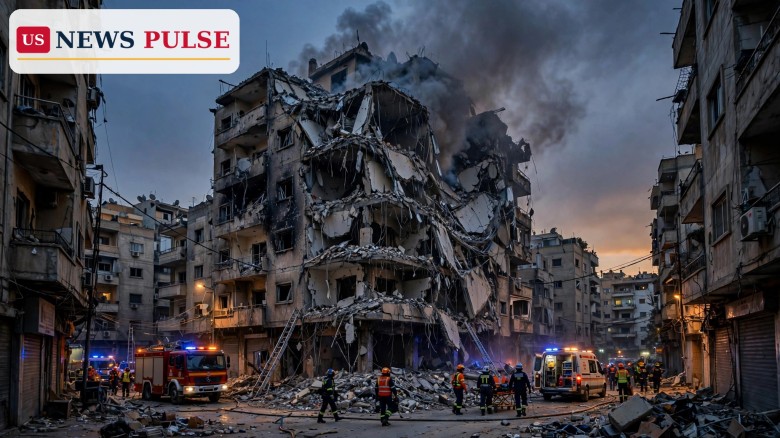
Israel killed Hezbollah's chief of staff, Haytham Ali Tabatabai, in an airstrike on an apartment building in Beirut's southern suburbs on Sunday, November 23, 2026, in the most serious blow to the Iran-backed group since a ceasefire ended more than a year of war. Lebanon's Health Ministry said five people were killed and 28 wounded in the strike, which hit a nine-storey building in the densely populated Haret Hreik district of Dahiyeh, the Hezbollah stronghold south of the capital. Hezbollah confirmed Tabatabai's death hours later, saying four of its fighters were among the dead.
Key Points
- The Israel Defense Forces said it "eliminated" Tabatabai, Hezbollah's chief of general staff and the man behind its rearmament.
- Five killed and 28 wounded, Lebanon's Health Ministry said, after the strike hit a nine-storey apartment building in Haret Hreik.
- The most senior Hezbollah commander killed since the November 2024 ceasefire; the fifth strike on Beirut's southern suburbs since the truce.
- Hezbollah said Israel crossed a "red line"; its leader, Naim Qassem, said the group may retaliate, and Iran's Revolutionary Guards urged revenge.
- The strike came a week before Pope Leo XIV is due in Lebanon; the US had placed a $5 million reward on Tabatabai.
What Happened
The strike hit on Sunday afternoon, without warning, in a crowded residential neighbourhood. The missile struck the third and fourth floors of a nine-storey building, where ambulance and fire crews scrambled to find survivors. Within hours, the Israeli military confirmed the attack, saying it had "eliminated the terrorist Haytham Ali Tabatabai, Hezbollah's chief of general staff". The military said Tabatabai "played a key role in expanding Hezbollah's operational and military capacities" and had been leading the group's build-up and rearmament since the war ended.
Lebanon's Health Ministry said five people were killed and 28 wounded. Hezbollah later confirmed that Tabatabai was among the dead and said four of its fighters had been killed. The group said Tabatabai had taken over as military leader after the war that killed many senior commanders, including longtime chief Hassan Nasrallah.
Background: A Ceasefire Under Strain
The November 2024 ceasefire was meant to end more than a year of hostilities between Israel and Hezbollah. But the truce has never fully held. Israel has carried out near-daily strikes across Lebanon since the ceasefire began, saying it is targeting Hezbollah members and infrastructure and accusing the group of rearming.
Earlier this month, Israel struck Beirut's southern suburbs for the first time since the ceasefire. That November 4 strike killed Ahmed Ghaleb Balout, the Radwan Force operations chief, along with two other commanders. Over the past year, Israel says it has eliminated some 350 Hezbollah operatives and destroyed weapons and infrastructure across Lebanon. The United States has also been pressing Beirut to disarm Hezbollah entirely, but the group has refused, insisting Israel must first stop its strikes and withdraw from Lebanese territory. A senior Hezbollah official said after Sunday's attack that the group "won't concern ourselves with any proposals as long as the enemy doesn't commit to the [2024] ceasefire agreement".
Hezbollah Chief Killed in Beirut Strike: Who Was Tabatabai?
Tabatabai, born in 1968 according to Hezbollah's statement, was largely unknown to the Lebanese public, despite holding one of the most senior posts in the organisation. He rose through the group's military ranks over decades and, after the war that killed Nasrallah and much of Hezbollah's old guard, took over as its de facto military chief. The United States had placed a $5 million reward on him, and Israeli officials said he was the central figure in the group's rearmament programme.
Reactions and Quotes
Hezbollah confirmed Tabatabai's death and said Israel had crossed a "red line" by striking the capital. Its secretary general, Sheikh Naim Qassem, said the group has the right to retaliate and that surrender is not an option, according to Al Manar television. Hundreds of supporters joined his funeral procession in Beirut's southern suburbs on Monday.
Iran reacted with fury. The Revolutionary Guards urged revenge for the killing, and Iran's Supreme National Security Council secretary, Ali Larijani, said: "Netanyahu continues his adventures until everyone realizes that no path remains except to confront this fabricated entity." Israel made no apology, saying Tabatabai had been leading Hezbollah's build-up and rearmament. Lebanon's government has not yet responded, but the strike places Beirut in a difficult position: under intense American pressure to disarm Hezbollah, yet each Israeli strike strengthens the case that disarmament is pointless while Israel keeps attacking.
Why It Matters
The killing of Tabatabai matters because it strikes at the heart of Hezbollah's recovery. The group lost its leader, much of its command structure and much of its arsenal in the 2024 war, and Tabatabai was charged with rebuilding it. His death disrupts that programme and signals Israel will keep hunting the people running it. It also matters because of where it happened. Dahiyeh is Hezbollah's home ground, a densely populated district where the group runs schools and clinics as well as its military operations. A strike on an apartment building there kills civilians as well as commanders. Each attack on Beirut makes it harder for Lebanon's government to argue that the truce is working.
What Happens Next
All eyes are now on Hezbollah's next move. Its leader says the group has the right to retaliate, but a major response could trigger a far larger Israeli campaign against Lebanon, while no response at all would invite further strikes on its leadership. Hezbollah has absorbed such killings before without a full-scale response, and it may do so again. The Lebanese government will face renewed pressure from Washington to move faster on disarmament. The Pope's visit next week will put Lebanon's fragile stability in the international spotlight, and Israel has shown no sign of stopping. The question now is whether Hezbollah's patience holds, or whether Sunday's strike finally breaks the ceasefire.
Frequently Asked Questions
Who was Haytham Ali Tabatabai? Hezbollah's chief of general staff and de facto military chief after the 2024 war with Israel. Born in 1968, he was largely unknown to the public, and the US had placed a $5 million reward on him.
How many people were killed in the Beirut strike? Five killed and 28 wounded, Lebanon's Health Ministry said. Hezbollah said four of its fighters, including Tabatabai, were among the dead.
Was this the first Israeli strike on Beirut since the ceasefire? No — the fifth on Beirut's southern suburbs since the November 2024 ceasefire. A November 4 strike killed a senior operations chief.
What did Hezbollah say after the strike? It confirmed his death, said Israel crossed a "red line", and its leader, Naim Qassem, said the group has the right to retaliate. Iran's Revolutionary Guards urged revenge.
Why does the strike matter for the ceasefire? The November 2024 ceasefire was meant to end more than a year of war, but Israel has struck Lebanon near-daily since then, saying Hezbollah is rearming. Killing its military chief in Beirut puts the truce under its greatest strain yet.
Related coverage: Iran says it shot down a US MQ-1 drone near the Strait of Hormuz and Iraqi forces enter Kataib Hezbollah stronghold after oil probe.
© 2026 US News Pulse. All rights reserved.
 Print
 Save